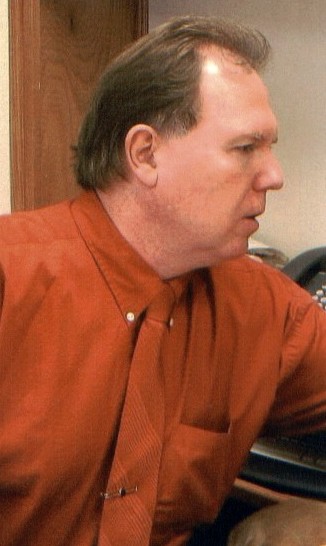
I have been following a couple of web sites for a little while I want to share with you. They are related as both are written by men who use wheelchairs. However, in some ways, that is where they split. They are different, as the first offers the resources of a professional rehab counselor and the other is a savvy and literate mobility expert. Their similarities are the strength of the resource each provides.
The first one is a web site titled
Pitt Rehab Counselor,
Written by Greg Traynor, a man who had a spinal cord injury while diving in 1999. As the web site’s title indicates, he is a rehab counselor in Pittsburgh.
On his site, Greg provides some useful links under various categories ranging from accessible entertainment to a variety of adaptive activities including driving, gardening, and sports. He also provides a good gathering of other resources, which is where I found the second site I want to share with you.
WheelchairJunkie.com
Is a site operated by Mark E. Smith, a self proclaimed mobility superstar. I can not vouch for Mark’s mobility skills, but will take him at his word on that. However, I can attest to his ability to capture thoughts and events in a manner which grabs the reader’s attention. On his site, which seems to be a gathering place for his latest blog entries, Mark describes day-to-day encounters and thoughts he has in a direct, yet personable style. He is both candid, as evidenced by his post about
Equality at the Strip Club,
and also very insightful to the world of disabilities. For proof of the latter, read his
July 27, 2007 post
where he compares the level of rehab care one gets from the perspective of sudden trauma versus progressive disabilities.
I know there are other disability related blogs and web sites that are worth noting. Trust me, I read many of them regularly. I have just been impressed with these two sites lately and wanted to share them.
Showing posts with label Power Wheelchairs. Show all posts
Showing posts with label Power Wheelchairs. Show all posts
Tuesday, September 04, 2007


Friday, July 13, 2007
Technology lets folks turn on TV by twitching eyebrows
There is an interesting assistive technology device being fine tuned in Singapore.
When this device is finished being refined, it will let users
Switch on the TV by twitching their eyebrows.
(Note: I am having problems making the link work, but if you do a right mouse click on the link, select "copy shortcut," and copy this into the "Open" command or address bar of your web browser without the final / at the end, it will open the article.)
This device is newsworthy, because of the pricing approach of the students who created the product to aid elderly people and those with a disability that makes hand operation of a remote control impossible.
The following passage was published on the Singapore News web article linked above:
“The device works by detecting muscle movements of the eyebrows to trigger the required function.
A band with sensors is held together by a velcro strip and is wrapped as close to the eyebrow level as possible. This strip is wired to a control pad which has indicator lights flashing on the function - either to change channels or increase volume and to trigger an alarm bell. The person just has to wait for the light to jump to the desired function on the pad before raising his eyebrows to trigger the change in channels or volume.
The infrared signal from the device can be picked up within a 5m-radius of the equipment.
For example, one of the paralysed patients who tried the device could only blink his eyes but it was enough to make the device work.”
While there are other assistive technology products on the market that can do similar operations, the goal of the three final-year electrical engineering students at Ngee Ann Polytechnic who have developed this device is to make it affordable. While related products sell for $1,000 to $7,000, according to one of the students, they plan to make their product available for under $100. Assistive technology that is designed with the full intention to help people with disabilities and not set out to make the developers lots of cash is news indeed.
The developers are also not limiting their vision for the application of the device. While their professor's original idea for the project was something that could ultimately be used to help operate the wheelchair, the students went beyond that. They also hope to make it do more than just operate a television. They want to make it function as a remote control for fans and lights as well.
Keep pushing, folks. I’m sure there are other applications that it can be used for.
When this device is finished being refined, it will let users
Switch on the TV by twitching their eyebrows.
(Note: I am having problems making the link work, but if you do a right mouse click on the link, select "copy shortcut," and copy this into the "Open" command or address bar of your web browser without the final / at the end, it will open the article.)
This device is newsworthy, because of the pricing approach of the students who created the product to aid elderly people and those with a disability that makes hand operation of a remote control impossible.
The following passage was published on the Singapore News web article linked above:
“The device works by detecting muscle movements of the eyebrows to trigger the required function.
A band with sensors is held together by a velcro strip and is wrapped as close to the eyebrow level as possible. This strip is wired to a control pad which has indicator lights flashing on the function - either to change channels or increase volume and to trigger an alarm bell. The person just has to wait for the light to jump to the desired function on the pad before raising his eyebrows to trigger the change in channels or volume.
The infrared signal from the device can be picked up within a 5m-radius of the equipment.
For example, one of the paralysed patients who tried the device could only blink his eyes but it was enough to make the device work.”
While there are other assistive technology products on the market that can do similar operations, the goal of the three final-year electrical engineering students at Ngee Ann Polytechnic who have developed this device is to make it affordable. While related products sell for $1,000 to $7,000, according to one of the students, they plan to make their product available for under $100. Assistive technology that is designed with the full intention to help people with disabilities and not set out to make the developers lots of cash is news indeed.
The developers are also not limiting their vision for the application of the device. While their professor's original idea for the project was something that could ultimately be used to help operate the wheelchair, the students went beyond that. They also hope to make it do more than just operate a television. They want to make it function as a remote control for fans and lights as well.
Keep pushing, folks. I’m sure there are other applications that it can be used for.
Friday, April 13, 2007
Texas student wins battle over accessible dorm room
A recent article on the
Campus Progress
Web site Titled
Separate but Unequal Dorms
tells about the victory of a Texas State University student who uses a wheelchair after she had to pay higher costs than other first-year students just so she could live in an accessible dorm room.
Bailey Gosda is a sophomore at TSU who uses a wheelchair due to cerebral palsy. She has been in a nearly two-year fight with the university, in which she has contended that the university overcharged her several thousands of dollars so that she could live in a dorm room with wheelchair access. This would be in violation of the Americans with Disabilities ACT (ADA).
In 2005, Ms. Gosda visited the campus and Residence Life told her they did not know where to house her. She asked to live in Smith Building, the traditional and most affordable dorm, but there were no rooms in the building that were wheelchair accessible. The university moved her to a single room in a more expensive dorm, explaining that she and her equipment would foreclude the possibility of having a roommate. The result was that she paid more than twice what most first-year students did.
With the assistance of an attorney from
Advocacy Inc.,
a non-profit disability rights organization based in Austin, Ms. Gosda began to take on the university.
In the article, her attorney stated that, “under the ADA, Gosda should only have to pay for what she requested—a dormitory room in a traditional building with a roommate—even if there was not a wheelchair accessible room available that fit that description.” Her attorney asked the school to repay Ms. Gosda the difference.”
This seems like a no-brainer, doesn't it? It was not that simple, though, as Texas State officials drug out their opposition. Read the article linked above to understand the battles this young lady had to undertake to be proven right.
Last month, Ms. Gosda was vindicated in her battle when the euniversity offered to refund the $6,000 it had overcharged her.
Hopefully, the university administration has learned a legal lesson on providing access. That was a cheap way out for them. Had she taken this matter to court and been successful, the university could have faced more severe financial penalties.
We often sit back and naively believe we are living in enlightened times when cases such as this are no longer taking place. It is a reflection of attitude towards the law and that is as subjective as any individual. The case of Ms. Gosda could have happened at any college or university. All it takes is the right situation, such as the lack of accessible rooms in the traditional dorm, and the subsequent boneheaded ignorance taken by somebody withing the university to not see the right thing to do, in this case it was to give her the accessible room at the rate of the traditional dorm room.
It is the responsibility of all DSS professionals to educate and enlighten. I would hope that the university consulted their ADA coordinator for an opinion before taking such a foolish and indefensible stance. It doesn't sound like they did, though.
Campus Progress
Web site Titled
Separate but Unequal Dorms
tells about the victory of a Texas State University student who uses a wheelchair after she had to pay higher costs than other first-year students just so she could live in an accessible dorm room.
Bailey Gosda is a sophomore at TSU who uses a wheelchair due to cerebral palsy. She has been in a nearly two-year fight with the university, in which she has contended that the university overcharged her several thousands of dollars so that she could live in a dorm room with wheelchair access. This would be in violation of the Americans with Disabilities ACT (ADA).
In 2005, Ms. Gosda visited the campus and Residence Life told her they did not know where to house her. She asked to live in Smith Building, the traditional and most affordable dorm, but there were no rooms in the building that were wheelchair accessible. The university moved her to a single room in a more expensive dorm, explaining that she and her equipment would foreclude the possibility of having a roommate. The result was that she paid more than twice what most first-year students did.
With the assistance of an attorney from
Advocacy Inc.,
a non-profit disability rights organization based in Austin, Ms. Gosda began to take on the university.
In the article, her attorney stated that, “under the ADA, Gosda should only have to pay for what she requested—a dormitory room in a traditional building with a roommate—even if there was not a wheelchair accessible room available that fit that description.” Her attorney asked the school to repay Ms. Gosda the difference.”
This seems like a no-brainer, doesn't it? It was not that simple, though, as Texas State officials drug out their opposition. Read the article linked above to understand the battles this young lady had to undertake to be proven right.
Last month, Ms. Gosda was vindicated in her battle when the euniversity offered to refund the $6,000 it had overcharged her.
Hopefully, the university administration has learned a legal lesson on providing access. That was a cheap way out for them. Had she taken this matter to court and been successful, the university could have faced more severe financial penalties.
We often sit back and naively believe we are living in enlightened times when cases such as this are no longer taking place. It is a reflection of attitude towards the law and that is as subjective as any individual. The case of Ms. Gosda could have happened at any college or university. All it takes is the right situation, such as the lack of accessible rooms in the traditional dorm, and the subsequent boneheaded ignorance taken by somebody withing the university to not see the right thing to do, in this case it was to give her the accessible room at the rate of the traditional dorm room.
It is the responsibility of all DSS professionals to educate and enlighten. I would hope that the university consulted their ADA coordinator for an opinion before taking such a foolish and indefensible stance. It doesn't sound like they did, though.
Thursday, April 12, 2007
Medicare and power wheelchairs
There is an interesting article posted on
AlterNet.org
About
Medicare keeping the door shut on the disabled.
The gist of the article concerns Medicare and its policy to either pay or not pay for power wheelchairs. The answer lies in the results of a strict checklist. The bone of contention is that “it boils down to one question: Does the patient need a wheelchair inside the home?”
According to the article, “If you can limp 10 feet to the bathroom, or move from the refrigerator to the sink to make dinner, then Medicare will not cover a power wheelchair, even if you can't walk down the block to the grocery store for the food in the first place.”
This approach seems almost like a silly argument, one that makes no sense in the broader scope of individual needs. If a person is barely functional in their home, but can manage just a little bit, then Medicare says, “Well then…you certainly don’t need a power wheelchair,” even though providing such an assistive device may enable the person to get out of the house and get a job.
Compound this with individual pride and the innate quality of people trying to show they can do as much as they can, demonstrating their will to be strong in light of a disabling condition, even when this demonstration of will is at the reviewing athority who will report their findings of the individual's ability/disability to Medicare? When showing they can walk ten feet, no matter how much is done with a limp or the level of pain they endure when doing this, will be the very deciding factor that will shoot that person in their all-------too-able foot.
Wouldn’t it make sense to empower a person by providing the tool that would give him the potential to go to work and have private employer-provided health insurance, getting him off of Medicare as a result?
I don’t consider myself a liberal, nor a bleeding heart, but I am a passionate defender of rights of people with disabilities. However, I am also a tax-paying citizen and also understand the need for Medicare to protect its budgetary constraints, carefully scrutinizing the criteria for incidents when they will pay for a person’s expensive piece of assistive technology. However, there should be a more common sense review to consider when Medicare will fund these items.
The article illustrates clearly that items such as this which Medicare reigns over with a tight fist often goes unnoticed by legislators, as it is not a big hit on the political radar screen. In time, though, I believe this will change with the graying boomer population and the effects of this aging bringing on a variety of disabling conditions. Medicare’s ability to be so stringent in its governance for power wheelchairs may change as does the age of our population.
AlterNet.org
About
Medicare keeping the door shut on the disabled.
The gist of the article concerns Medicare and its policy to either pay or not pay for power wheelchairs. The answer lies in the results of a strict checklist. The bone of contention is that “it boils down to one question: Does the patient need a wheelchair inside the home?”
According to the article, “If you can limp 10 feet to the bathroom, or move from the refrigerator to the sink to make dinner, then Medicare will not cover a power wheelchair, even if you can't walk down the block to the grocery store for the food in the first place.”
This approach seems almost like a silly argument, one that makes no sense in the broader scope of individual needs. If a person is barely functional in their home, but can manage just a little bit, then Medicare says, “Well then…you certainly don’t need a power wheelchair,” even though providing such an assistive device may enable the person to get out of the house and get a job.
Compound this with individual pride and the innate quality of people trying to show they can do as much as they can, demonstrating their will to be strong in light of a disabling condition, even when this demonstration of will is at the reviewing athority who will report their findings of the individual's ability/disability to Medicare? When showing they can walk ten feet, no matter how much is done with a limp or the level of pain they endure when doing this, will be the very deciding factor that will shoot that person in their all-------too-able foot.
Wouldn’t it make sense to empower a person by providing the tool that would give him the potential to go to work and have private employer-provided health insurance, getting him off of Medicare as a result?
I don’t consider myself a liberal, nor a bleeding heart, but I am a passionate defender of rights of people with disabilities. However, I am also a tax-paying citizen and also understand the need for Medicare to protect its budgetary constraints, carefully scrutinizing the criteria for incidents when they will pay for a person’s expensive piece of assistive technology. However, there should be a more common sense review to consider when Medicare will fund these items.
The article illustrates clearly that items such as this which Medicare reigns over with a tight fist often goes unnoticed by legislators, as it is not a big hit on the political radar screen. In time, though, I believe this will change with the graying boomer population and the effects of this aging bringing on a variety of disabling conditions. Medicare’s ability to be so stringent in its governance for power wheelchairs may change as does the age of our population.
Subscribe to:
Posts (Atom)