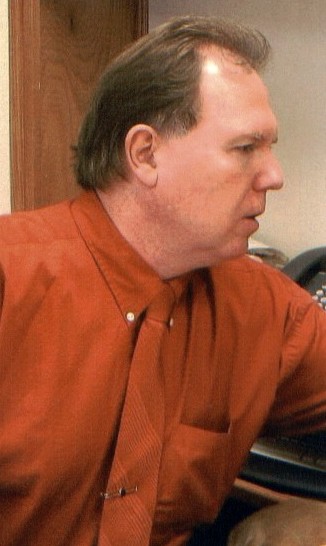
I’ve always thought that I am pretty keen on seeing the assistive technology applications of various advances in electronic devices. However, I must admit to being humbled when I read about the incorporation of technologies in the following Baltimore Sun article.
Steering Clear of Limits
is a most apt title for this insightful news article about the convergence of the technology John Hudson uses, but also about his approach to life. When reading it, I couldn’t help but marvel at Hudson and his upbeat and "can do" attitude.
For example, despite the fact that he has no arms and only one leg, which is shorter than normal and has only four toes, Hudson types 42 words per minute and bowls with a 138 average score. Oh yes, he also drives his modified van.
This article highlights both the advances in technology and the achievements one can accomplish when his abilities outweigh his disabilities. It is inspiring to see both of these.
For those seeking some statistical data, about 400,000 vehicles which have been modified with adaptive equipment were on the roads of the U.S. in 2005, according to the article. Additionally, this number has grown by 10-15% annually over the last few years. The reason for this growth in demand for modified vehicles is multi-fold: better informed consumers with disabilities; advances in technology; and growing numbers of seniors, people with disabilities, and wounded veterans.
However, more than the technological advances, the article highlights the most important evolution that is occurring—independence. That is in large part due to individual attitudes, such as Hudson’s, and augmentation by electronic devices that make possible the desires of people with disabilities to have their lives be as normal as possible.
Showing posts with label Attitudes. Show all posts
Showing posts with label Attitudes. Show all posts
Monday, July 23, 2007


Wednesday, April 18, 2007
Updated: Attitudes towards people with disabilities-- Like We're Not Even Here
There is an interesting article in the
Government Technology magazine,
titled
Like We’re Not Even Here.
In it, the writer discusses the attitude of some people towards others who have visible disabilities—they talk about us like “we’re not even here.”
I think the article speaks clearly about a particular group of people, unfortunately found too often in the service industry such as cab drivers, wait staff at restaurants or hotel desk clerks. This aggravating and disrespectful attitude is displayed when the service person does not speak to the person with a disability, instead talking to the person who happens to be with him or her.
People in service professions still routinely ask the accompanying person questions such as, What would he like to drink?” or “Will she need anything special for her guide dog?” It is the unspoken attitude that the person with a disability is not capable of speaking for himself.
Whether the attitude is intentional or if it is being subconsciously voiced doesn’t really matter. It still exists.
The heart of the matter is to recognize that it exists. Only then can we change attitudes.
As a footnote to this post, when I attempted to leave a comment on the publication’s web site regarding the attitude expressed in the article, I was unable to do so. The site, like many others employs a screening technology called Captcha to filter spam from reader replies. Captcha uses a graphical image to show letters and numbers that the reader must enter into an edit field to demonstrate it is an actual person, not a spam bot, that is posting to the site. Unfortunately, screen readers, such as JAWS, do not decipher any letters or numbers. Screen readers only see a graphical image—a picture – instead of text.
Isn’t it ironic that a magazine targeted towards government technology workers, who one would think would be fully cognizant of the requirements of Section 508, has a web site that does not allow access to blind readers?
Like we're not even here.
UPDATE: 04/19/07
I emailed Gina Scott, the writer of that article and received a prompt and professional response later that same day. She acknowledged the accessibility concerns and was clear that she did not want to come across as hypocritical. It was her hope that, despite the accessibility concerns, by raising the issue, she would get the word out to "those in government who were not even aware of the issues"
No problem, Ms. Scott. I don't believe you came across as hypocritical in any manner. Enlightenment is a wonderful thing.
She was also forwarding my concerns and suggested solutions to her IT department for consideration as they are in the process of updating their web site. Here's hoping that the IT folks follow up!
I thank Ms. Scott for her time, concern, and insight.
Lastly, I received a comment that the link to the story does not work, so here is the URL to read that story:
www.govtech.net/news/news.php?id=104996
(I Have tried to correct the link, but am still unable to make it work, but provide the complete URL so that readers can read Ms. Scott's meaningful article. Copy the address and paste it into your web browser. The article will then load correctly.)
Subscribe to:
Posts (Atom)