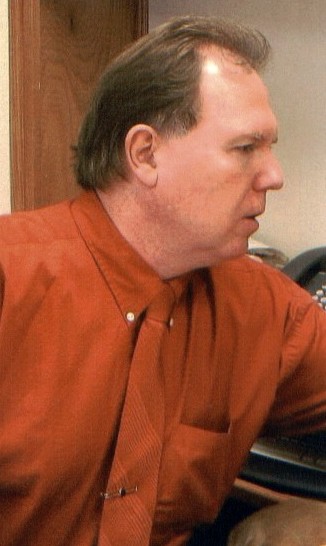
Its been a while, but I’m back.
The latest edition of the
Disability 411 podcast
is now available.
It features yours truly as the guest interviewer and the interviewee is
Stephen Kerr,
A disc jockey and Assistant Program Director at
KKMJ, Magic 95,
In Austin, TX.
The reason for the interview is the technology evolution across the radio industry regarding the adoption of tuchscreen computer programs to operate radio stations. You see, Stephen is blind, and the introduction of this type of technology could easily stop his career in its tracks if not for insightful adaptation. Check out the interview and see how Stephen has managed to stay abreast of the changes in his long-time profession and the accessibility he has implemented.
And, if you’d rather read the interview, rather than listen to the podcast, Beth, as always, has the
Episode transcript
Available as well.
Wednesday, March 25, 2009


Friday, February 20, 2009
Merging technologies is an accessibility solution to consider
Today, I’m sharing a technology pairing that is working well for both myself and the students I train on assistive technology.
For Christmas, I received an HP netbook, one of those slimmed down, ultralight notebook computers. It has a 16 GB solid state hard drive, making boot up and shutdown go faster than on a computer with a conventional hard drive. It weighs in a just under 2.5 pounds and has a 10-inch display screen. What It comes with is a 1 gig processor and 1 Gb of RAM, with 2 USB slots and an SD card reader. I also enjoy the built-in B/G WiFi and count this as a big addition to my personal computing experience.
What it doesn’t have is either a CD or DVD drive, which probably accounts for the trimmed weight and compact size. It does come with a recovery CD of the Windows XP Home operating system, just in case it ever crashes. To install the CD, though, will require using an external, USB disk drive. I don’t have one of these, but hope I won’t ever need one.
One of the best things on this HP model versus other makes is that the keyboard is 92% of the size of regular HP notebooks. That fuller size, versus mashed-together keyboards on other makes, really helps screen reader users who require a keyboard for operating the machine.
I’d heard that one could run a screen reader on these netbook computers and wanted to put that to the test. Being I’m a
JAWS
user by practice, I slapped the latest version of it on there and authorized it. It takes a little while for JAWS to start when booting up, but once it does, the machine runs along very well. My biggest hangup is getting used to the JAWS laptop configuration on this while using the desktop configuration at home. I recently purchased a USB keypad to let me use the more comfortable desktop configuration on this. I haven’t hooked that up yet, but will in the next few days.
Yes, with JAWS, This is a perfect road machine for me. When I travel and need a computer, I’ve got one that won’t break my back to carry. Neither did it break the bank, costing only $399. It does the primary tasks I want when away from home—surfing the net, email, and document writing. Any heavier jobs I wouldn’t usually do away from home anyways.
Still, I’ve also installed several of Jim Kitchens’
Kitchensinc games,
As well as some from other gamemakers, For my own entertainment. I use these myself, but also with the students I teach on assistive technology. I’ve yet to meet a blind or visually impaired student who knew that there were computer games made for folks who couldn’t see the screen. There are learning aspects to many of the games, but even for those which are just fun, these easily fall into the extended core curriculum.
The primary drawback of this netbook is that the battery only gives it about three hours of juice. I understand that HP is supposed to offer a supplemental 6-cell battery that will last longer than the current 3-cell model.
Aside from working well, this sleek, little thing looks great. My wife liked mine so much, she bought herself one, too.
Just this week, one of my students also received his own HP netbook, identical to mine. However, instead of using JAWS, he is using the thumb-drive version of
Serotek’s System Access Mobile,
Which is also running great for him.
My final comment on these netbooks is that, for blind students who need technology with a screen reader, they offer a very affordable alternative to the expensive, stand-alone electronic notetakers like the Pacmate or Voicenote, which run into the thousands of dollars. Granted, adding a screen reader like JAWS adds to the cost, but if you enroll your student in Serotek’s
KK-12 program,
That doesn’t need to be the case. The student will get a computer that gives the power of a full computer in a lightweight and easily-toted netbook that looks good to his/her peers. That also includes full Windows functionality, not the Windows Mobile version like on Pacmate. If there are additional programs that the student needs to run on the product, the compatibility will be near 100% on these as compared to to an “iffy” chance for compatibility on products like the Pacmate or Voicenote.
This post isn’t meant to slam those stand alone notetakers, but the more mainstream we can make products for our students, the better off they will be. Accessibility doesn’t need to come in a proprietary product., which has so often been the case in the past. Granted, Windows Mobile is better than a proprietary operating system, but it still isn't the full Windows package that one can get on a netbook.
For Christmas, I received an HP netbook, one of those slimmed down, ultralight notebook computers. It has a 16 GB solid state hard drive, making boot up and shutdown go faster than on a computer with a conventional hard drive. It weighs in a just under 2.5 pounds and has a 10-inch display screen. What It comes with is a 1 gig processor and 1 Gb of RAM, with 2 USB slots and an SD card reader. I also enjoy the built-in B/G WiFi and count this as a big addition to my personal computing experience.
What it doesn’t have is either a CD or DVD drive, which probably accounts for the trimmed weight and compact size. It does come with a recovery CD of the Windows XP Home operating system, just in case it ever crashes. To install the CD, though, will require using an external, USB disk drive. I don’t have one of these, but hope I won’t ever need one.
One of the best things on this HP model versus other makes is that the keyboard is 92% of the size of regular HP notebooks. That fuller size, versus mashed-together keyboards on other makes, really helps screen reader users who require a keyboard for operating the machine.
I’d heard that one could run a screen reader on these netbook computers and wanted to put that to the test. Being I’m a
JAWS
user by practice, I slapped the latest version of it on there and authorized it. It takes a little while for JAWS to start when booting up, but once it does, the machine runs along very well. My biggest hangup is getting used to the JAWS laptop configuration on this while using the desktop configuration at home. I recently purchased a USB keypad to let me use the more comfortable desktop configuration on this. I haven’t hooked that up yet, but will in the next few days.
Yes, with JAWS, This is a perfect road machine for me. When I travel and need a computer, I’ve got one that won’t break my back to carry. Neither did it break the bank, costing only $399. It does the primary tasks I want when away from home—surfing the net, email, and document writing. Any heavier jobs I wouldn’t usually do away from home anyways.
Still, I’ve also installed several of Jim Kitchens’
Kitchensinc games,
As well as some from other gamemakers, For my own entertainment. I use these myself, but also with the students I teach on assistive technology. I’ve yet to meet a blind or visually impaired student who knew that there were computer games made for folks who couldn’t see the screen. There are learning aspects to many of the games, but even for those which are just fun, these easily fall into the extended core curriculum.
The primary drawback of this netbook is that the battery only gives it about three hours of juice. I understand that HP is supposed to offer a supplemental 6-cell battery that will last longer than the current 3-cell model.
Aside from working well, this sleek, little thing looks great. My wife liked mine so much, she bought herself one, too.
Just this week, one of my students also received his own HP netbook, identical to mine. However, instead of using JAWS, he is using the thumb-drive version of
Serotek’s System Access Mobile,
Which is also running great for him.
My final comment on these netbooks is that, for blind students who need technology with a screen reader, they offer a very affordable alternative to the expensive, stand-alone electronic notetakers like the Pacmate or Voicenote, which run into the thousands of dollars. Granted, adding a screen reader like JAWS adds to the cost, but if you enroll your student in Serotek’s
KK-12 program,
That doesn’t need to be the case. The student will get a computer that gives the power of a full computer in a lightweight and easily-toted netbook that looks good to his/her peers. That also includes full Windows functionality, not the Windows Mobile version like on Pacmate. If there are additional programs that the student needs to run on the product, the compatibility will be near 100% on these as compared to to an “iffy” chance for compatibility on products like the Pacmate or Voicenote.
This post isn’t meant to slam those stand alone notetakers, but the more mainstream we can make products for our students, the better off they will be. Accessibility doesn’t need to come in a proprietary product., which has so often been the case in the past. Granted, Windows Mobile is better than a proprietary operating system, but it still isn't the full Windows package that one can get on a netbook.
Sunday, February 15, 2009
Kindle II offers text-to-speech promise, but Authors' Guild wants TTS turned off
It seems that as technology developers innovate, they also challenge old ways of thinking.
Case in point is the upcoming release of the
Kindle II E-book reader,
A second-generation technology product designed and sold exclusively by the online retail giant Amazon.
One of the innovations that the Kindle II has over its predecessor, and the one creating all the ruckus here, is the reader’s built-in text-to-speech (TTS) ability. While it is originally intended to give sighted readers the option to continue their reading indulgences when involved in activities such as driving, which would otherwise mean they would have to engage their eyes and hands elsewhere and stop their reading, enabling the TTS would allow them to continue reading right where they are. As anybody who uses TTS knows, the ability to take your reading material with you and keep on reading hands-free is a big plus.
So, what’s the problem you ask? It comes from the
Authors' Guild.
The union has thrown up a big protest, challenging that by using TTS on their writers’ printed materials, this effectively makes them audio books. The Guild asserts that Amazon has only paid for the E-book rights, not the audio book rights.
I’ve heard about the Kindle II’s TTS option for some time now, but only recently have I begun to look into it. Wouldn’t you know it, just when I begin to get interested, folks want to turn it off and make the device inaccessible.
Just hang up another “Blind folks not allowed” sign here!
And, the blasted thing isn’t even available yet. It won’t be shipped until February 24.
I’m not even certain if the Kindle II’s TTS is a full-functioning screen reader that would read the web pages and menus, which the user would need to access to order and download books onto the unit. However, if the Authors' Guild has anything to say about it, I might never find out.
Do these people really think readers want to listen to a synthetic, mechanical voice reading to them if they don’t have to? In this vein, I agree with
Susabelle
at the
Access Technologists Higher Education Network.
Amen, Susabelle. I use TTS in various forms, but when I read a book, give me a professional recording over the machine any day. My downloaded, digital books from the
National Library Service for the Blind and Physically Handicapped
are, without a doubt, my preferred medium for reading over anything on TTS. My Victor Stream could read any book from
Bookshare.org,
(if I paid to subscribe to this accessibility solution,) or any book I might scan into a MS-Word document, But those options would require me to listen to the TTS to read to me. If I can get the book from the NLS, though, where a person is actually reading the book on a digital recording, I’m there without a second thought.
The thing is, that not all books are available from either the NLS or Bookshare. Sometimes, especially with new releases, blind people, like anybody else, want to read a book when it is first released. If we can’t get it through our usual channels of accessible materials and want to pay our money, then why couldn’t we get it in an accessible digital format from Amazon? After all, I happily spend my money to get the latest audio book on CD when I just can't wait for an accessible copy. With the Kindle II, there is that potential, but not until the Writer’s Guild stops stifling innovation.
Perhaps it is the cost that the guild is looking at. E-books sell for less than audio books. I can't think of any new release on CD that sells for the price of any E-book. The guild isn't mincing words when it discusses revenue streams, so maybe that is what this is all about. If you want to listen to it, pay for the audio book.
Here’s to hoping that the Writers’ Guild gets their collective noses out of the old technology and understands the off-the-shelf accessibility promise that the Kindle II brings to the millions of Americans with print disabilities. I truly believe Amazon is on the right side of this argument, but that doesn’t mean they won’t cave to the writers’ demands to disable the TTS function on their books. After all, what good is an E-book reader without content? Fight the good fight Amazon and do the right thing here.
For further reading:
The National Federation of the Blind replies to the Authors' Guild.
Betanews: Is text-to-speech a threat to audiobooks ?
Kindle II F.A.Q page
Where they discuss “experimental technologies” such as the TTS, and that they plan to grow, not diminish these.
Case in point is the upcoming release of the
Kindle II E-book reader,
A second-generation technology product designed and sold exclusively by the online retail giant Amazon.
One of the innovations that the Kindle II has over its predecessor, and the one creating all the ruckus here, is the reader’s built-in text-to-speech (TTS) ability. While it is originally intended to give sighted readers the option to continue their reading indulgences when involved in activities such as driving, which would otherwise mean they would have to engage their eyes and hands elsewhere and stop their reading, enabling the TTS would allow them to continue reading right where they are. As anybody who uses TTS knows, the ability to take your reading material with you and keep on reading hands-free is a big plus.
So, what’s the problem you ask? It comes from the
Authors' Guild.
The union has thrown up a big protest, challenging that by using TTS on their writers’ printed materials, this effectively makes them audio books. The Guild asserts that Amazon has only paid for the E-book rights, not the audio book rights.
This presents a significant challenge to the publishing industry. Audiobooks surpassed $1 billion in sales in 2007; e-book sales are just a small fraction of that. While the audio quality of the Kindle 2, judging from Amazon's promotional materials, is best described as serviceable, it's far better than the text-to-speech audio of just a few years ago. We expect this software to improve rapidly.
We're studying this matter closely and will report back to you. In the meantime, we recommend that if you haven't yet granted your e-book rights to backlist or other titles, this isn't the time to start. If you have a new book contract and are negotiating your e-book rights, make sure Amazon's use of those rights is part of the dialog. Publishers certainly could contractually prohibit Amazon from adding audio functionality to its e-books without authorization, and Amazon could comply by adding a software tag that would prohibit its machine from creating an audio version of a book unless Amazon has acquired the appropriate rights. Until this issue is worked out, Amazon may be undermining your audio market as it exploits your e-books.
I’ve heard about the Kindle II’s TTS option for some time now, but only recently have I begun to look into it. Wouldn’t you know it, just when I begin to get interested, folks want to turn it off and make the device inaccessible.
Just hang up another “Blind folks not allowed” sign here!
And, the blasted thing isn’t even available yet. It won’t be shipped until February 24.
I’m not even certain if the Kindle II’s TTS is a full-functioning screen reader that would read the web pages and menus, which the user would need to access to order and download books onto the unit. However, if the Authors' Guild has anything to say about it, I might never find out.
Do these people really think readers want to listen to a synthetic, mechanical voice reading to them if they don’t have to? In this vein, I agree with
Susabelle
at the
Access Technologists Higher Education Network.
Being a provider of alternate format, I can tell you that no one wants to have to listen to the electronic voice of a text-to-speech conversion unless their disability requires it. Even the best voices still sound monotone, despite some of the recent advances in voice technology that have occurred. If you don't need text-to-speech, you won't be using it, I can pretty much guarantee. Listening to a book via text-to-speech technology is not the same as having an audio book. Audio books are highly produced, using a human reader. Most of us have experienced traditional audio books in one form or another. Text-to-speech, as good as it is, is not ever going to replace traditionally-produced audio books for the majority of listeners.
Amen, Susabelle. I use TTS in various forms, but when I read a book, give me a professional recording over the machine any day. My downloaded, digital books from the
National Library Service for the Blind and Physically Handicapped
are, without a doubt, my preferred medium for reading over anything on TTS. My Victor Stream could read any book from
Bookshare.org,
(if I paid to subscribe to this accessibility solution,) or any book I might scan into a MS-Word document, But those options would require me to listen to the TTS to read to me. If I can get the book from the NLS, though, where a person is actually reading the book on a digital recording, I’m there without a second thought.
The thing is, that not all books are available from either the NLS or Bookshare. Sometimes, especially with new releases, blind people, like anybody else, want to read a book when it is first released. If we can’t get it through our usual channels of accessible materials and want to pay our money, then why couldn’t we get it in an accessible digital format from Amazon? After all, I happily spend my money to get the latest audio book on CD when I just can't wait for an accessible copy. With the Kindle II, there is that potential, but not until the Writer’s Guild stops stifling innovation.
Perhaps it is the cost that the guild is looking at. E-books sell for less than audio books. I can't think of any new release on CD that sells for the price of any E-book. The guild isn't mincing words when it discusses revenue streams, so maybe that is what this is all about. If you want to listen to it, pay for the audio book.
Here’s to hoping that the Writers’ Guild gets their collective noses out of the old technology and understands the off-the-shelf accessibility promise that the Kindle II brings to the millions of Americans with print disabilities. I truly believe Amazon is on the right side of this argument, but that doesn’t mean they won’t cave to the writers’ demands to disable the TTS function on their books. After all, what good is an E-book reader without content? Fight the good fight Amazon and do the right thing here.
For further reading:
The National Federation of the Blind replies to the Authors' Guild.
Betanews: Is text-to-speech a threat to audiobooks ?
Kindle II F.A.Q page
Where they discuss “experimental technologies” such as the TTS, and that they plan to grow, not diminish these.
Friday, February 06, 2009
The library is now open: Google Books Mobile employs OCR and adds unintended accessibility
This latest bit of news is, well, hot off the press.
In
Google’s
on-going quest to make the world a more searchable place, and to make all discovered content available for viewing on whatever device one is using, whether that is a computer or mobile phone, the internet search giant has learned to embrace a tool of the assistive technology trade, namely optical character recognition, or OCR.
This all came about in Google Books latest quest to put
1.5 million books in your pocket.
What the fine folks at Google found when taking this endeavor mobile was that the page images Google Books serves up as pictures of individual pages on a computer are quite “unwieldy” on mobile phones. To solve the dilemma, they have employed OCR to extract the text of the book pages and display this content just as it would show any other web page.
And, in the above post, Google also clearly illustrates some of the inherent imperfections blind OCR users have known about for years. Yes, some times the text comes out as gibberish. It isn’t perfect, but it works more often than not.
So, here’s the really big news in all this. Even though it was an unintended result, Google Books has finally made its material accessible to blind screen reader users. And the best news in all this is that these folks don’t even have to be using the web on a mobile device with a screen reader. All they need to do is access the
Google Books Mobile site
I just tried it on my pc and it works great. I searched for Mark Twain and clicked on
A Connecticut Yankee in King Arthur’s Court.
While it took some time for Google to discover the added value of universal design, perhaps they can now begin to see it for the benefit that it truly is. If they had just used this OCR presentation method from the inception of Google Books, the “Blind Folks Not Allowed” sign wouldn’t have been necessary.
So, even though it was an unintended result, hat’s off to Google for finally bringing accessibility to Google Books. Yes, the library is now open.
In
Google’s
on-going quest to make the world a more searchable place, and to make all discovered content available for viewing on whatever device one is using, whether that is a computer or mobile phone, the internet search giant has learned to embrace a tool of the assistive technology trade, namely optical character recognition, or OCR.
This all came about in Google Books latest quest to put
1.5 million books in your pocket.
One of the great things about an iPhone or Android phone is being able to play Pacman while stuck in line at the post office. Sometimes though, we yearn for something more than just playing games or watching videos.
What if you could also access literature's greatest works, such as Emma and The Jungle Book, right from your phone? Or, some of the more obscure gems suchas Mark Twain's hilarious travelogue, Roughing It? Today we are excited to announce the launch of a mobile version of Google Book Search, opening up over 1.5 million mobile public domain books in the US (and over half a million outside the US) for you to browse while buying your postage.
While these books were already available on Google Book Search, these new mobile editions are optimized to be read on a small screen. To try it out and start reading, open up your web browser in your iphone or Android phone and go to
http://books.google.com/m.
What the fine folks at Google found when taking this endeavor mobile was that the page images Google Books serves up as pictures of individual pages on a computer are quite “unwieldy” on mobile phones. To solve the dilemma, they have employed OCR to extract the text of the book pages and display this content just as it would show any other web page.
And, in the above post, Google also clearly illustrates some of the inherent imperfections blind OCR users have known about for years. Yes, some times the text comes out as gibberish. It isn’t perfect, but it works more often than not.
So, here’s the really big news in all this. Even though it was an unintended result, Google Books has finally made its material accessible to blind screen reader users. And the best news in all this is that these folks don’t even have to be using the web on a mobile device with a screen reader. All they need to do is access the
Google Books Mobile site
I just tried it on my pc and it works great. I searched for Mark Twain and clicked on
A Connecticut Yankee in King Arthur’s Court.
While it took some time for Google to discover the added value of universal design, perhaps they can now begin to see it for the benefit that it truly is. If they had just used this OCR presentation method from the inception of Google Books, the “Blind Folks Not Allowed” sign wouldn’t have been necessary.
So, even though it was an unintended result, hat’s off to Google for finally bringing accessibility to Google Books. Yes, the library is now open.
SeroTalk at ATIA: bringing wide array of assistive technologies together
This information has been out on the web for about a week and I’m a little late writing about it, but the richness of the resources offered makes this worth even a delayed posting.
A week ago, the assistive technology professional trade group ATIA held its annual conference in Orlando. While attending there, Serotek’s
SeroTalk Blog
Set up recording equipment at a table to interview professionals from whichever company wanted to sit down and chat up their latest offerings.
What they put together was a compendium of resources that only rarely occurs—
35 Interviews from ATIA 2009.
Not only are there almost all of the usual big names in blindness-related assistive technology, (one obvious name is missing, see if you can figure out which one) but there were also several others that weren’t as well known. The blindness-related products run the gamut from screen readers to magnifiers, to the latest offerings from APH, and even some federal, state, and regional blindness resources.
What makes this collection stand out even more, though, is that while it was hosted by Serotek, a blindness-related technology company, they also included the following interviews that weren’t necessarily related to blindness:
Drive on, Serotek! Keep on bringing the different communities together and making things happen in the world of assistive technology.
A week ago, the assistive technology professional trade group ATIA held its annual conference in Orlando. While attending there, Serotek’s
SeroTalk Blog
Set up recording equipment at a table to interview professionals from whichever company wanted to sit down and chat up their latest offerings.
What they put together was a compendium of resources that only rarely occurs—
35 Interviews from ATIA 2009.
Not only are there almost all of the usual big names in blindness-related assistive technology, (one obvious name is missing, see if you can figure out which one) but there were also several others that weren’t as well known. The blindness-related products run the gamut from screen readers to magnifiers, to the latest offerings from APH, and even some federal, state, and regional blindness resources.
What makes this collection stand out even more, though, is that while it was hosted by Serotek, a blindness-related technology company, they also included the following interviews that weren’t necessarily related to blindness:
- * Dynavox discussing their interactive AAC speech generating devices
- * InfoGrip talking to listeners about keyboards, tracballs, and switches
- * Resna.org sharing about assistive technology act programs across the U.S.
- * UltraThera giving a Demo of PointScribe Software for Helping Persons to Improve Handwriting
- * ProxTalker sharing about their AAC devices to help people who can’t speak
- * Quilsoft giving a Demo of WordQ Predictive Text and SpeakQ Speech Recognition software
- * Jim Fruchterman Discussing a Project Called Raising The Floor to Create Universal Access
- * Talker Inc Augmentative Communications Device for the Speech-Impaired
Drive on, Serotek! Keep on bringing the different communities together and making things happen in the world of assistive technology.
Tuesday, February 03, 2009
Captioned Phone gives people with hearing impairments an accessible phone to use
I just love it when I hear about assistive technology in the mainstream media, not just on those usual online sites where I go to find this information. I mean, when you go to a web site dedicated to assistive technology and its use by people with disabilities, its not really any big surprise to learn about the latest tech innovation.
So, you can imagine my surprise on Sunday night when I heard an ad for a
Captioned Phone
In an ad on one of the local, Houston-area television stations.
Here’s the
ad that played.
Granted, what is being spoken in the ad isn’t a perfect description of everything that is being displayed on the screen, but even a blind dude like me can get the general message of what is going on during that ad. There was some additional print information from the ad that my wife read to me, but the information provided in the audio was pretty evident on describing the product. It basically uses voice recognition and speech-to-text technology to provide a real-time caption to the conversation the user is having.
On the web site, CapTel’s Benefits are described as:
If you’re interested in learning more about this revolutionary phone, check out this
video,
or read the
FAQ page.
While the ad I caught was sponsored by CapTel Texas and
Relay Texas,
There is also a
Availability page
To see where else this program can be found across the United States.
And, for you Texas residents, here’s a great final note:
So, you can imagine my surprise on Sunday night when I heard an ad for a
Captioned Phone
In an ad on one of the local, Houston-area television stations.
Here’s the
ad that played.
Granted, what is being spoken in the ad isn’t a perfect description of everything that is being displayed on the screen, but even a blind dude like me can get the general message of what is going on during that ad. There was some additional print information from the ad that my wife read to me, but the information provided in the audio was pretty evident on describing the product. It basically uses voice recognition and speech-to-text technology to provide a real-time caption to the conversation the user is having.
Ideal for people with some degree of hearing loss, the Captioned Telephone (CapTel) works like any other telephone with one important addition: It displays every word the caller says throughout the conversation. CapTel phone users can listen to the caller, and can also read the written captions in the CapTel's bright display window.
On the web site, CapTel’s Benefits are described as:
- Calls are made in a natural manner, simply dial the telephone number directly for the person you are calling
- Users enjoy natural telephone conversations, and can check the captions for added clarity
- Everyone can use the CapTel phone simply turn off the captions feature to use it as a traditional telephone
- Captions appear nearly simultaneously with the spoken words
- The CapTel phone includes an amplified handset and tone control for clarity
If you’re interested in learning more about this revolutionary phone, check out this
video,
or read the
FAQ page.
While the ad I caught was sponsored by CapTel Texas and
Relay Texas,
There is also a
Availability page
To see where else this program can be found across the United States.
And, for you Texas residents, here’s a great final note:
Texas residents may qualify to receive a free CapTel telephone through the state’s Special Telecommunications Assistance Program (STAP). Or, Texas residents can purchase a CapTel phone directly.
New project lets users share Braille books
It makes sense that people who create something would prefer to see its use maximized and not limited to only one user. It also makes ecological sense that we should recycle where we can.
With those two points in mind, there is now
NFBShareBraille.org,
A web repository for the free exchange of Braille materials, sponsored, obviously enough, by the
National Federation of the Blind
Yes, that did say you could request a title as well as offer up what you have. I like that mentality. There’s no need to duplicate the effort if its already done.
And, yes, it did say you have to register for an account, but that’s free and relatively painless.
So, if you have material that is already Brailled and no longer needed, or want to see if a book you need is already available, get on over to the NFBShareBraille site and check it out.
Thanks to the folks at
Blind Bargains
for sharing this useful information.
With those two points in mind, there is now
NFBShareBraille.org,
A web repository for the free exchange of Braille materials, sponsored, obviously enough, by the
National Federation of the Blind
NFB ShareBraille is a free service provided by the National Federation of the Blind to promote the use and vitality of Braille. To trade your Braille books or to request books from other NFB ShareBraille users, simply create a free account and start exploring the available titles.”
Yes, that did say you could request a title as well as offer up what you have. I like that mentality. There’s no need to duplicate the effort if its already done.
And, yes, it did say you have to register for an account, but that’s free and relatively painless.
So, if you have material that is already Brailled and no longer needed, or want to see if a book you need is already available, get on over to the NFBShareBraille site and check it out.
Thanks to the folks at
Blind Bargains
for sharing this useful information.
Friday, January 30, 2009
Stem cell treatment reverses MS in study group
There is some very encouraging news in the stem cell newsfront.
In a recent study at Northwestern University in Chicago, patients with multiple sclerosis received treatement with their own stem cells, and
Reversed their disability.
This procedure did not use the controversial, embryonic stem cells, but instead gathered stem cells from the very patient they were later used on.
This is great news, indeed. Let’s hope this success sparks further research and innovation.
In a recent study at Northwestern University in Chicago, patients with multiple sclerosis received treatement with their own stem cells, and
Reversed their disability.
This procedure did not use the controversial, embryonic stem cells, but instead gathered stem cells from the very patient they were later used on.
All 21 patients in the study had the “relapsing-remitting” form of the disease that makes their symptoms alternately flare up and recede. Three years after being treated, on average, 17 of the patients had improved on tests of their symptoms, 16 had experienced no relapse and none had deteriorated, the study found.
“This is the first study to actually show reversal of disability,” said Richard Burt, an associate professor in the division of immunotherapy at Northwestern, and the lead author of the study published Thursday in the British journal, the Lancet Neurology. “Some people had complete disappearance of all symptoms.”
This is great news, indeed. Let’s hope this success sparks further research and innovation.
On paydays and light bulbs
I’ve been working with a group of kids now for a period of roughly two months. Most of what I’ve been doing is teaching them how to use the JAWS screen reader, although I know there are many other fine points I’m overlooking if I say that’s all I’ve been doing with them. I have also demonstrated for each of them what the Victor Reader Stream is, and how this versatile media player can assist them in day-to-day activities. I’ve also introduced them to DVS movies and computer games for the blind, mostly those from Jim Kitchens’
Kitchensinc
Web Site.
There is more to come and I'm learning as well as the kids are. I am learning the keystroke commands for Serotek's
System Access Mobile
screen reader so that I can teach them how to use this as well. As the students turn in their application forms, they are getting their own jump drive versions of the System Access Mobile screen reader as part of Serotek's Keys for K-12 program.
The experience of teaching and empowering these young minds is incredible. I don’t think the students realize just how much they give back to me, but they pay me in denominations beyond words or anything of monetary value. It is so beautiful when the lesson we’ve been working on comes together for the student and that light bulb clicks for them. It just warms my heart each time this happens and I’ve been getting warm-hearted a lot lately. Its like the assistive technology professional I work with tells me, Today was payday and you just got paid.”
I was working with one of my elementary school boys yesterday on a lesson involving editing a document. He was learning where to place the curser to insert a letter in a word. Instead of putting it on the letter in front of which he wanted to insert the text, he would put the cursor on the letter he wanted the text to follow. Needless to say, he was getting a little frustrated. He was undaunted though, and kept trudging through the lesson, putting the pieces into place and finally finished the document just like it needed to be. It was beautiful to see that whole process happen.
While he was doing this, I was sitting back, coaching him, just grinning ear-to-ear as I witnessed learning in action. I told him that he was learning what to do as well as what not to do and attempted to illustrate with the story of Thomas Edison. I asked him if he knew who Edison was and he replied, Isn’t he the man who invented electricity, or was that Ben Franklin?” Then he went back to editing his document.
I grinned and then shared the story about how many times Edison had to work at inventing the light bulb. When a reporter asked Edison how it felt to fail so many different times, his reply to the reporter was, “ I didn’t fail those times. I just learned that many ways that the bulb didn’t work, which led me to figure out how to make it the right way.” (I wasn’t sure of the exact quote, but was paraphrasing in an attempt to illustrate the learning aspect for my student.)
Then, this boy told me, “Yeah, but he was just inventing the light bulb. He wasn’t trying to write a document like I am.”
Ka-ching! I just got paid again.
If you can’t tell, I love this job.
Kitchensinc
Web Site.
There is more to come and I'm learning as well as the kids are. I am learning the keystroke commands for Serotek's
System Access Mobile
screen reader so that I can teach them how to use this as well. As the students turn in their application forms, they are getting their own jump drive versions of the System Access Mobile screen reader as part of Serotek's Keys for K-12 program.
The experience of teaching and empowering these young minds is incredible. I don’t think the students realize just how much they give back to me, but they pay me in denominations beyond words or anything of monetary value. It is so beautiful when the lesson we’ve been working on comes together for the student and that light bulb clicks for them. It just warms my heart each time this happens and I’ve been getting warm-hearted a lot lately. Its like the assistive technology professional I work with tells me, Today was payday and you just got paid.”
I was working with one of my elementary school boys yesterday on a lesson involving editing a document. He was learning where to place the curser to insert a letter in a word. Instead of putting it on the letter in front of which he wanted to insert the text, he would put the cursor on the letter he wanted the text to follow. Needless to say, he was getting a little frustrated. He was undaunted though, and kept trudging through the lesson, putting the pieces into place and finally finished the document just like it needed to be. It was beautiful to see that whole process happen.
While he was doing this, I was sitting back, coaching him, just grinning ear-to-ear as I witnessed learning in action. I told him that he was learning what to do as well as what not to do and attempted to illustrate with the story of Thomas Edison. I asked him if he knew who Edison was and he replied, Isn’t he the man who invented electricity, or was that Ben Franklin?” Then he went back to editing his document.
I grinned and then shared the story about how many times Edison had to work at inventing the light bulb. When a reporter asked Edison how it felt to fail so many different times, his reply to the reporter was, “ I didn’t fail those times. I just learned that many ways that the bulb didn’t work, which led me to figure out how to make it the right way.” (I wasn’t sure of the exact quote, but was paraphrasing in an attempt to illustrate the learning aspect for my student.)
Then, this boy told me, “Yeah, but he was just inventing the light bulb. He wasn’t trying to write a document like I am.”
Ka-ching! I just got paid again.
If you can’t tell, I love this job.
Tuesday, January 20, 2009
Blind Bargains 2009 Access Awards voting underway-- go vote
For those who don’t know about
Blind Bargains,
The regularly updated and very useful web site list daily deals of interest to those of us who are blind and into technology. I receive their daily email update, but they also offer an RSS feed to keep readers updated of the latest deals.
Besides just listing great deals on tech-related issues, last year the Blind Bargains folks began awarding the Access Awards. They kicked it off by first asking for reader input on a variety of categories regarding blind technology and access. The categories included best software, hardware, web site, blog, and others.
Well, that was last year and the sophomore nomination process is over. It is now time for the voting round in the second annual Blind BargainsAccess Awards.
I am very humbled and proud to find Access Ability nominated for best blindness-related blog. I would sincerely appreciate it if you would go to the
Voting Round page
And cast your vote for Access Ability as the best blog.
The other nominated blogs are almost all names which regular readers have seen referenced as sources of information here on Access Ability. They are blogs that I read regularly and whose authors I regard with utmost esteem. So, it is truly an honor to be grouped with these blogs which are very well respected within the blind community. I am proud to be mentioned worthy of hanging with these guys:
Blind Access Journal,
Fred’s Head Companion,
Mobile Space,
and
The Ranger Station.
And, aside from just voting for the best blog, please take the time to cast your vote for the other categories as well.
Blind Bargains,
The regularly updated and very useful web site list daily deals of interest to those of us who are blind and into technology. I receive their daily email update, but they also offer an RSS feed to keep readers updated of the latest deals.
Besides just listing great deals on tech-related issues, last year the Blind Bargains folks began awarding the Access Awards. They kicked it off by first asking for reader input on a variety of categories regarding blind technology and access. The categories included best software, hardware, web site, blog, and others.
Well, that was last year and the sophomore nomination process is over. It is now time for the voting round in the second annual Blind BargainsAccess Awards.
I am very humbled and proud to find Access Ability nominated for best blindness-related blog. I would sincerely appreciate it if you would go to the
Voting Round page
And cast your vote for Access Ability as the best blog.
The other nominated blogs are almost all names which regular readers have seen referenced as sources of information here on Access Ability. They are blogs that I read regularly and whose authors I regard with utmost esteem. So, it is truly an honor to be grouped with these blogs which are very well respected within the blind community. I am proud to be mentioned worthy of hanging with these guys:
Blind Access Journal,
Fred’s Head Companion,
Mobile Space,
and
The Ranger Station.
And, aside from just voting for the best blog, please take the time to cast your vote for the other categories as well.
Monday, January 12, 2009
Guided by Love-- A Seeing Eye dog owner recounts her first
Everybody who knows me knows that I travel with a Seeing Eye dog. Hence, I have a good understanding and great compassion for these wonderful animals, as well as the legal aspects that ensure our access in the United States.
With that in mind, I want to share an article with you. In
Guided by love: A reporter recalls life with Bates, a Seeing Eye dog,
Liz Campbell recalls her first dog from The Seeing Eye. She describes in heartfelt detail, what the process was like for her to initially decide to get a guide dog, her years with her golden retriever Bates, and transitioning through the decision making process involved to get her new dog.
Liz is a government affairs reporter for the Fort Worth Star-Telegram. I first heard of her when she made a presentation at the state convention of the National Federation of the Blind several years ago. I listened as she gave a recount of what life was like for a journalism student who was blind attending Baylor University back in the days before word processors. I clearly recall the incident where she described the time when she turned in a lengthy article that numbered several typed pages, right at deadline,, only to be told that all the pages were blank. What had happened was that her typewriter’s ink ribbon had run out and, being blind, she didn’t notice that important detail.
I also met Liz a couple of years ago at the
Come Walk in Our Shoes
event, which I reported on here on Access Ability. Liz was there demonstrating the original KNFB Reader.
On apersonal note, I just recently found out that Liz was in class with my friend
Wayne Merritt,
When she was in Morristown training with her second Seeing Eye dog.
Anybody who has experienced the wonders and emotions involved in the process of getting a guide dog can certainly appreciate the tale, or should that be “tail,” of Bates. Liz’s professional talents for reporting shine through in good form as she candidly shares the feelings, thoughts, and even doubts that come to mind when pondering this process. Go back and click the link to read her entire article.
Or, if you prefer, there is also the
full version of the article,
with accompanying video and audio files that supplement her written words.
With that in mind, I want to share an article with you. In
Guided by love: A reporter recalls life with Bates, a Seeing Eye dog,
Liz Campbell recalls her first dog from The Seeing Eye. She describes in heartfelt detail, what the process was like for her to initially decide to get a guide dog, her years with her golden retriever Bates, and transitioning through the decision making process involved to get her new dog.
I tried to keep a normal routine that day — doing errands before work and walking to a restaurant for lunch. But my day was filled with tears. It was especially hard when friends came to my desk to tell Bates goodbye.
It was also, though, a day full of anticipation. I was getting a new dog soon. In fact, the next day, I was leaving for the Seeing Eye training facility, in Morristown, N.J.
I thought about a new dog and what he might be like. Could I trust him to guide me safely, as did Bates? Could I ever love him as much as I love Bates?
Liz is a government affairs reporter for the Fort Worth Star-Telegram. I first heard of her when she made a presentation at the state convention of the National Federation of the Blind several years ago. I listened as she gave a recount of what life was like for a journalism student who was blind attending Baylor University back in the days before word processors. I clearly recall the incident where she described the time when she turned in a lengthy article that numbered several typed pages, right at deadline,, only to be told that all the pages were blank. What had happened was that her typewriter’s ink ribbon had run out and, being blind, she didn’t notice that important detail.
I also met Liz a couple of years ago at the
Come Walk in Our Shoes
event, which I reported on here on Access Ability. Liz was there demonstrating the original KNFB Reader.
On apersonal note, I just recently found out that Liz was in class with my friend
Wayne Merritt,
When she was in Morristown training with her second Seeing Eye dog.
Anybody who has experienced the wonders and emotions involved in the process of getting a guide dog can certainly appreciate the tale, or should that be “tail,” of Bates. Liz’s professional talents for reporting shine through in good form as she candidly shares the feelings, thoughts, and even doubts that come to mind when pondering this process. Go back and click the link to read her entire article.
Or, if you prefer, there is also the
full version of the article,
with accompanying video and audio files that supplement her written words.
Sunday, January 04, 2009
Google engineer Raman addressing blind accessibility on touch screen phones
I’ve previously railed here about the inaccessibility of the iPhone, due to the whizbang Apple product’s touch screen not having any features that make the much-ballyhooed gadget usable by blind folks. Maybe my approach to touch screen phones was all wrong. Instead of knocking the innovation, I should’ve embraced it.
At least, that’s what
T. V. Raman has done.
From the New York Times article linked above:
So then, the question comes to mind, if he can’t see the touch screen, then how does he know where to correctly touch it to make a call?
This is truly the insight that needs to be applied to touch screen phones, and should have applications that can be carried over to other touch screen devices that are ubiquitous and becoming more and more commonplace around households and businesses everyday.
Those in the blind technology circles might know who T. V. Raman is, but many don’t. For those of you who don’t, let me shed a bit of light. Mr. Raman is a computer scientist and engineer at
Google.
He is also blind due to glaucoma and And is behind several aspects of accessibility at the online search and advertising behemoth. He has a history of creating accessibility in existing products, including pdf documents for Adobe Acrobat.
I’ve read a good bit about Mr. Raman over the past few years, but this is, by far, the most interesting news to me. The reason why is the ondslaught of touch screens coming down the pike in the future of our everyday lives. If they can innovate and make this aspect of daily living more accessible, which I see becoming more and more integrated into our lives, then I’m all for it.
At least, that’s what
T. V. Raman has done.
From the New York Times article linked above:
Some of Mr. Raman’s innovations may help make electronic gadgets and Web services more user-friendly for everyone. Instead of asking how something should work if a person cannot see, he says he prefers to ask, “How should something work when the user is not looking at the screen?”
With no buttons to guide the fingers on its glassy surface, the touch-screen cellphone may seem a particularly daunting challenge. But Mr. Raman said that with the right tweaks, touch-screen phones — many of which already come equipped with GPS technology and a compass — could help blind people navigate the world.
So then, the question comes to mind, if he can’t see the touch screen, then how does he know where to correctly touch it to make a call?
Since he cannot precisely hit a button on a touch screen, Mr. Raman created a dialer that works based on relative positions. It interprets any place where he first touches the screen as a 5, the center of a regular telephone dial pad. To dial any other number, he simply slides his finger in its direction — up and to the left for 1, down and to the right for 9, and so on. If he makes a mistake, he can erase a digit simply by shaking the phone, which can detect motion.
He and Mr. Chen are testing several other input methods. None of these technologies have been rolled out, but Mr. Raman, who is already using the G1 as his primary cellphone, hopes to make them freely available soon.
(Few screen readers are available for smartphones today, and they can often cost as much as a phone itself.)
This is truly the insight that needs to be applied to touch screen phones, and should have applications that can be carried over to other touch screen devices that are ubiquitous and becoming more and more commonplace around households and businesses everyday.
Those in the blind technology circles might know who T. V. Raman is, but many don’t. For those of you who don’t, let me shed a bit of light. Mr. Raman is a computer scientist and engineer at
Google.
He is also blind due to glaucoma and And is behind several aspects of accessibility at the online search and advertising behemoth. He has a history of creating accessibility in existing products, including pdf documents for Adobe Acrobat.
I’ve read a good bit about Mr. Raman over the past few years, but this is, by far, the most interesting news to me. The reason why is the ondslaught of touch screens coming down the pike in the future of our everyday lives. If they can innovate and make this aspect of daily living more accessible, which I see becoming more and more integrated into our lives, then I’m all for it.
Saturday, December 20, 2008
Ginger Spell on Disability 411
Several years ago, I read a passage that has stuck with me and become my own day-to-day mantra: “There are no mistakes in life, only lessons. It is only when we fail to learn the lesson that a mistake occurs.”
That thought also echoes the adage of, “If you always do what you always did, you always get what you always got.”
With those ideas in mind, let me ask a question. What do we learn from proofreading with a spellchecker? When we use most spellcheckers, we get the screen popping up the correct spelling of words, one word at a time, with no real feedback on what we’re doing wrong. If we’re not learning from our mistakes, er lessons, then we are destined to repeat them.
So, how about a spellchecker designed not to look at just the single word and be a preventative measure, like most are today, but instead, looks at the whole sentence and contextual use of the word, and seeks to teach the user where he is making errors?
And, what if this novel idea worked as a plug in for Microsoft Word, easily the most-used word processing program?
And, best yet, what if it were free?
If this sounds like an interesting tool, then check out the latest episode of the
Disability 411 podcast.
In Episode 58, Beth interviews Miki Feldman-Simon of
Ginger Software,
The company which has developed Ginger Spell, the very spellchecker that I just described above. It is marketed for being a “new technology for people with dyslexia.”
The learning of lessons comes in reports that Ginger Spell will generate. This is where Ginger Spell is different by offering lessons, not mistakes. The user can learn where and how he is creating errors and, once these areas are identified, can work to fix these in the future.
To use the Ginger Spell plug in, the user will need to set up a log in account. That lets the program generate the individual report for that particular user, which can make this a very useful tool for university writing labs, or even for student computers operated by the DSO.
Does this sound like an interesting tool? Check out the link above for the D411 show for more of the interview with Miki. Also, go to the Ginger Software page to download and try out Ginger Spell for yourself.
And, remember…, no more mistakes, only lessons.
That thought also echoes the adage of, “If you always do what you always did, you always get what you always got.”
With those ideas in mind, let me ask a question. What do we learn from proofreading with a spellchecker? When we use most spellcheckers, we get the screen popping up the correct spelling of words, one word at a time, with no real feedback on what we’re doing wrong. If we’re not learning from our mistakes, er lessons, then we are destined to repeat them.
So, how about a spellchecker designed not to look at just the single word and be a preventative measure, like most are today, but instead, looks at the whole sentence and contextual use of the word, and seeks to teach the user where he is making errors?
And, what if this novel idea worked as a plug in for Microsoft Word, easily the most-used word processing program?
And, best yet, what if it were free?
If this sounds like an interesting tool, then check out the latest episode of the
Disability 411 podcast.
In Episode 58, Beth interviews Miki Feldman-Simon of
Ginger Software,
The company which has developed Ginger Spell, the very spellchecker that I just described above. It is marketed for being a “new technology for people with dyslexia.”
It doesn’t correct just spelling mistakes. It also corrects misused words, basically words that are spelled correctly but not in that context. How we do it is we look at the context of the sentence. The software uses breakthrough technology that looks at the context of each sentence and works out what the writer or the user was trying to write according to the context.
At the moment we correct spelling and misused words, but in the beginning of next year we’ll also be correcting grammatical errors which will make a huge difference to people making not just spelling mistakes but say, people for whom English is a second language who make a lot of grammatical errors.
What the software also does by correcting the whole sentence, it’s making the whole way people work a lot more efficient. Instead of going back and looking word by word, it is much faster to correct full sentences. So, if it takes someone an hour to write, and this is the feedback we’re getting from users right now, instead of it taking them a half an hour or an hour to write a few sentences before, it’s very quick and very efficient. you click one button and it corrects all of the mistakes within that sentence. You click another button, it corrects all the misused words and you just continue working.
It’s just a much better way to use the time and the accuracy is a lot higher than any other spell checker. If you really have difficulty writing and you make unusual spelling mistakes, which a lot of people who have learning difficulties or who have dyslexia do, normal spell checkers can’t correct the unusual mistakes that they make. Our software, because it looks at the context of the sentence can correct these unusual mistakes at the sentence level. It’s much more accurate and it’s much faster and easier to use.
The learning of lessons comes in reports that Ginger Spell will generate. This is where Ginger Spell is different by offering lessons, not mistakes. The user can learn where and how he is creating errors and, once these areas are identified, can work to fix these in the future.
To use the Ginger Spell plug in, the user will need to set up a log in account. That lets the program generate the individual report for that particular user, which can make this a very useful tool for university writing labs, or even for student computers operated by the DSO.
Does this sound like an interesting tool? Check out the link above for the D411 show for more of the interview with Miki. Also, go to the Ginger Software page to download and try out Ginger Spell for yourself.
And, remember…, no more mistakes, only lessons.
Friday, December 12, 2008
Developers of WebAnywhere screen reader recognized for technology collaboration
Hopefully, the following recognition will allow insight to continue.
The 3rd annual Mellon Awards for Technology Collaboration (MATC) recognized the great work going on at the University of Washington on
WebAnywhere,
The cross-platform, cross-browser, web-based screen reader on the go.
The MATC recognition provides a $50,000 award to the university, which will hopefully be used for the continued work on this insightful, open source software.
If you’re interested in trying out this innovative and evolving assistive technology , go to the official
WebAnywhere home page.
And, in case you missed it, a few months ago, I interviewed
Jefferey Bigham,
the contact person for WebAnywhere, several months ago here on Access Ability.
The 3rd annual Mellon Awards for Technology Collaboration (MATC) recognized the great work going on at the University of Washington on
WebAnywhere,
The cross-platform, cross-browser, web-based screen reader on the go.
The MATC recognition provides a $50,000 award to the university, which will hopefully be used for the continued work on this insightful, open source software.
If you’re interested in trying out this innovative and evolving assistive technology , go to the official
WebAnywhere home page.
And, in case you missed it, a few months ago, I interviewed
Jefferey Bigham,
the contact person for WebAnywhere, several months ago here on Access Ability.
Friday, December 05, 2008
Personal update
Sorry about the lack of posts of late. Aside from the Thanksgiving week break, during which I was gone for a 6-day cruise with my family, I’m also working on a couple of projects. Both of these undertakings are similar in that they involve me teaching assistive technology.
First, I have recently begun working with a local school district to teach their blind and visually impaired students how to use the JAWS screen reader and some other assistive technologies in which I’m well versed in. I’m so impressed with the range of skills the students possess, not to mention their desire to learn. I’m doing this a couple of days a week with students from elementary to high school age. The teachers and administrators keep thanking me for doing this, but I keep feeling that I should thank me for being able to contribute to the education of these kids. Maybe I’m idealistic, but what I teach them might be the very skill that helps them excel in college or land that job they want. Only time will tell what dividends are realized out of my time investment with these students.
The second undertaking I’ve been working on is a structured curriculum for teaching VI professionals on how to teach their students how to use JAWS. I was contacted a couple of weeks ago by a VI professional from another school district. He asked if I could teach him and a fellow colleague on how to instruct their students on this. He said that they have to know several different technologies to fit a variety of skill sets and visual acuities, but doing this usually means being a jack of all trades and master of none. To teach JAWS, though, one must have more of a skill level than what they have and he said that the practical experience I have is a very sought after skill.
Doing both of these teaching projects has sparked an inspired fire within me. Using JAWS and other assistive technologies are skills I’ve learned out of necessity, but mastering these and staying up to date on latest innovations in assistive technology was a self serving method for me to maximize my experience and abilities. However, I’ve realized that I have become a resource on using various technologies that many of my friends who are also users of these turn to when they need help or looking at purchasing new equipment. It is that realization mixed with a desire to help that have pushed me to embark on my latest efforts.
The down side of all this is that I’m winding up with less time to write here on Access Ability. Don’t worry, though. I’m still here and will be tending this fire as well. It may be a bit less frequent, but writing here will definitely be something I continue. After all, it was a passion to share resources that drove me to begin this blog in the first place, and that fire still burns.
I just feel that I needed to let regular readers of this blog understand why I’ve been a bit absent of late.
More soon…
First, I have recently begun working with a local school district to teach their blind and visually impaired students how to use the JAWS screen reader and some other assistive technologies in which I’m well versed in. I’m so impressed with the range of skills the students possess, not to mention their desire to learn. I’m doing this a couple of days a week with students from elementary to high school age. The teachers and administrators keep thanking me for doing this, but I keep feeling that I should thank me for being able to contribute to the education of these kids. Maybe I’m idealistic, but what I teach them might be the very skill that helps them excel in college or land that job they want. Only time will tell what dividends are realized out of my time investment with these students.
The second undertaking I’ve been working on is a structured curriculum for teaching VI professionals on how to teach their students how to use JAWS. I was contacted a couple of weeks ago by a VI professional from another school district. He asked if I could teach him and a fellow colleague on how to instruct their students on this. He said that they have to know several different technologies to fit a variety of skill sets and visual acuities, but doing this usually means being a jack of all trades and master of none. To teach JAWS, though, one must have more of a skill level than what they have and he said that the practical experience I have is a very sought after skill.
Doing both of these teaching projects has sparked an inspired fire within me. Using JAWS and other assistive technologies are skills I’ve learned out of necessity, but mastering these and staying up to date on latest innovations in assistive technology was a self serving method for me to maximize my experience and abilities. However, I’ve realized that I have become a resource on using various technologies that many of my friends who are also users of these turn to when they need help or looking at purchasing new equipment. It is that realization mixed with a desire to help that have pushed me to embark on my latest efforts.
The down side of all this is that I’m winding up with less time to write here on Access Ability. Don’t worry, though. I’m still here and will be tending this fire as well. It may be a bit less frequent, but writing here will definitely be something I continue. After all, it was a passion to share resources that drove me to begin this blog in the first place, and that fire still burns.
I just feel that I needed to let regular readers of this blog understand why I’ve been a bit absent of late.
More soon…
Thursday, November 20, 2008
Leader Dogs giving away Trekker Breeze
How would you like a chance to win a Trekker Breeze?
In an effort to promote its Trekker Breeze training initiative, which incorporates the functionality of GPS with orientation and mobility skills,
Leader Dogs for the Blind,
Is giving away a Trekker Breeze.
In addition to the contest, Leader Dogs is also featuring both trainer and student blogs where the writers will chronicle their Trekker Breeze experiences on the Rochester, Minnesota guide dog school's web site.
The drawing is open to everybody, not just Leader Dog students. There is also a brief survey to inquire what drew participants to the post. To enter, go to the official
contest web site.
The drawing will take place on Dec. 19, 2008 and the winner will be notified by email.
For the uninformed, the Trekker Breeze is a lite version of Trekker, the powerful accessible GPS navigation system, manufactured and solde by the assistive technology company
Humanware.
When I trained with Boise, my current dog from
The Seeing Eye,
my training partner was a big user of various assistive technologies. He traveled to Morristown with two suitcases, one of which was nothing but his gadget bag. One of these gadgets was the original Trekker, which he insisted I check out on one of our walks in town.
The information Trekker provided was incredible. It told me of so many different shops and street demarkations that I never knew about, even with the robust information provided by several trainers on the same route. If the Trekker Breeze gives the same user feedback with as much eas of use, it will be a great prize to whomever wins it. Hopefully, that will be me!
In an effort to promote its Trekker Breeze training initiative, which incorporates the functionality of GPS with orientation and mobility skills,
Leader Dogs for the Blind,
Is giving away a Trekker Breeze.
In addition to the contest, Leader Dogs is also featuring both trainer and student blogs where the writers will chronicle their Trekker Breeze experiences on the Rochester, Minnesota guide dog school's web site.
The drawing is open to everybody, not just Leader Dog students. There is also a brief survey to inquire what drew participants to the post. To enter, go to the official
contest web site.
The drawing will take place on Dec. 19, 2008 and the winner will be notified by email.
For the uninformed, the Trekker Breeze is a lite version of Trekker, the powerful accessible GPS navigation system, manufactured and solde by the assistive technology company
Humanware.
Trekker Breeze offers the important benefits of GPS orientation tools. It enhances independence and confidence in travelling. Users can record routes as they walk them with sighted assistance. Routes can then be previewed and activated for future use. As they walk by, users receive audible information such as street names, intersections and reference landmarks. In case they are lost, they can retrace their steps. They can also reach favorite destinations with turn by turn instructions from their current position. The product makes it easier to travel alone and allows people to discover and enjoy their surroundings.
When I trained with Boise, my current dog from
The Seeing Eye,
my training partner was a big user of various assistive technologies. He traveled to Morristown with two suitcases, one of which was nothing but his gadget bag. One of these gadgets was the original Trekker, which he insisted I check out on one of our walks in town.
The information Trekker provided was incredible. It told me of so many different shops and street demarkations that I never knew about, even with the robust information provided by several trainers on the same route. If the Trekker Breeze gives the same user feedback with as much eas of use, it will be a great prize to whomever wins it. Hopefully, that will be me!
Wednesday, November 12, 2008
Blind Planet aims to be one-stop blindness resource
If you’re interested in news, products, and information specific to blindness, you might want to bookmark the
Blind Planet
Web site, which bills itself as, “The best blind community on the net,.”
I first learned about the site because somebody read a blog post here by clicking on a link originating on the Blind Planet site. Intrigued and curious, I checked it out. After perusing the site and its
News Aggregator
I added it to my own RSS feeds.
Besides my own blog feed, the Blind Planet News Aggregator includes feeds from several of my regular favorites, including
Blind Bargains,
Blind Cool Tech Podcast,
Fred’s Head Companion,
The Ranger Station,
Top Tech Tidbits for Thursday,
And
Wayne’s blog.
For me, the News Aggregator does meet its intended mission of being that one-stop resource, at least for reading my favorite blindness related blogs and web sites.
See if it does the same for you.
Blind Planet
Web site, which bills itself as, “The best blind community on the net,.”
“Our mission is to provide the world with a one-stop resource for blindness-related information, podcasts, tutorials, mailing lists, web sites, and almost anything else that would be useful to the blind community.”
Welcome to The Blind Planet! The Blind Planet is a rapidly-growing web site that offers a lot of valuable information for the blind community, and / or for those people who are interested in learning about blindness and how blind people go about their daily lives. Regardless of whether you are blind, sighted, a novice or a professional at technology, or are just searching for help and / or information on a particular topic, you will definitely find the Blind Planet to be one of your favorite web sites very quickly.
I first learned about the site because somebody read a blog post here by clicking on a link originating on the Blind Planet site. Intrigued and curious, I checked it out. After perusing the site and its
News Aggregator
I added it to my own RSS feeds.
Besides my own blog feed, the Blind Planet News Aggregator includes feeds from several of my regular favorites, including
Blind Bargains,
Blind Cool Tech Podcast,
Fred’s Head Companion,
The Ranger Station,
Top Tech Tidbits for Thursday,
And
Wayne’s blog.
For me, the News Aggregator does meet its intended mission of being that one-stop resource, at least for reading my favorite blindness related blogs and web sites.
See if it does the same for you.
Tuesday, November 11, 2008
AccessApps offers free assistive technology applications to run on USB jump drive
(Thanks to the
Fred’s Head Companion
for the following assistive technology resource.)
AccessApps
is a site that has more than 50 assistive technology and learning applications. The beauty of this site is that these titles will all run on any computer, directly from a USB jump drive with no need to install software on the host computer.
The site, based in Scotland, will allow you to select the various software applications and download them in one suite. There are even step-by-step tutorials and video guides on the site’s “Help” page to get you up and running.
What are you waiting for? Go get ‘em!
Fred’s Head Companion
for the following assistive technology resource.)
AccessApps
is a site that has more than 50 assistive technology and learning applications. The beauty of this site is that these titles will all run on any computer, directly from a USB jump drive with no need to install software on the host computer.
The site, based in Scotland, will allow you to select the various software applications and download them in one suite. There are even step-by-step tutorials and video guides on the site’s “Help” page to get you up and running.
AccessApps is an initiative developed by the Scottish JISC Regional Support Centres in cooperation with
JISC TechDis
. It consists of over 50 open source and freeware assistive technology applications which can be entirely used from a USB stick on a Windows computer (
here is a full list of applications on offer).
AccessApps will run without needing to install anything on a computer and provide a range of e-learning solutions to support writing, reading and planning as well as visual and mobility difficulties.
What are you waiting for? Go get ‘em!
Friday, November 07, 2008
Interview on No Limits 2 Learning Live
Pardon me, but its time for a little self promotion.
On Wednesday, I was interviewed by my friend Lon Thornburg
On his
No Limits 2 Learning Live
BlogCastRadio program If you enter on the link above, the webcast will stream, but there is also an option to download the program if you prefer to listen to it later.)
On this program, Lon asks me about a variety of issues from personal adjustment to blindness to what it takes for a blind student to prepare for college. I get to discuss some of the issues most important to me, most particularly planning, self advocacy, and accessible texts.
I first met Lon through a comment left here on the Access Ability blog and we’ve gotten to know each other through email correspondence since then, but this is the first time we’ve actually talked to one another. I hope its not the last! Lon is a well qualified assistive technology expert in Oregon whose passion for helping shines through in everything he does. I’m truly proud to call him my friend.
Be sure to keep up with Lon's regular writings and reflections on his
No Limits 2 Learning
Blog. He writes on a variety of assistive technology matters and ties in some of the most important and compelling aspects of working with students.
On Wednesday, I was interviewed by my friend Lon Thornburg
On his
No Limits 2 Learning Live
BlogCastRadio program If you enter on the link above, the webcast will stream, but there is also an option to download the program if you prefer to listen to it later.)
On this program, Lon asks me about a variety of issues from personal adjustment to blindness to what it takes for a blind student to prepare for college. I get to discuss some of the issues most important to me, most particularly planning, self advocacy, and accessible texts.
I first met Lon through a comment left here on the Access Ability blog and we’ve gotten to know each other through email correspondence since then, but this is the first time we’ve actually talked to one another. I hope its not the last! Lon is a well qualified assistive technology expert in Oregon whose passion for helping shines through in everything he does. I’m truly proud to call him my friend.
Be sure to keep up with Lon's regular writings and reflections on his
No Limits 2 Learning
Blog. He writes on a variety of assistive technology matters and ties in some of the most important and compelling aspects of working with students.
Thursday, November 06, 2008
Brain Computer Interface continues to evolve
I’ve previously posted about the research involving technologies which allow the Brain to interface with a Computer. One link I provided was the work that Hitachi has made with its
Brain-machine-interface,
As well as the
Project Epoch,
A brain computer interface that lets computer gamers interact using only thoughts and facial expressions.
The programs that allow a person the ability to operate a computer by thought are complex applications that execute computer commands using only normal, human thought processes. This research offers great hope for people who have limited or no motor function, as well as tons of potential for future variations of what it can do.
Now, here’s the latest update on this technology.
If you missed it this past Sunday, the CBS news magazine
60 Minutes
had a report on the latest innovations in this revolutionary technology. When that web page loads, do as the Aerosmith song of a few years back instructed, and “Just Push Play.”
In the video, Scott Pelley reports on two people who use brain interactions with a computer to interact and communicate. The first person we meet is Scott Mackler, a husband, father, and neuroscientist who was diagnosed with ALS nine years ago. Mackler uses an external cap of electrodes to operate the computer and engage the Brain Computer Interface to respond to Pelley’s questions during the interview.
The other person shown in the sequence is Cathy Hutchinson, who was paralyzed after a stroke some years ago. She has a different variation on her interaction with the computer, though. While Mackler was connected via the cap of electrode arrays on the outside of his head, she is directly connected to the computer with electrodes that have been implanted in the motor cortex of her brain. She uses a plug on her head to connect to the Braingate system on the computer. She makes the computer respond to her commands just as if she were operating a mouse with her hand. She has even operated a wheelchair using the Braingate.
Click on the link above and watch the video. It is truly fascinating. This shows what can be done when we push the limits of what is possible. The advances this technology is creating remind me that the potential for mankind to succeed is virtually unlimited.
As a final note, a tip of the hat also goes to CBS for showing great insight to providing accessible material. For those who are deaf or hearing impaired, or just prefer to read the text instead of watching the awe-inspiring video, the network also offers a
text transcript.
Brain-machine-interface,
As well as the
Project Epoch,
A brain computer interface that lets computer gamers interact using only thoughts and facial expressions.
The programs that allow a person the ability to operate a computer by thought are complex applications that execute computer commands using only normal, human thought processes. This research offers great hope for people who have limited or no motor function, as well as tons of potential for future variations of what it can do.
Now, here’s the latest update on this technology.
If you missed it this past Sunday, the CBS news magazine
60 Minutes
had a report on the latest innovations in this revolutionary technology. When that web page loads, do as the Aerosmith song of a few years back instructed, and “Just Push Play.”
In the video, Scott Pelley reports on two people who use brain interactions with a computer to interact and communicate. The first person we meet is Scott Mackler, a husband, father, and neuroscientist who was diagnosed with ALS nine years ago. Mackler uses an external cap of electrodes to operate the computer and engage the Brain Computer Interface to respond to Pelley’s questions during the interview.
The other person shown in the sequence is Cathy Hutchinson, who was paralyzed after a stroke some years ago. She has a different variation on her interaction with the computer, though. While Mackler was connected via the cap of electrode arrays on the outside of his head, she is directly connected to the computer with electrodes that have been implanted in the motor cortex of her brain. She uses a plug on her head to connect to the Braingate system on the computer. She makes the computer respond to her commands just as if she were operating a mouse with her hand. She has even operated a wheelchair using the Braingate.
Click on the link above and watch the video. It is truly fascinating. This shows what can be done when we push the limits of what is possible. The advances this technology is creating remind me that the potential for mankind to succeed is virtually unlimited.
As a final note, a tip of the hat also goes to CBS for showing great insight to providing accessible material. For those who are deaf or hearing impaired, or just prefer to read the text instead of watching the awe-inspiring video, the network also offers a
text transcript.
Subscribe to:
Posts (Atom)