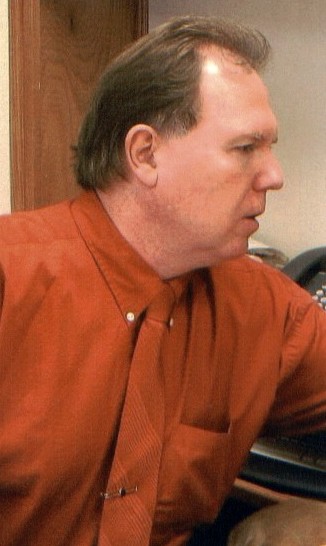
Its been a while, but I’m back.
The latest edition of the
Disability 411 podcast
is now available.
It features yours truly as the guest interviewer and the interviewee is
Stephen Kerr,
A disc jockey and Assistant Program Director at
KKMJ, Magic 95,
In Austin, TX.
The reason for the interview is the technology evolution across the radio industry regarding the adoption of tuchscreen computer programs to operate radio stations. You see, Stephen is blind, and the introduction of this type of technology could easily stop his career in its tracks if not for insightful adaptation. Check out the interview and see how Stephen has managed to stay abreast of the changes in his long-time profession and the accessibility he has implemented.
And, if you’d rather read the interview, rather than listen to the podcast, Beth, as always, has the
Episode transcript
Available as well.
Showing posts with label Disability 411. Show all posts
Showing posts with label Disability 411. Show all posts
Wednesday, March 25, 2009


Saturday, December 20, 2008
Ginger Spell on Disability 411
Several years ago, I read a passage that has stuck with me and become my own day-to-day mantra: “There are no mistakes in life, only lessons. It is only when we fail to learn the lesson that a mistake occurs.”
That thought also echoes the adage of, “If you always do what you always did, you always get what you always got.”
With those ideas in mind, let me ask a question. What do we learn from proofreading with a spellchecker? When we use most spellcheckers, we get the screen popping up the correct spelling of words, one word at a time, with no real feedback on what we’re doing wrong. If we’re not learning from our mistakes, er lessons, then we are destined to repeat them.
So, how about a spellchecker designed not to look at just the single word and be a preventative measure, like most are today, but instead, looks at the whole sentence and contextual use of the word, and seeks to teach the user where he is making errors?
And, what if this novel idea worked as a plug in for Microsoft Word, easily the most-used word processing program?
And, best yet, what if it were free?
If this sounds like an interesting tool, then check out the latest episode of the
Disability 411 podcast.
In Episode 58, Beth interviews Miki Feldman-Simon of
Ginger Software,
The company which has developed Ginger Spell, the very spellchecker that I just described above. It is marketed for being a “new technology for people with dyslexia.”
The learning of lessons comes in reports that Ginger Spell will generate. This is where Ginger Spell is different by offering lessons, not mistakes. The user can learn where and how he is creating errors and, once these areas are identified, can work to fix these in the future.
To use the Ginger Spell plug in, the user will need to set up a log in account. That lets the program generate the individual report for that particular user, which can make this a very useful tool for university writing labs, or even for student computers operated by the DSO.
Does this sound like an interesting tool? Check out the link above for the D411 show for more of the interview with Miki. Also, go to the Ginger Software page to download and try out Ginger Spell for yourself.
And, remember…, no more mistakes, only lessons.
That thought also echoes the adage of, “If you always do what you always did, you always get what you always got.”
With those ideas in mind, let me ask a question. What do we learn from proofreading with a spellchecker? When we use most spellcheckers, we get the screen popping up the correct spelling of words, one word at a time, with no real feedback on what we’re doing wrong. If we’re not learning from our mistakes, er lessons, then we are destined to repeat them.
So, how about a spellchecker designed not to look at just the single word and be a preventative measure, like most are today, but instead, looks at the whole sentence and contextual use of the word, and seeks to teach the user where he is making errors?
And, what if this novel idea worked as a plug in for Microsoft Word, easily the most-used word processing program?
And, best yet, what if it were free?
If this sounds like an interesting tool, then check out the latest episode of the
Disability 411 podcast.
In Episode 58, Beth interviews Miki Feldman-Simon of
Ginger Software,
The company which has developed Ginger Spell, the very spellchecker that I just described above. It is marketed for being a “new technology for people with dyslexia.”
It doesn’t correct just spelling mistakes. It also corrects misused words, basically words that are spelled correctly but not in that context. How we do it is we look at the context of the sentence. The software uses breakthrough technology that looks at the context of each sentence and works out what the writer or the user was trying to write according to the context.
At the moment we correct spelling and misused words, but in the beginning of next year we’ll also be correcting grammatical errors which will make a huge difference to people making not just spelling mistakes but say, people for whom English is a second language who make a lot of grammatical errors.
What the software also does by correcting the whole sentence, it’s making the whole way people work a lot more efficient. Instead of going back and looking word by word, it is much faster to correct full sentences. So, if it takes someone an hour to write, and this is the feedback we’re getting from users right now, instead of it taking them a half an hour or an hour to write a few sentences before, it’s very quick and very efficient. you click one button and it corrects all of the mistakes within that sentence. You click another button, it corrects all the misused words and you just continue working.
It’s just a much better way to use the time and the accuracy is a lot higher than any other spell checker. If you really have difficulty writing and you make unusual spelling mistakes, which a lot of people who have learning difficulties or who have dyslexia do, normal spell checkers can’t correct the unusual mistakes that they make. Our software, because it looks at the context of the sentence can correct these unusual mistakes at the sentence level. It’s much more accurate and it’s much faster and easier to use.
The learning of lessons comes in reports that Ginger Spell will generate. This is where Ginger Spell is different by offering lessons, not mistakes. The user can learn where and how he is creating errors and, once these areas are identified, can work to fix these in the future.
To use the Ginger Spell plug in, the user will need to set up a log in account. That lets the program generate the individual report for that particular user, which can make this a very useful tool for university writing labs, or even for student computers operated by the DSO.
Does this sound like an interesting tool? Check out the link above for the D411 show for more of the interview with Miki. Also, go to the Ginger Software page to download and try out Ginger Spell for yourself.
And, remember…, no more mistakes, only lessons.
Monday, August 25, 2008
Disability 411 Episode 56 features interview with Kelby Brick
The latest episode of the Disability 411 podcast is hot off the press.
One of the big announcements is that the web site can be reached with an easier to remember address,
http://disability-411.com
.
Please make sure to notice the dash in the site’s address. Some address harvester had taken the even simpler to remember Disability411.com domain already, so it wasn’t available. And, if you have a bookmark for the old address,
http://disability411.jinkle.com,
don’t worry—that domain still works, too. Beth just tried to make it easier for listeners to remember.
And, no, I’m not plugging the show because it has a guest submission by yours truly. There is some fantastic news in
Episode 56
Of particular interest to Deaf consumers.
This show features an interview with Kelby Brick, of
GoAmerica.com,
Who discusses the latest news in Deaf communication, the ability for Deaf consumers to get 10-digit phone numbers.
If that doesn’t make sense, then check out Episode 56 and see why that is really big news. I think you’ll understand why this communication evolution is another technological step for the Deaf community. For further information about this historic breakthrough in videophone relay signing, check out
Kelby's announcement
on the Go America site.
Wednesday, July 16, 2008
New and improved Disability 411; Review of The Short Bus by Jonathan Mooney
Okay, it is new and improved. It features a re-designed web page. And, the latest episode is out.
The “it” in this case, is the
Disability 411 podcast,
On whose latest episode your humble blogger makes his debut as a regular contributor. In this episode, D411 host Beth Case also announces some other guest contributors, putting me in some good company.
The other contributers are Day Al-Mohamed, of the
Day in Washington podcast,
Jacquie Brennan, from the
Disability Law Lowdown podcast,
And Chris Wright, a web designer, musician, and all-around idea generator for Beth.
Chris is also offering to do screen reader accessibility evaluations of web sites at no charge to D411 listeners (or readers, for those who choose to read the transcript instead of listening to the podcast). To contact him, send an email to
chrisw1@bestweb.net
and put “web site evaluation” in the subject line. Also, make sure you mention that you’re a fan of D411.
Do check out the D411 site's new logo and web page. It also includes disability news headlines, as well as some of Beth's favorite resource links.
For my beginning D411 contribution, I offer a review of
The Short Bus, A Journey beyond normal
By
Jonathan Mooney.
I first heard about this book a few months ago when the author emailed me through this blogsite and offered to send me a review copy. I replied to Mr. Mooney and asked if he had a review copy that was accessible to a computer screen reader and explained some formats that would work. Unfortunately, I never heard back from Mr. Mooney. I had checked out his web site and read a part of the introduction. I was really eager to read more, but that didn’t happen for a while.
I didn’t have access to check for the book’s availability through the
National Library Service for the Blind and Physically Disabled (NLS),
because more than five years ago, I had quit listening to those modified talking books on 4-track cassettes. I had grown tired of listening to books in that format due to what I felt was excessive space needs and effort to listen to books in what I felt was an antiquedated media format in a digital age.
The good news is that since getting my Victor Reader Stream, and its ability to play the protected digital files from the
NLS Downloadable Book and Magazine Service,
I’ve re-established my membership with the library. And, yes, The Short Bus was available as a download. It was actually the first NLS book that I downloaded and listened to on this accessible media player.
Jonathan Mooney is an author and speaker who has captured the essence of his own experience as a child with a learning disability, and turned it into a quest to explore how others with differing disabilities live their lives. Mooney was a boy who was dyslexic and didn’t learn to read until he was 12 years old. Along his way through the public school system, he heard many things, most notable of which was that he would do well to graduate high school and that college was all but out of the question. Like so many other people with disabilities, Mooney tapped into his strengths and survived, surpassing those glum predictions of his academic future. Not only was he able to parlay his atheletic skills into a scholarship to Loyola Marimount, but he later went on to graduate with honors from Brown University.
In the introduction, Mooney talks about how he began one presentation with an empathetic statement of, “Normal people suck.” In those three words, Mooney gives an indication of his approach to change his presentation to fit the situation and effectively reach out and connect with particular members of his audience.
The book’s title states exactly what the book is about. Mooney draws upon his childhood memories of when he rode that iconic symbol for kids in special education to school. However, what he has done now is make it a familiar means of recognition, and a very bold statement maker it is, as his means of transportation in this coast-to-coast journey exploring how people of different ages across the country manage their various disabilities. All the while he illustrates the defining personality of each person he visits, allowing us to see them for their abilities and not just their disabilities.
That takes care of explaining the title, for the most part, but that word “Normal” is there for a very specific reason. Children with disabilities are classified and treated as being outside the norm and Mooney examines the educational and social constructs for this. He also offers a brief history about many of the discussed disabilities and, peppered throughout the text, offers a good representation of the disability rights movement here in the United States.
More than just examining the definition of what it means to be classified outside the boundaries of “normal,” what each person he presents does, is present their own method of challenging what it is to be normal. Each of these people are presented, despite any limitations their disabilities impose, as normal people. They interact with their family, their community, and pursue life with zeal. That pursuit can be seen in the way the 8-year old deaf-blind girl understand so much more than what many perceive, or maybe how she plays a trick on her brother. Or it might be found in the older, transgender man named Cookie who has a deep understanding of art and paints a mural on the inside of Mooney’s bus, even though one of his darkest recollections was when he was six and his teacher called him stupid. Or, maybe it is in the heart of the boy who uses a wheelchair due to cerebral palsy, but has an undying love for roller coasters. It can be found in any of the variety of people Mooney meets up with. Pick any one of them and you’ll find out a new definition of what normal is.
The book is written in a style that is easy and comfortable to read, like sitting down with an old friend. While the language is direct and sometimes coarse, it usually fits the context. For anybody who works in the disability service field, The Short Bus should make a stop on your reading list. It is a good read covering a range of disabilities and profiles some strong people with attitudes that allow them to pursue life. While I had to wait a few months to get a copy I could read, it was definitely worth the wait.
There is a lot more than just my review of that book on D411. Go to the D411 home page and check out its new design and grab the latest episode.
Friday, June 06, 2008
Access Ability is joining the Disability 411 podcast
I’m excited to share this news with the regular readers of Access Ability.
A couple of weeks ago, Beth Case, of the
Disability 411 Podcast
Invited me to be a regular contributor to the program. The latest episode of D411 is now up and ready to download , on which, she makes this announcement publicly official.
Needless to say, I’m eager to do this. The opportunity to do something in audio as well as in print here on Access Ability is something I’ve considered for quite a while. Now, thanks to Beth, this is becoming a reality.
I’ve written here before about how much I enjoy the ease of use and accessibility of the
Goldwave
Digital Audio editing program. Now, I’m going to be able to use it even more regularly to produce my segments on D411.
And, on the current D411 show, Beth gives a good primer on transitioning from high school to college for students with disabilities. She raises some key issues that all students with disabilities need to be aware of, so do check it out for that important information.
So, now you know what you need to do…make sure to download the current episode and then check out the future episodes of Disability 411 for news and information regarding the world of disability and accessibility. This has always been a quality, professional podcast, and I am looking forward to adding value to the high standards Beth has set.
I’ll see you soon on D411!
Friday, April 25, 2008
Disability 411 podcast is back with new episode
One of my favorite disability service professionals is back in her podcast groove.
Beth Case, of the
Disability 411 podcast
Recently surfaced with her latest D411 episode.
There was a hiatus for a while, but if you’ve unsubscribed or quit checking for a new episode, go back and grab it. There is no guest, just Beth updating her listeners of what is going on.
If you’ve not heard her podcasts before, check her out. Beth is a sign language interpreter, as well as a long-time provider of disability services and has been active in the professional DS field in many capacities.
I understand that it isn't what puts money in the bank, but I'm sure glad to see D411 back up and running, Beth.
Friday, December 14, 2007
National Sign Language Interpreter Database: an idea whose time has come
Given the shortage of sign language interpreters, have you ever thought about a database that would list sign language interpreters and let you find those nearest you?
Think no more about it, as the National Sign Language Interpreter Database, or NSLID, is up and running. They have a searchable web site at
nlsid.com
According to the site, their purpose is to:
“Provide a free, national database of Sign Language Interpreters to improve the coordination and availability of support services on a local, state and national level.”
What's really neat is that this database works both ways, providing a listing of the interpreters to those who are seeking them, and also allows interpreters to list their services.
So, if you’re a sign language interpreter wanting to do some freelance work, you can post a listing with your contact information and also list the type of services you provide. (This also works great for agencies to list themselves so that anybody seeking services in their area can locate them.) There are areas to list one’s level of certification or specializations one may possess, such as theatrical or legal interpreting. Additionally, one can also post your pay scale by range and the distance you are willing to travel.
The site is not only about interpreting. The database also allows interpreters to list any specialized services they offer including speech-to-text providers such as C-print, Typewell, CART, as well as oral interpreting and cued speech interpreting.
Thanks to Bet Case of the
Disability 411 Podcast
for the information about this worthwhile database. Also, congratulations to Beth on her 50th podcast. We look forward to more D411 shows in the future.
Monday, October 15, 2007
Disability professional teaches class on using ASL to communicate with infants
One of my favorite disability service professionals was recently featured in a Houston Chronicle news article about her class on teaching American Sign Language (ASL) to preverbal infants.
In the article, Beth Case, of North Harris Montgomery Community College, and also the host of the
Disability 411 podcast,
Discusses how she began using sign language with her own nephew and what the class will encompass. The article also describes the community interest that grew to become this class offered through Case’s college.
One item mentioned briefly in the article that grabbed my attention was the applications for using ASL for communicating with developmentally delayed children, including those with Down syndrome and autism.
Link to the Houston Chronicle article:
http://www.chron.com/disp/story.mpl/nb/tomball/news/5201083.html
Thursday, September 20, 2007
College Internship Program offers promise for students with Aspergers and learning differences
Imagine a college internship geared specifically towards students with learning differences and Aspergers. Now, what if I told you that this is not just in the imagination, but a reality which is already up and running.
I first learned about the
College Internship Program,
Or CIP, on the latest edition of the
Disability 411 podcast.
On D-411's Show 47, host Beth Case interviews Janet Miller, the Program Director of CIP’s newly-opened Berkeley, California psite.
So what exactly is CIP?
According to Ms. Miller, CIP is “a residential program for 18-25 (sometimes 26) year olds with Asperger’s and non-verbal learning disability predominantly. We do have some other students who enter.”
The Berkeley Center is the fourth program that CIP operates. The other programs are at the Berkshires in Lee, Massachusetts, the Brevard Center in Melbourne, Florida, and Bloomington, Indiana.
There is a lot of information about the CIP program in the interview. Basically, it is a residential program to work on the social deficits or independent living problems that are common with Asperger’s and learning disabilities, coupled with at least one college class for the students to gain academic experience. It is a 3-4 year program with, what Ms. Miller describes as what appears to be a high cost. However, she emphasizes that CIP does have funding sources available, including an alliance with Sally Mae.
Something I personally found very intriguing in the D-411 interview was the story about Dr. Michael McMannon, CIP’s Executive Director and founder of the program. Miller says, “He will tell you right out on his website that he himself, in his fifties, like five or six years ago, was diagnosed with Asperger’s… Here’s this man who had been a high, high functioning multi-tasker guy, you know, who had an employee, a longtime employee, come to him with a list a few years ago and said, “Michael, here’s a list of twenty traits of something called Aspberger’s Syndrome. You have nineteen of them.” From this, Dr. McMannon drew his inspiration to develop CIP.
For more comprehensive information about the program, check out the CIP web site and also the podcast.
(Note: The Disability 411 podcasts are always posted with a transcript available. If you are unable to listen to the audio, then click on the link and read the transcript. Like I’ve said before, if your work is worth producing in the first place, then it is worth producing in an alternate format.)
Finally, if you want the latest information about the program, CIP also provides updates on the
Asperger’s Syndrome & LD Blog.
Thursday, April 12, 2007
Second part of Marcus Engel interview is now posted
Okay, so you went to the
Disability 411
Site a couple of weeks ago and downloaded the interview I did with
Marcus Engel,
Or at least downloaded the transcript to see what Marcus is all about. Then, you felt like you were left hanging on a cliff because it suddenly ended, all due to the interviewer, namely me, running long on the interview.
Never fear. Beth Case has been busily working and you can now go to the
Disability 411
Site and get the second part of that interview.
Now that you see how easy it is to conduct and submit an interview or product review, why don’t you take Beth up on her offer and submit one to Disability 411 yourself. I think she would appreciate a variety of topics and is giving a lot of latitude for submissions. Besides, it is your shot at getting your moment in the sun. And, who knows, you might tap into an interest that you didn’t know you were good at until you did that submission.
Disability 411
Site a couple of weeks ago and downloaded the interview I did with
Marcus Engel,
Or at least downloaded the transcript to see what Marcus is all about. Then, you felt like you were left hanging on a cliff because it suddenly ended, all due to the interviewer, namely me, running long on the interview.
Never fear. Beth Case has been busily working and you can now go to the
Disability 411
Site and get the second part of that interview.
Now that you see how easy it is to conduct and submit an interview or product review, why don’t you take Beth up on her offer and submit one to Disability 411 yourself. I think she would appreciate a variety of topics and is giving a lot of latitude for submissions. Besides, it is your shot at getting your moment in the sun. And, who knows, you might tap into an interest that you didn’t know you were good at until you did that submission.
Tuesday, March 27, 2007
Interview with Marcus Engel
As hoped, I have an announcement to make.
My interview with Marcus Engel is now posted on the
Disability 411 blog.
Well, sort of. The interviewer got a little chatty and the interview ran long, so Show 38 is the first half of my interview with Marcus, a dynamic and interesting professional speaker and author.
So, what are you doing reading this? Go on over and check out Beth Case’s blog and download the interview. Also, make sure to come back to her site later for part 2!
Monday, March 05, 2007
Interview submitted to Disability 411
I spent Friday morning conducting an interview for submission to the
Disability 411 podcast.
Beth had recently sent out a call for guest submissions to help her manage recent time crunches on Disability 411. With that opening, I figured I’d take my first crack at the world of podcasting and called up a good friend,
Marcus Engel,
To be the interviewee for my freshman introduction.
I have known Marcus for twelve years and find him to be an interesting and fascinating man. He is a 31-year old professional speaker and author of two books. He was blinded at age 18 in 1993 as the result of an auto accident when the car he was riding in was hit by a drunk driver. After more than 300 hours of surgery, most of it above the neck, Mark redirected his life with a positive attitude and a personal motivation for success.
I don’t know if Beth will select this interview for inclusion in her podcast, but I certainly hope she will. Granted the interviewer sort of stumbles a bit in his questioning, but give him a break. It is his first podcast effort. As for Marcus, his replies are interesting and thought provoking.
Whether she uses the interview in her podcast or not, Marcus is donating signed copies of both his books for Beth to give away to listeners of Disability 411. He is also offering a computer file of his manuscripts to those with a disability that keeps them from reading printed material. They can get this by simply emailing him through his website. Now, that’s accessibility!
To learn more about Marcus, click the link above for his official home page. On that site, you can also subscribe to the monthly newsletter that he writes. As if the speaking schedule, book and newsletter writing weren’t enough, Marcus also writes
Engel’s Ensights,
His personal blog with updates on a regular basis.
Subscribe to:
Posts (Atom)