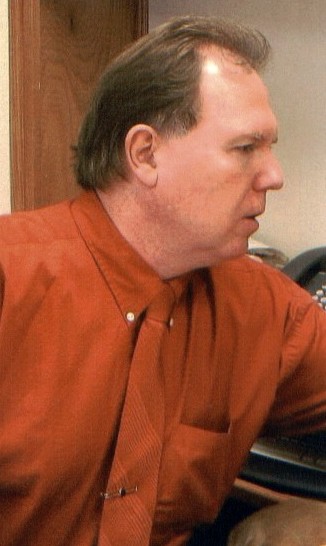
There is a new press release , announcing the name change for Premiere Assistive Technology, Inc., in which the new name will be more reflective of the role this strategic assistive technology company excels at.
The new name of the company is
Premiere Literacy.
If you’re already familiar with this company, then you know that they develop assistive hardware and software solutions to assist in reading and writing. The company’s focus of creating solutions that work has always been accompanied by the thought that these are only usable if they are affordable.
The change in name is reflective of a broader understanding of their clients’ needs, which the company has come to grasp in their years of operation, as well as the evolution of technology in the role of literacy. This is also augmented by alliances they continue to build.
This is all perhaps summed up best in the words of Dr. Steve Timmer, the company’s VP of Research,:
"It simply doesn't matter WHY you can't read, whether it's due to a cognitive processing difficulty, a physical vision problem or a cultural challenge (e.g. English as a Second Language). The fact that anyone struggles to read and write means that literacy technologies can help them. That is why Premier Literacy is making it possible for students and adults everywhere to have access to the tools that can make a wholesale difference in their life. With the accelerating shift to a world of digital content, shortfalls in literacy skills are a greater liability than ever before. Literacy in the 21st century has become so much more than just 'reading a book.' Just consider that systems like Google, Facebook, MySpace, wikis, etc. barely existed only 3 years ago. Now think about the future only 3 short years from now. There is a rapid growing universe of content that WILL NEVER APPEAR IN A HARDCOPY BOOK. Literacy skills must now include the ability to not only 'read' content, but to 'search,' 'find,' 'sort,' 'filter,' 'summarize,' 'translate,' 'download,' 'convert to audio,' 'communicate / collaborate online' and 'even publish to the Internet.' Premier Literacy's core commitment is to target our energies and resources to drive innovation in the development of solutions to meet all of these current literacy needs and those that will materialize in the future."
And, to avoid confusing anybody, even though the name of the company has changed, the address for their web site remains the same,
www.readingmadeeasy.com.
Showing posts with label Hardware. Show all posts
Showing posts with label Hardware. Show all posts
Tuesday, April 01, 2008


Tuesday, March 04, 2008
Assistive technology review: Victor Reader Stream
I wrote here last Friday that I was going to spend some time taking my new
Victor Reader Stream
For a test drive. I’m here today to share my initial thoughts on this powerful, yet very affordable, piece of assistive technology.
What the Stream does
The Stream is a portable, rechargeable media player designed for the blind that is about the size of a deck of cards. It plays a few forms of audio files, most notably MP3, wav, and OGG Vorbis. It has a screen reader that will read the folder and file information, as well as .html and .txt formats. (The .html files will be able to be read using the associated formatting attributes.) It plays DAISY and NISO books. Additionally, in the U.S., it plays books from Bookshare and the NLS. Finally, it is also a mono voice recorder.
The unit will play approximately 15 hours on a charge, according to the manufacturer. It will take about four hours to recharge. While it is recharging, the user can use the unit.
The files can be listened to through the built-in speaker or ear buds, also shipped with the unit. My own experience finds the small speaker has sufficient sound quality for my own liking, despite the volume limitations. The Stream can also play through external speakers via the earphone jack. The unit allows separate volume levels for ear buds and internal speaker and remembers the settings.
As stated, the voice recorder is set to record in mono, not stereo, and has a decent built-in microphone. . An external microphone can also be used if preferred.
Files play on the device from a Secure Digital (SD) card. It is also shipped with a plug that will allow a USB drive to be used. However, the USB drive will be “read only” and, if using the voice recorder, these cannot be save on the USB drive; they must be saved on an SD card.
The Stream will read documents and allow the user to move by many increments, such as headings. However, I think that one of the most usable features of the product is that it has the ability to go to a specific page in a book. Just as sighted students do in class, students who are blind can enter the specific page number that their teacher/professor is discussing.
What the Stream does not do
The device will not play files in Windows Media (.wma) format. If a user rips CDs to the computer using Windows Media Player, it puts the audio files in this .wma format. To listen to these files on the Stream, the user will need to convert them to one of the audio formats the unit supports.
The Stream ships with a USB cable so that it can be connected to a pc. File transfers can be performed using this setup, but the manufacturer instructs users that using an SD card reader will be quicker. When connected to the pc, the user cannot operate the Stream.
It will not read documents with .doc and .rtf file extensions. The solution for reading these files on the Stream is simple; save the file in either .html or .txt and it can then be read by the Stream.
My Thoughts
I am very impressed by the Stream. The learning curve is only slight. Once familiarized with the button configuration, it was just a matter of playing with the device for a little bit before I felt totally comfortable using it.
So far, all I have done on the unit is read over some of the built-in tutorial and listen to music on it. There is so much more to come for me and this nifty, electronic box. I will be doing more with it in coming days, such as reading documents and books, and will write more about those impressions as they occur.
One of the Stream’s most appealing features is its price, only $329 from the manufacturer,
Humanware,
Which also adds on a shipping fee of $20 and sends the product 2-day delivery.
However, the savvy web shopper can find it for less, from vendors such as
Adaptive Information Systems Incorporated,
which sells the device for $299 and sweetens that discounted price by offering free shipping.
Any user of assistive technology will recognize that, whether purchasing from the manufacturer or a vendor, the price is low and affordable to people on fixed incomes. The product for that money appears to be a durable and lasting piece of accessible technology. It gives people who are blind the ability to take documents or book to meetings, just as their sighted counterparts. With the device’s ability to navigate through these, the Stream user can be on an even playing field with their peers.
The price is also friendly to the tight budgets in place at most disability support service offices. The product you get for that investment is a very user-friendly piece of assistive technology that will allow your students to have accessible textbooks at their fingertips.
The Victor Reader Stream is one of the most talked about pieces of assistive technology hardware that has come out in a long while. Add the affordability to the quality design, and you have an appealing product that can be used by many blind people. For a taste of the buzz in the blind community about the Stream, you might want to look at the recent
Ranger Station poll
About the product.
Finally, if interested in reading more information about the product, check out the official
Victor Reader Stream FAQ page.
Victor Reader Stream
For a test drive. I’m here today to share my initial thoughts on this powerful, yet very affordable, piece of assistive technology.
What the Stream does
The Stream is a portable, rechargeable media player designed for the blind that is about the size of a deck of cards. It plays a few forms of audio files, most notably MP3, wav, and OGG Vorbis. It has a screen reader that will read the folder and file information, as well as .html and .txt formats. (The .html files will be able to be read using the associated formatting attributes.) It plays DAISY and NISO books. Additionally, in the U.S., it plays books from Bookshare and the NLS. Finally, it is also a mono voice recorder.
The unit will play approximately 15 hours on a charge, according to the manufacturer. It will take about four hours to recharge. While it is recharging, the user can use the unit.
The files can be listened to through the built-in speaker or ear buds, also shipped with the unit. My own experience finds the small speaker has sufficient sound quality for my own liking, despite the volume limitations. The Stream can also play through external speakers via the earphone jack. The unit allows separate volume levels for ear buds and internal speaker and remembers the settings.
As stated, the voice recorder is set to record in mono, not stereo, and has a decent built-in microphone. . An external microphone can also be used if preferred.
Files play on the device from a Secure Digital (SD) card. It is also shipped with a plug that will allow a USB drive to be used. However, the USB drive will be “read only” and, if using the voice recorder, these cannot be save on the USB drive; they must be saved on an SD card.
The Stream will read documents and allow the user to move by many increments, such as headings. However, I think that one of the most usable features of the product is that it has the ability to go to a specific page in a book. Just as sighted students do in class, students who are blind can enter the specific page number that their teacher/professor is discussing.
What the Stream does not do
The device will not play files in Windows Media (.wma) format. If a user rips CDs to the computer using Windows Media Player, it puts the audio files in this .wma format. To listen to these files on the Stream, the user will need to convert them to one of the audio formats the unit supports.
The Stream ships with a USB cable so that it can be connected to a pc. File transfers can be performed using this setup, but the manufacturer instructs users that using an SD card reader will be quicker. When connected to the pc, the user cannot operate the Stream.
It will not read documents with .doc and .rtf file extensions. The solution for reading these files on the Stream is simple; save the file in either .html or .txt and it can then be read by the Stream.
My Thoughts
I am very impressed by the Stream. The learning curve is only slight. Once familiarized with the button configuration, it was just a matter of playing with the device for a little bit before I felt totally comfortable using it.
So far, all I have done on the unit is read over some of the built-in tutorial and listen to music on it. There is so much more to come for me and this nifty, electronic box. I will be doing more with it in coming days, such as reading documents and books, and will write more about those impressions as they occur.
One of the Stream’s most appealing features is its price, only $329 from the manufacturer,
Humanware,
Which also adds on a shipping fee of $20 and sends the product 2-day delivery.
However, the savvy web shopper can find it for less, from vendors such as
Adaptive Information Systems Incorporated,
which sells the device for $299 and sweetens that discounted price by offering free shipping.
Any user of assistive technology will recognize that, whether purchasing from the manufacturer or a vendor, the price is low and affordable to people on fixed incomes. The product for that money appears to be a durable and lasting piece of accessible technology. It gives people who are blind the ability to take documents or book to meetings, just as their sighted counterparts. With the device’s ability to navigate through these, the Stream user can be on an even playing field with their peers.
The price is also friendly to the tight budgets in place at most disability support service offices. The product you get for that investment is a very user-friendly piece of assistive technology that will allow your students to have accessible textbooks at their fingertips.
The Victor Reader Stream is one of the most talked about pieces of assistive technology hardware that has come out in a long while. Add the affordability to the quality design, and you have an appealing product that can be used by many blind people. For a taste of the buzz in the blind community about the Stream, you might want to look at the recent
Ranger Station poll
About the product.
Finally, if interested in reading more information about the product, check out the official
Victor Reader Stream FAQ page.
Tuesday, February 05, 2008
SmartNav 4 is hands-free alternative computer mouse
I notice regular traffic to this blog searching for alternative techniques to operate the computer mouse. This prompted me to do some research into these and I located the home page for
SmartNav,
A hands-free, ergonomically designed alternative mouse.
From the web site:
“SmartNav 4 allows complete computer control for users interested in ergonomic and assistive technology devices. By controlling the cursor with subtle head movements, a whole new level of independence is realized.”
The device is marketed towards computer users who are unable to use a conventional mouse due to spinal cord injury, quadraplegia, Muscular Dystrophy, or ALS, but is also targeting users with Carpal Tunnel Syndrome. This assistive technology allows the user to move the cursor across the entire computer screen using head motions that are less than one-fourth of an inch. It includes a virtual keyboard that allows the user to type with the head motions as well. Additionally, it also lets users plug in a clickswitch or or footswitch to alternatively enable the cursor.
And, to answer the big question, the web site has the latest version listed for $499.
I am not endorsing this product, as I've not used it. However, I am writing about it here on Access Ability as a resource for those readers who are seeking this type of assistive technology. However, if somebody who uses this device would like to leave a comment about how it operates, I'd love to hear about your experience.
SmartNav,
A hands-free, ergonomically designed alternative mouse.
From the web site:
“SmartNav 4 allows complete computer control for users interested in ergonomic and assistive technology devices. By controlling the cursor with subtle head movements, a whole new level of independence is realized.”
The device is marketed towards computer users who are unable to use a conventional mouse due to spinal cord injury, quadraplegia, Muscular Dystrophy, or ALS, but is also targeting users with Carpal Tunnel Syndrome. This assistive technology allows the user to move the cursor across the entire computer screen using head motions that are less than one-fourth of an inch. It includes a virtual keyboard that allows the user to type with the head motions as well. Additionally, it also lets users plug in a clickswitch or or footswitch to alternatively enable the cursor.
And, to answer the big question, the web site has the latest version listed for $499.
I am not endorsing this product, as I've not used it. However, I am writing about it here on Access Ability as a resource for those readers who are seeking this type of assistive technology. However, if somebody who uses this device would like to leave a comment about how it operates, I'd love to hear about your experience.
Wednesday, February 21, 2007
Two assistive technology resources
Today, I present two leads for assistive technology, one I discovered on my own and the other is a user review describing his adaptation of a gaming keyboard, turning it into an assistive technology device.
After a recent hard drive crash on my old computer, I was forced into looking at getting a new pc. In doing this, the one thing that I knew I wanted to avoid was getting a computer with the new Microsoft Vista operating system. I use JAWS as my screen reader and the newness that is Vista was something JAWS wasn’t quite up to handling just yet. I had no problem finding a pc with Windows XP and was soon back in the digital world.
One thing I took for granted on my old computer was the CD burning program, Record Now. That program had come installed as part of the manufacturer’s package and I was happily surprised when first using it because I found it was designed with accessibility in mind. There was even an accessibility heading under the help menu which told how the manufacturer wanted the software to work with screen readers.
When I first attempted to burn some files onto a CD on the new machine, I had to look around the programs to find the one to use. There are actually three applications on here that can do the job, but, unfortunately, none of them are very accessible, nor are they designed to be intuitive in their operation. This brought me to search for an accessible CD burning program.
Fortunately, this search didn’t take too long. I quickly found the Premiere CD/DVD Creator manufactured by
Premiere Assistive Software.
The program was easy to locate and download and, best of all, it was free. More than that, though, is that it was designed to be accessible to screen readers.
I instantly recognized the Premiere Assistive Software name, as it was the manufacturer of some software programs we used in providing DSS to students at my last position. The main draw of their software for our job was that they did the tasks we needed very well and were affordable. The link above will take you to a page listing all the available titles. Some, like the CD/DVD Creator and talking calculator, are free.
The other item I want to share is how somebody took a
Logitech G11 gaming keyboard
that was not intended as assistive technology, but after he saw the device’s abilities, quickly understood how it could be made to meet his AT needs. The focus is the keyboard’s additional, programmable function and mode keys. Instead of assigning game functions to these keys, the user assigned executable macros to them and made it function as AT to assist him in overcoming his physical limitations.
Again, technology not specifically designed to work as AT fits well into the DSS domain. This is the true beauty of designing products with universal access. If only the manufacturer’s could see this, they could open up new markets for their products.
After a recent hard drive crash on my old computer, I was forced into looking at getting a new pc. In doing this, the one thing that I knew I wanted to avoid was getting a computer with the new Microsoft Vista operating system. I use JAWS as my screen reader and the newness that is Vista was something JAWS wasn’t quite up to handling just yet. I had no problem finding a pc with Windows XP and was soon back in the digital world.
One thing I took for granted on my old computer was the CD burning program, Record Now. That program had come installed as part of the manufacturer’s package and I was happily surprised when first using it because I found it was designed with accessibility in mind. There was even an accessibility heading under the help menu which told how the manufacturer wanted the software to work with screen readers.
When I first attempted to burn some files onto a CD on the new machine, I had to look around the programs to find the one to use. There are actually three applications on here that can do the job, but, unfortunately, none of them are very accessible, nor are they designed to be intuitive in their operation. This brought me to search for an accessible CD burning program.
Fortunately, this search didn’t take too long. I quickly found the Premiere CD/DVD Creator manufactured by
Premiere Assistive Software.
The program was easy to locate and download and, best of all, it was free. More than that, though, is that it was designed to be accessible to screen readers.
I instantly recognized the Premiere Assistive Software name, as it was the manufacturer of some software programs we used in providing DSS to students at my last position. The main draw of their software for our job was that they did the tasks we needed very well and were affordable. The link above will take you to a page listing all the available titles. Some, like the CD/DVD Creator and talking calculator, are free.
The other item I want to share is how somebody took a
Logitech G11 gaming keyboard
that was not intended as assistive technology, but after he saw the device’s abilities, quickly understood how it could be made to meet his AT needs. The focus is the keyboard’s additional, programmable function and mode keys. Instead of assigning game functions to these keys, the user assigned executable macros to them and made it function as AT to assist him in overcoming his physical limitations.
Again, technology not specifically designed to work as AT fits well into the DSS domain. This is the true beauty of designing products with universal access. If only the manufacturer’s could see this, they could open up new markets for their products.
Saturday, January 13, 2007
Olympus introduces three accessible recorders
As anybody who has done so would know, purchasing an accessible digital player/recorder in the past has required one to buy either a specially modified, otherwise commercially available product or a specialty product made specifically for the glind. In Both cases, the recorders have been expensive, often costing several times more than what an off the shelf model would cost. Now, that experience is changing.
Olympus is introducing
three accessible digital recorders.
The electronics company is launching its DS-30, DS-40, and DS-50 models, which the company claims are “optimized for downloading, listening to, and creating podcasts.” Olympus is pitching these units as the “all-in-one audio device,” noting that the high sound quality makes them ideal for listening to audio books and music.
What sets this line of recorders apart from any competition is that they are accessible to blind consumers off the shelf.
According to the Olympus press release linked above:
“The three new devices offer a voice confirmation function that can be turned on or off. When turned on, the function enables the devices to speak, helping users to navigate the folders and various set-up options. The pleasant automated voice guides users through the onscreen menus for setting date, time and other menu selecting modes. It also confirms by stating the folder name as the user moves from one folder to another. This enables visually challenged users to easily move through the device's menus, folders and set-up options. An instruction manual will also be available to users as an audio file. Much like any audio book, this option enables users to listen to the instruction manual for quick and easy use.”
The recorders connect with users computers via a USB cable and, via the included software, podcasts are automatically downloaded to the unit when it is connected to the pc. Additionally, the digital recorders are designed to work with
Audible.com,
A commercial site for audio books and spoken word content many blind consumers are already familiar with.
The primary difference between the three units are the storage capacities. The DS-30 holds 256 Mb, the DS-40 512 Mb, and the DS-50 holds 1 Gb.
All of the recorders play files in either the MP3 or WMA format.
Another useful feature of the units is the ability to slow down and speed up the playback of the recordings. The recordings can be slowed down to 50% speed or sped up by 50%, assisting users to either grab specifics or to breeze through recorded lectures.
I was impressed with the devices’ claimed reported battery life. Olympus states that users can get up to 32 hours of use from 2 AAA batteries. (An AC power adaptor is also included with the unit.)
These units are supposed to be available this month. Accessories included are a USB cable, a stereo microphone, stereo headphones, two AAA batteries, and software. The DS 50 also comes with a remote control and a carrying case.
MSRP for these units: DS-30, $149; DS-40, $199; DS-50, 249.
Olympus is leading the way by making products that are accessible out of the box.
Olympus is introducing
three accessible digital recorders.
The electronics company is launching its DS-30, DS-40, and DS-50 models, which the company claims are “optimized for downloading, listening to, and creating podcasts.” Olympus is pitching these units as the “all-in-one audio device,” noting that the high sound quality makes them ideal for listening to audio books and music.
What sets this line of recorders apart from any competition is that they are accessible to blind consumers off the shelf.
According to the Olympus press release linked above:
“The three new devices offer a voice confirmation function that can be turned on or off. When turned on, the function enables the devices to speak, helping users to navigate the folders and various set-up options. The pleasant automated voice guides users through the onscreen menus for setting date, time and other menu selecting modes. It also confirms by stating the folder name as the user moves from one folder to another. This enables visually challenged users to easily move through the device's menus, folders and set-up options. An instruction manual will also be available to users as an audio file. Much like any audio book, this option enables users to listen to the instruction manual for quick and easy use.”
The recorders connect with users computers via a USB cable and, via the included software, podcasts are automatically downloaded to the unit when it is connected to the pc. Additionally, the digital recorders are designed to work with
Audible.com,
A commercial site for audio books and spoken word content many blind consumers are already familiar with.
The primary difference between the three units are the storage capacities. The DS-30 holds 256 Mb, the DS-40 512 Mb, and the DS-50 holds 1 Gb.
All of the recorders play files in either the MP3 or WMA format.
Another useful feature of the units is the ability to slow down and speed up the playback of the recordings. The recordings can be slowed down to 50% speed or sped up by 50%, assisting users to either grab specifics or to breeze through recorded lectures.
I was impressed with the devices’ claimed reported battery life. Olympus states that users can get up to 32 hours of use from 2 AAA batteries. (An AC power adaptor is also included with the unit.)
These units are supposed to be available this month. Accessories included are a USB cable, a stereo microphone, stereo headphones, two AAA batteries, and software. The DS 50 also comes with a remote control and a carrying case.
MSRP for these units: DS-30, $149; DS-40, $199; DS-50, 249.
Olympus is leading the way by making products that are accessible out of the box.
Friday, November 03, 2006
Disability is no reason not to vote
With the 2006 election season climaxing next week, it is imperative that we all get out and vote. If you are a registered voter and have not voted early, remember to do so on Tuesday. With the advents in physical and technological access to the polls, there is no reason for anybody of voting age not to use this right so many Americans have given their lives to protect.
This year’s election is supposed to have a good number of the electronic voting machines in place. These machines were originally intended to automate and simplify the voting process so we might all avoid a repeat of the hanging chad showdown of the 2000 presidential elections. However these machines were also heralded as revolutionary because they also had the ability to employ a screen reader and let the blind voters cast their secret ballot independently.
Personally speaking, I’ve had some experience with the electronic voting systems in the past two elections, neither of which went well and resorted to me using sighted assistance instead of the speech output that was supposed to make these devices so landmark. However, I’ll gladly work through the hassles of staff who have only cursory training on the speech technology again to have my vote count, even if we can’t get the machine to work and have to revert to a sighted person helping me.
A good discussion of the movement towards disability access at the poll is titled, “I Can’t Sing and I can’t Dance but I can vote,” written by Cass Irvin. The brief essay can be viewed at
Fred’s Head Companion,
A blog from the American Printing House for the Blind.
The bottom line is that a disability should never keep somebody from voting. There is too much legislation that affects disability programs and funding. Please encourage your students to participate in the election process.
This year’s election is supposed to have a good number of the electronic voting machines in place. These machines were originally intended to automate and simplify the voting process so we might all avoid a repeat of the hanging chad showdown of the 2000 presidential elections. However these machines were also heralded as revolutionary because they also had the ability to employ a screen reader and let the blind voters cast their secret ballot independently.
Personally speaking, I’ve had some experience with the electronic voting systems in the past two elections, neither of which went well and resorted to me using sighted assistance instead of the speech output that was supposed to make these devices so landmark. However, I’ll gladly work through the hassles of staff who have only cursory training on the speech technology again to have my vote count, even if we can’t get the machine to work and have to revert to a sighted person helping me.
A good discussion of the movement towards disability access at the poll is titled, “I Can’t Sing and I can’t Dance but I can vote,” written by Cass Irvin. The brief essay can be viewed at
Fred’s Head Companion,
A blog from the American Printing House for the Blind.
The bottom line is that a disability should never keep somebody from voting. There is too much legislation that affects disability programs and funding. Please encourage your students to participate in the election process.
Monday, October 16, 2006
Come Walk in Our Shoes
This past weekend, I had the pleasure to participate at Come Walk in Our Shoes, an annual experiential educational event in Central Texas. Sponsored by the VIP support group in Temple, the event had a strong showing of support from the local public. While the event is designed to be an educational outreach for the sighted public, it also served as a good networking of blind resources and as an information gathering opportunity as well.
The event had several challenge tables set up where sighted people were allowed to don a blindfold and attempt to do various tasks they are used to doing, but taking away their ability to rely on visual input. This is what the original concept of the event was—educating those who do not usually know how blind people function, but are interested enough to learn. However, as the event has evolved over the several years of its existence, it has grown to also include an offering of information and resources to the blind people in attendance.
One of the presenters at the event was Mark Marvel, with the
Blind Ambitions Groups,
A blind support group based in Dallas. The group’s web site offers its mission and purpose as follows:
“The mission of Blind Ambitions Groups is to educate blind and visually impaired people and their families about available resources – and to encourage each person to move to the next step – whatever it may be for that person."
"PURPOSE: Through support, we teach blind and visually impaired (hereinafter referred to as blind) people to advocate for themselves in getting what they need to facilitate a better quality of life.”
I met with Mark and am impressed with the work his group is doing. While they are based in Dallas, he said they are planning to offer their services state-wide in the future. Already, they host two radio programs on the Reading Radio network, Eye on Employment and Sound of Sight. There are archived shows available for download on their web site. There is a strong emphasis on advocacy and Mark is a really dynamic spokesperson who seems to have a good grasp of his resources. He also said their web site was going to undergo some updates in the coming days.
Take a little time to check out the group’s site and look through the archives of past shows. They present a good resource to offer your blind and visually impaired students who are looking for information and will eventually be seeking employment.
Also, while I was at this event, I had the opportunity to investigate, first-hand, the
Kurzweil - National Federation of the Blind reader.
At my last position, my colleague and I had read several news articles about this innovative piece of OCR scanning technology. Since the time I had first heard about it, I had been very intrigued by what is in essence, a portable scanner that runs OCR software. It is built with a digital camera linked to a PDA running OCR software designed by the granddaddy of OCR himself.
I think the KNFB Reader does a good job in scanning the photographs it takes and extracting out the text, but has a couple of drawbacks. In this age where computers are always processing information faster with each passing month, this device seemed a bit slow. The Reader also seemed a bit bulky for my taste, in its traditional camera bag-sized carrying case. For $3,500, I expected something a little more compact and also thought it would process the images faster. Perhaps, these aspects are coming in a future build of the unit. I have to admit that the whole concept of integrating the technologies that this device does is putting the tools in place to make independence among the blind a fact of life, even if the pricetag is a bit hefty.
Additionally, representatives from the Seeing Eye, the Texas Division for Rehabilitive Services, and a technology trainer who teaches blind consumers how to use JAWS and Zoom Text were also present and sharing information about their specific services.
Overall, the Come Walk in Our Shoes event was very successful in its mission to educate and provide resources. I look forward to seeing how this event grows for next year.
The event had several challenge tables set up where sighted people were allowed to don a blindfold and attempt to do various tasks they are used to doing, but taking away their ability to rely on visual input. This is what the original concept of the event was—educating those who do not usually know how blind people function, but are interested enough to learn. However, as the event has evolved over the several years of its existence, it has grown to also include an offering of information and resources to the blind people in attendance.
One of the presenters at the event was Mark Marvel, with the
Blind Ambitions Groups,
A blind support group based in Dallas. The group’s web site offers its mission and purpose as follows:
“The mission of Blind Ambitions Groups is to educate blind and visually impaired people and their families about available resources – and to encourage each person to move to the next step – whatever it may be for that person."
"PURPOSE: Through support, we teach blind and visually impaired (hereinafter referred to as blind) people to advocate for themselves in getting what they need to facilitate a better quality of life.”
I met with Mark and am impressed with the work his group is doing. While they are based in Dallas, he said they are planning to offer their services state-wide in the future. Already, they host two radio programs on the Reading Radio network, Eye on Employment and Sound of Sight. There are archived shows available for download on their web site. There is a strong emphasis on advocacy and Mark is a really dynamic spokesperson who seems to have a good grasp of his resources. He also said their web site was going to undergo some updates in the coming days.
Take a little time to check out the group’s site and look through the archives of past shows. They present a good resource to offer your blind and visually impaired students who are looking for information and will eventually be seeking employment.
Also, while I was at this event, I had the opportunity to investigate, first-hand, the
Kurzweil - National Federation of the Blind reader.
At my last position, my colleague and I had read several news articles about this innovative piece of OCR scanning technology. Since the time I had first heard about it, I had been very intrigued by what is in essence, a portable scanner that runs OCR software. It is built with a digital camera linked to a PDA running OCR software designed by the granddaddy of OCR himself.
I think the KNFB Reader does a good job in scanning the photographs it takes and extracting out the text, but has a couple of drawbacks. In this age where computers are always processing information faster with each passing month, this device seemed a bit slow. The Reader also seemed a bit bulky for my taste, in its traditional camera bag-sized carrying case. For $3,500, I expected something a little more compact and also thought it would process the images faster. Perhaps, these aspects are coming in a future build of the unit. I have to admit that the whole concept of integrating the technologies that this device does is putting the tools in place to make independence among the blind a fact of life, even if the pricetag is a bit hefty.
Additionally, representatives from the Seeing Eye, the Texas Division for Rehabilitive Services, and a technology trainer who teaches blind consumers how to use JAWS and Zoom Text were also present and sharing information about their specific services.
Overall, the Come Walk in Our Shoes event was very successful in its mission to educate and provide resources. I look forward to seeing how this event grows for next year.
Tuesday, October 10, 2006
New computer mouse device for the foot is on the horizon
For people who do not have use of their hands, living in a digital environment where operating a computer is almost a must, creates quite a challenge. Of course, there are mice designed to be operated by the foot, but there is now a
wireless hardware device designed to be worn on the foot
and not as an external device.
According to the Ars Technica news article:
“The future of computing could include a foot-activated input device, according to some HP researchers in the UK. The researchers have filed a Patent for a foot-controlled user interface that is intended to be used with a wearable computing device, but may also be used with a desktop computer.
Unlike existing foot "mice," the wireless device is to be worn on the foot, not operated as an external device by the foot. This would allow a freer range of motion and presumably more natural use. It is intended to be strapped to the foot or shoe of the user and, using an accelerometer and magnetic sensor, a reference unit can calculate relative positioning of the foot to translate it on the user interface. Various foot movements could be programmed to mean specific actions, such as twisting the foot for a left or right click. Although this sounds like a sport only to be practiced while on the comfort of your own couch, the patent claims that the device could also be used while standing.”
I know of a drafting student who did not have use of his hands, yet functioned quite well with adaptive computing using his foot to operate the external mouse. I wonder if he would be able to find use of this device once it hits the market and what his thoughts would be.
wireless hardware device designed to be worn on the foot
and not as an external device.
According to the Ars Technica news article:
“The future of computing could include a foot-activated input device, according to some HP researchers in the UK. The researchers have filed a Patent for a foot-controlled user interface that is intended to be used with a wearable computing device, but may also be used with a desktop computer.
Unlike existing foot "mice," the wireless device is to be worn on the foot, not operated as an external device by the foot. This would allow a freer range of motion and presumably more natural use. It is intended to be strapped to the foot or shoe of the user and, using an accelerometer and magnetic sensor, a reference unit can calculate relative positioning of the foot to translate it on the user interface. Various foot movements could be programmed to mean specific actions, such as twisting the foot for a left or right click. Although this sounds like a sport only to be practiced while on the comfort of your own couch, the patent claims that the device could also be used while standing.”
I know of a drafting student who did not have use of his hands, yet functioned quite well with adaptive computing using his foot to operate the external mouse. I wonder if he would be able to find use of this device once it hits the market and what his thoughts would be.
Tuesday, September 19, 2006
New Multi-Language Driver for FS Pac Mate
If you have any visually impaired students who use the Pac Mate model note taker from Freedom Scientific, the following news release may be of interest to them, particularly if they are bilingual.
Freedom Scientific is pleased to announce the immediate availability of the new Multi-language keyboard driver for PAC mate, allowing you to add the ability to input text in eight different languages on your PAC mate QX.
This driver requires that you be running version 4.0 or later of the PAC mate software.
With this driver installed, you can choose from eight different keyboard layouts, allowing you to enter text in Spanish, Italian, German, European French, French Canadian, Brazilian Portuguese, French Swiss, and German Swiss. American and U.K. English already are included on PAC Mate QX models running PAC Mate Version 4.0 or later.
What Does It Cost?
The multi-language keyboard driver is a free download.
How Do I Get It?
A link to this download is available from the PAC mate Headquarters page on Freedom Scientific's web site, or you can go directly to the page by visiting
http://www.freedomscientific.com/PACMATE-HQ/PACMate_Multi_lang_Keybd_Driver.asp/
Follow the instructions on this page regarding downloading and installing the driver.
We're sure customers who work with multiple languages will enjoy the additional power and functionality this offers.
Jonathan Mosen.
Vice President, Blindness Hardware Product Management
Freedom Scientific BLV Group LLC
Freedom Scientific is pleased to announce the immediate availability of the new Multi-language keyboard driver for PAC mate, allowing you to add the ability to input text in eight different languages on your PAC mate QX.
This driver requires that you be running version 4.0 or later of the PAC mate software.
With this driver installed, you can choose from eight different keyboard layouts, allowing you to enter text in Spanish, Italian, German, European French, French Canadian, Brazilian Portuguese, French Swiss, and German Swiss. American and U.K. English already are included on PAC Mate QX models running PAC Mate Version 4.0 or later.
What Does It Cost?
The multi-language keyboard driver is a free download.
How Do I Get It?
A link to this download is available from the PAC mate Headquarters page on Freedom Scientific's web site, or you can go directly to the page by visiting
http://www.freedomscientific.com/PACMATE-HQ/PACMate_Multi_lang_Keybd_Driver.asp/
Follow the instructions on this page regarding downloading and installing the driver.
We're sure customers who work with multiple languages will enjoy the additional power and functionality this offers.
Jonathan Mosen.
Vice President, Blindness Hardware Product Management
Freedom Scientific BLV Group LLC
Subscribe to:
Posts (Atom)