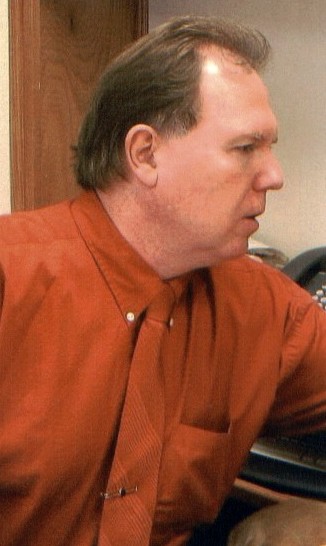
This past weekend, I had the pleasure to participate at Come Walk in Our Shoes, an annual experiential educational event in Central Texas. Sponsored by the VIP support group in Temple, the event had a strong showing of support from the local public. While the event is designed to be an educational outreach for the sighted public, it also served as a good networking of blind resources and as an information gathering opportunity as well.
The event had several challenge tables set up where sighted people were allowed to don a blindfold and attempt to do various tasks they are used to doing, but taking away their ability to rely on visual input. This is what the original concept of the event was—educating those who do not usually know how blind people function, but are interested enough to learn. However, as the event has evolved over the several years of its existence, it has grown to also include an offering of information and resources to the blind people in attendance.
One of the presenters at the event was Mark Marvel, with the
Blind Ambitions Groups,
A blind support group based in Dallas. The group’s web site offers its mission and purpose as follows:
“The mission of Blind Ambitions Groups is to educate blind and visually impaired people and their families about available resources – and to encourage each person to move to the next step – whatever it may be for that person."
"PURPOSE: Through support, we teach blind and visually impaired (hereinafter referred to as blind) people to advocate for themselves in getting what they need to facilitate a better quality of life.”
I met with Mark and am impressed with the work his group is doing. While they are based in Dallas, he said they are planning to offer their services state-wide in the future. Already, they host two radio programs on the Reading Radio network, Eye on Employment and Sound of Sight. There are archived shows available for download on their web site. There is a strong emphasis on advocacy and Mark is a really dynamic spokesperson who seems to have a good grasp of his resources. He also said their web site was going to undergo some updates in the coming days.
Take a little time to check out the group’s site and look through the archives of past shows. They present a good resource to offer your blind and visually impaired students who are looking for information and will eventually be seeking employment.
Also, while I was at this event, I had the opportunity to investigate, first-hand, the
Kurzweil - National Federation of the Blind reader.
At my last position, my colleague and I had read several news articles about this innovative piece of OCR scanning technology. Since the time I had first heard about it, I had been very intrigued by what is in essence, a portable scanner that runs OCR software. It is built with a digital camera linked to a PDA running OCR software designed by the granddaddy of OCR himself.
I think the KNFB Reader does a good job in scanning the photographs it takes and extracting out the text, but has a couple of drawbacks. In this age where computers are always processing information faster with each passing month, this device seemed a bit slow. The Reader also seemed a bit bulky for my taste, in its traditional camera bag-sized carrying case. For $3,500, I expected something a little more compact and also thought it would process the images faster. Perhaps, these aspects are coming in a future build of the unit. I have to admit that the whole concept of integrating the technologies that this device does is putting the tools in place to make independence among the blind a fact of life, even if the pricetag is a bit hefty.
Additionally, representatives from the Seeing Eye, the Texas Division for Rehabilitive Services, and a technology trainer who teaches blind consumers how to use JAWS and Zoom Text were also present and sharing information about their specific services.
Overall, the Come Walk in Our Shoes event was very successful in its mission to educate and provide resources. I look forward to seeing how this event grows for next year.
Monday, October 16, 2006


Friday, October 13, 2006
October 15 is National White Cane Safety Day
I know, October 15 falls on Sunday this year, and campuses are pretty much shut down, but I still wanted to get this out here.
Below is the text of the official White House press release designating this day.
********
FR:
Olegario D. Cantos VII, Esq.
Associate Director for Domestic Policy
The White House
- - - - - - - - - -
Just a few hours ago, the President signed a proclamation, declaring
October 15, 2006, as White Cane Safety Day. I therefore wanted to send
the text to you right away. Please distribute this widely.
Commemoration of this occasion enables communities all around the
country to focus attention on the abilities, independence, and spirit of
blind and visually impaired Americans. Since (as you have recently
seen) October is also National Disability Employment Awareness Month,
the appropriate related themes tie in quite well.
If you would like to receive a framable copy of the Proclamation which
is worthy of prominent display (featuring the Seal of the President in
gold and the signature of the President), please fax requests to (202)
456-2806. (Note that such requests are not processed through my
office.)
**********
WHITE CANE SAFETY DAY, 2006
- - - - - - -
BY THE PRESIDENT OF THE UNITED STATES OF AMERICA
A PROCLAMATION
Our Nation believes in the promise of all our citizens, and we must work
to ensure that the opportunities of America are more accessible to every
person. Many Americans who are blind or visually impaired use white
canes to enable them to enjoy greater mobility, engage in productive
work, and participate fully in all aspects of life. On White Cane
Safety Day, we celebrate the many achievements of Americans who are
blind or visually impaired, and we recognize the white cane as an
important symbol of their determination and independence.
My Administration remains committed to removing barriers that confront
Americans with disabilities. Since we launched the New Freedom
Initiative 5 years ago, we have worked to improve access to community
life, expand educational opportunities, strengthen training and
employment services, and promote the development of technology for
people with disabilities. We are building on the progress of the
Americans with Disabilities Act and working to make America a place
where all citizens have the opportunity to realize their full potential.
The Congress, by joint resolution (Public Law 88-628) approved on
October 6, 1964, as amended, has designated October 15 of each year as
"White Cane Safety Day."
NOW, THEREFORE, I, GEORGE W. BUSH, President of the United States of
America, do hereby proclaim October 15, 2006, as White Cane Safety Day.
I call upon public officials, business leaders, educators, librarians,
and all the people of the United States to join as we work to ensure
that the benefits and privileges of life in our great Nation are
available to Americans who are blind or visually impaired, and to
observe this day with appropriate ceremonies, activities, and programs.
IN WITNESS WHEREOF, I have hereunto set my hand this twelfth day of
October, in the year of our Lord two thousand six, and of the
Independence of the United States of America the two hundred and
thirty-first.
GEORGE W. BUSH
- - - - - - - - - -
Olegario D. Cantos VII, Esq.
Associate Director for Domestic Policy
The White House
Washington, DC 20502
(202) 456-7330 [Phone/Relay]
(202) 456-5557 [Fax]
ocantos@who.eop.gov
Below is the text of the official White House press release designating this day.
********
FR:
Olegario D. Cantos VII, Esq.
Associate Director for Domestic Policy
The White House
- - - - - - - - - -
Just a few hours ago, the President signed a proclamation, declaring
October 15, 2006, as White Cane Safety Day. I therefore wanted to send
the text to you right away. Please distribute this widely.
Commemoration of this occasion enables communities all around the
country to focus attention on the abilities, independence, and spirit of
blind and visually impaired Americans. Since (as you have recently
seen) October is also National Disability Employment Awareness Month,
the appropriate related themes tie in quite well.
If you would like to receive a framable copy of the Proclamation which
is worthy of prominent display (featuring the Seal of the President in
gold and the signature of the President), please fax requests to (202)
456-2806. (Note that such requests are not processed through my
office.)
**********
WHITE CANE SAFETY DAY, 2006
- - - - - - -
BY THE PRESIDENT OF THE UNITED STATES OF AMERICA
A PROCLAMATION
Our Nation believes in the promise of all our citizens, and we must work
to ensure that the opportunities of America are more accessible to every
person. Many Americans who are blind or visually impaired use white
canes to enable them to enjoy greater mobility, engage in productive
work, and participate fully in all aspects of life. On White Cane
Safety Day, we celebrate the many achievements of Americans who are
blind or visually impaired, and we recognize the white cane as an
important symbol of their determination and independence.
My Administration remains committed to removing barriers that confront
Americans with disabilities. Since we launched the New Freedom
Initiative 5 years ago, we have worked to improve access to community
life, expand educational opportunities, strengthen training and
employment services, and promote the development of technology for
people with disabilities. We are building on the progress of the
Americans with Disabilities Act and working to make America a place
where all citizens have the opportunity to realize their full potential.
The Congress, by joint resolution (Public Law 88-628) approved on
October 6, 1964, as amended, has designated October 15 of each year as
"White Cane Safety Day."
NOW, THEREFORE, I, GEORGE W. BUSH, President of the United States of
America, do hereby proclaim October 15, 2006, as White Cane Safety Day.
I call upon public officials, business leaders, educators, librarians,
and all the people of the United States to join as we work to ensure
that the benefits and privileges of life in our great Nation are
available to Americans who are blind or visually impaired, and to
observe this day with appropriate ceremonies, activities, and programs.
IN WITNESS WHEREOF, I have hereunto set my hand this twelfth day of
October, in the year of our Lord two thousand six, and of the
Independence of the United States of America the two hundred and
thirty-first.
GEORGE W. BUSH
- - - - - - - - - -
Olegario D. Cantos VII, Esq.
Associate Director for Domestic Policy
The White House
Washington, DC 20502
(202) 456-7330 [Phone/Relay]
(202) 456-5557 [Fax]
ocantos@who.eop.gov
Gallaudet University update
To update you, the
situation at Gallaudet University
is
continuing to escalate.
The campus of the Washington D.C. university for the deaf has now been shut down for two days due to students staging protests over the incoming president. In the latest turn of events, the football team joined the protest. Students are blocking entrances to the campus. Meanwhile, police sit by and watch.
This is not the first time that students at Gallaudet have demonstrated in sucha fashion. It was 18 years ago that student demonstrators forced the university to appoint the first deaf president.
The actions of the students are truly a statement of the deaf culture. The underlying argument, no matter how else it is presented, is that the incoming president is not deaf enough.
situation at Gallaudet University
is
continuing to escalate.
The campus of the Washington D.C. university for the deaf has now been shut down for two days due to students staging protests over the incoming president. In the latest turn of events, the football team joined the protest. Students are blocking entrances to the campus. Meanwhile, police sit by and watch.
This is not the first time that students at Gallaudet have demonstrated in sucha fashion. It was 18 years ago that student demonstrators forced the university to appoint the first deaf president.
The actions of the students are truly a statement of the deaf culture. The underlying argument, no matter how else it is presented, is that the incoming president is not deaf enough.
Wednesday, October 11, 2006
October is Breast Cancer Awareness Month
If you haven’t noticed the multitude of pink ribbons around us as a reminder, October is
National Breast Cancer Awareness Month.
Statistics on the incidence of breast cancer, according to the
National Breast Cancer Awareness Foundation, Inc web site
Show that:
“This year in America, more than 211,000 women will be diagnosed with breast cancer and 43,300 die.
One woman in eight either has or will develop breast cancer in her lifetime.
In addition, 1,600 men will be diagnosed with breast cancer and 400 will die this year.
If detected early, the five-year survival rate exceeds 95%.
Mammograms are among the best early detection methods, yet 13 million U.S. women 40 years of age or older have never had a mammogram.”
That last statistic is particularly interesting, as information on the
American Cancer Society web site
States:
“The Best Early Warning System for Breast Cancer?
A mammogram. Every year. Every woman age 40 and older. For Breast Cancer Awareness Month, mammograms are In the Spotlight.”
There are more than enough resources for reference material at these three linked sites, and they are much more athoritative than AccessAbility can be, so I’ll leave it to them to provide you you with more information.
What I will do is to encourage your DSS office to take an active role in supporting breast cancer awareness. Co-sponsor campus events highlighting awareness and get out there with reference material and resources. Join with your student health center and do something to promote awareness.
Look at those statistics, then look around you. The odds are that you will know one or more women who are dealing with or have survived breast cancer. If not, you will.
National Breast Cancer Awareness Month.
Statistics on the incidence of breast cancer, according to the
National Breast Cancer Awareness Foundation, Inc web site
Show that:
“This year in America, more than 211,000 women will be diagnosed with breast cancer and 43,300 die.
One woman in eight either has or will develop breast cancer in her lifetime.
In addition, 1,600 men will be diagnosed with breast cancer and 400 will die this year.
If detected early, the five-year survival rate exceeds 95%.
Mammograms are among the best early detection methods, yet 13 million U.S. women 40 years of age or older have never had a mammogram.”
That last statistic is particularly interesting, as information on the
American Cancer Society web site
States:
“The Best Early Warning System for Breast Cancer?
A mammogram. Every year. Every woman age 40 and older. For Breast Cancer Awareness Month, mammograms are In the Spotlight.”
There are more than enough resources for reference material at these three linked sites, and they are much more athoritative than AccessAbility can be, so I’ll leave it to them to provide you you with more information.
What I will do is to encourage your DSS office to take an active role in supporting breast cancer awareness. Co-sponsor campus events highlighting awareness and get out there with reference material and resources. Join with your student health center and do something to promote awareness.
Look at those statistics, then look around you. The odds are that you will know one or more women who are dealing with or have survived breast cancer. If not, you will.
Tuesday, October 10, 2006
New computer mouse device for the foot is on the horizon
For people who do not have use of their hands, living in a digital environment where operating a computer is almost a must, creates quite a challenge. Of course, there are mice designed to be operated by the foot, but there is now a
wireless hardware device designed to be worn on the foot
and not as an external device.
According to the Ars Technica news article:
“The future of computing could include a foot-activated input device, according to some HP researchers in the UK. The researchers have filed a Patent for a foot-controlled user interface that is intended to be used with a wearable computing device, but may also be used with a desktop computer.
Unlike existing foot "mice," the wireless device is to be worn on the foot, not operated as an external device by the foot. This would allow a freer range of motion and presumably more natural use. It is intended to be strapped to the foot or shoe of the user and, using an accelerometer and magnetic sensor, a reference unit can calculate relative positioning of the foot to translate it on the user interface. Various foot movements could be programmed to mean specific actions, such as twisting the foot for a left or right click. Although this sounds like a sport only to be practiced while on the comfort of your own couch, the patent claims that the device could also be used while standing.”
I know of a drafting student who did not have use of his hands, yet functioned quite well with adaptive computing using his foot to operate the external mouse. I wonder if he would be able to find use of this device once it hits the market and what his thoughts would be.
wireless hardware device designed to be worn on the foot
and not as an external device.
According to the Ars Technica news article:
“The future of computing could include a foot-activated input device, according to some HP researchers in the UK. The researchers have filed a Patent for a foot-controlled user interface that is intended to be used with a wearable computing device, but may also be used with a desktop computer.
Unlike existing foot "mice," the wireless device is to be worn on the foot, not operated as an external device by the foot. This would allow a freer range of motion and presumably more natural use. It is intended to be strapped to the foot or shoe of the user and, using an accelerometer and magnetic sensor, a reference unit can calculate relative positioning of the foot to translate it on the user interface. Various foot movements could be programmed to mean specific actions, such as twisting the foot for a left or right click. Although this sounds like a sport only to be practiced while on the comfort of your own couch, the patent claims that the device could also be used while standing.”
I know of a drafting student who did not have use of his hands, yet functioned quite well with adaptive computing using his foot to operate the external mouse. I wonder if he would be able to find use of this device once it hits the market and what his thoughts would be.
Unrest at Gallaudet and the deaf culture
Have you been following the news about the unrest at Gallaudet University? If not, read how the intensity of student unrest has
surprised the incoming Gallaudet leader.
This is a strong example of how the deaf culture is so unique among the world of people with disabilities. If you have not spent time with either your students or the interpreters at your school, sit down and do so to gain some valuable insight to a world beyond that which you know. I can personally attest to the awakening I experienced when I did just that. I must add that learning about the interpreters’ education and training experiences were a big cultural lesson for me.
surprised the incoming Gallaudet leader.
This is a strong example of how the deaf culture is so unique among the world of people with disabilities. If you have not spent time with either your students or the interpreters at your school, sit down and do so to gain some valuable insight to a world beyond that which you know. I can personally attest to the awakening I experienced when I did just that. I must add that learning about the interpreters’ education and training experiences were a big cultural lesson for me.
Friday, October 06, 2006
October is National Disability Employment Awareness Month
Don’t forget that October is
National Disability Employment Awareness month.
This is a great time to coordinate activities with your college’s career counseling office. Just think, you may be able to educate the career counselors and potential employers in your area on what the needs of people with disabilities are. Go forth, dispel the false ideas, and share what you know!
Do you have anything planned for the month in conjunction with this designation? If so, please post a comment and share it with the rest of our readers.
National Disability Employment Awareness month.
This is a great time to coordinate activities with your college’s career counseling office. Just think, you may be able to educate the career counselors and potential employers in your area on what the needs of people with disabilities are. Go forth, dispel the false ideas, and share what you know!
Do you have anything planned for the month in conjunction with this designation? If so, please post a comment and share it with the rest of our readers.
Wednesday, October 04, 2006
Review of Dragon Naturally Speaking 9
If you’ve been considering a purchase of Dragon Naturally Speaking 9, but weren’t sure what the highs and lows of it were, or if you’ve been weighing whether it would be worth an upgrade if running an older version, then the following should be of interest to you.
The folks at Ars Technica have a very good, pros and cons
Review of Dragon Naturally Speaking 9.
Dragon is a powerful program that serves those with limited hand usage very well. That goes not only for motor and neurological disorders, but includes Repetitive Stress Injuries. Everyone say it together…carpal tunnel syndrome!
In the review, the author makes a comparison of the current version to that which existed ten years ago. Of course, the differences are dramatic. Dragon 9 boasts an accuracy rate of 99%, but I’m sure that comes with time and practice. Still, if you’re in the market for this program, check out the review.
The folks at Ars Technica have a very good, pros and cons
Review of Dragon Naturally Speaking 9.
Dragon is a powerful program that serves those with limited hand usage very well. That goes not only for motor and neurological disorders, but includes Repetitive Stress Injuries. Everyone say it together…carpal tunnel syndrome!
In the review, the author makes a comparison of the current version to that which existed ten years ago. Of course, the differences are dramatic. Dragon 9 boasts an accuracy rate of 99%, but I’m sure that comes with time and practice. Still, if you’re in the market for this program, check out the review.
Tuesday, October 03, 2006
Model Home Designed for Visually Impaired
An interesting concept is being undertaken by the American Foundation for the Blind in how to demonstrate assistive household devices to people who have lost or are losing their sight.
In a Dallas
model home for the blind,the AFB has a physical facility that allows the visually impaired person to take a tour of the actual adaptive devices and products that can increase independent living. The model home is already open to the public and will have its grand opening on Oct. 27. Plans are also in the works to make a virtual tour of the home available over the web.
The web tour will be helpful for those folks who don't live near Dallas. This will allow people to see what the house has who would not otherwise be able to check out the offerings, but this virtual tour is limited in its scope. You can only see the items on the video monitor and the target audience is visually impaired. It will take some smart web designing to effectively communicate the displayed information in alternate formats. It can be done.
Perhaps this model home is a concept that can be replicated. Maybe each state that has a blind rehab center for adults could set up a model home to show their clients when they are at the center receiving services. I know the Criss Cole Center in Austin has some aspects of this in the kitchen areas, in the communications department, and the tech center.
This model home is truly an innovative concept that can have broader application if applied to different disabilities. Think about a home designed for a quadraplegic. The adaptive devices that would be demonstrated would apply not only to somebody with that specific disability, but could be explored for use by people with other disabilities.
While this information is not specifically about higher education, it does concern a group that this blog is targeted towards and I'm posting this information here as a resource for any students that might find interest in what is offered.
In a Dallas
model home for the blind,the AFB has a physical facility that allows the visually impaired person to take a tour of the actual adaptive devices and products that can increase independent living. The model home is already open to the public and will have its grand opening on Oct. 27. Plans are also in the works to make a virtual tour of the home available over the web.
The web tour will be helpful for those folks who don't live near Dallas. This will allow people to see what the house has who would not otherwise be able to check out the offerings, but this virtual tour is limited in its scope. You can only see the items on the video monitor and the target audience is visually impaired. It will take some smart web designing to effectively communicate the displayed information in alternate formats. It can be done.
Perhaps this model home is a concept that can be replicated. Maybe each state that has a blind rehab center for adults could set up a model home to show their clients when they are at the center receiving services. I know the Criss Cole Center in Austin has some aspects of this in the kitchen areas, in the communications department, and the tech center.
This model home is truly an innovative concept that can have broader application if applied to different disabilities. Think about a home designed for a quadraplegic. The adaptive devices that would be demonstrated would apply not only to somebody with that specific disability, but could be explored for use by people with other disabilities.
While this information is not specifically about higher education, it does concern a group that this blog is targeted towards and I'm posting this information here as a resource for any students that might find interest in what is offered.
Saturday, September 23, 2006
Access World: a rich resource for tech info
I will be without computer access for the next week, so I want to leave readers with a resource I’ve known about and used for several years. It the American Foundation for the Blind’s
Access World
magazine.
Access World is a bi-monthly publication of the AFB that documents and reviews the latest technological innovations and how taccessible the various products are to those with visual impairments. The on-line magazine is a rich resource for everything from comparisons of screen readers, OCR programs, and CCTVs to examining the accessibility of the latest models of cell phones. There was a recent feature on accessibility of different office copy machines. If you think those are confounding, you ought to try using one of those multi-tasking machines with little or no sight. That review really grabbed the essence of how inaccessible the world of most stand-alone copy machines are.
As if Access World were not resource enough, I’ll toss one other one out here. It is the
Official AFB web site.
While I will be off-line for a few days, fret not. AccessAbility will be back soon. Check back at the beginning of October. Until then, here’s to a more accessible world.
Access World
magazine.
Access World is a bi-monthly publication of the AFB that documents and reviews the latest technological innovations and how taccessible the various products are to those with visual impairments. The on-line magazine is a rich resource for everything from comparisons of screen readers, OCR programs, and CCTVs to examining the accessibility of the latest models of cell phones. There was a recent feature on accessibility of different office copy machines. If you think those are confounding, you ought to try using one of those multi-tasking machines with little or no sight. That review really grabbed the essence of how inaccessible the world of most stand-alone copy machines are.
As if Access World were not resource enough, I’ll toss one other one out here. It is the
Official AFB web site.
While I will be off-line for a few days, fret not. AccessAbility will be back soon. Check back at the beginning of October. Until then, here’s to a more accessible world.
Thursday, September 21, 2006
Federal Complaint About Monkey's Therapy/Assistance Role
Did you read about Debby Rose, the Springfield, MO woman who has filed a complaint with the federal government against the local health department? The reason for her complaint is that the health officials have ruled that her monkey is a therapy animal, not an assistance animal as she alleges, and has disallowed her access to establishments that serve or handle food.
According to the article in the Springfield News Leader:
“Rose said her monkey, Richard, is a service animal that helps her cope with a debilitating anxiety disorder, which includes a racing heart, high blood pressure and panic attacks in certain situations -- particularly public activities. Richard helps relieve that and, according to the Americans With Disabilities Act, she said, he should be allowed into public food places.”
“Director of Health Kevin Gipson maintained the health department's position that, according to its interpretation of ADA law, the monkey is a therapy animal or a pet -- not a service animal — and therefore not allowed in food establishments. According to health department research, "a service animal by definition has to perform a physical function for that person," Gipson said.”
“Gipson said he would reverse the decision if the federal government says Rose's monkey is a service animal. He encouraged Rose to file a complaint.”
This difference in opinion is exactly what I was writing about in an earlier post and to make certain that your school has a policy in place regarding assistance animals as well as therapy animals. Service animals do not always come in the canine variety. Don’t forget that just a couple of years ago a few miniature horses were trained to function as guides for blind people.
If interested, the full article about the woman’s allegation is at
the Springfield News Leader web site.
According to the article in the Springfield News Leader:
“Rose said her monkey, Richard, is a service animal that helps her cope with a debilitating anxiety disorder, which includes a racing heart, high blood pressure and panic attacks in certain situations -- particularly public activities. Richard helps relieve that and, according to the Americans With Disabilities Act, she said, he should be allowed into public food places.”
“Director of Health Kevin Gipson maintained the health department's position that, according to its interpretation of ADA law, the monkey is a therapy animal or a pet -- not a service animal — and therefore not allowed in food establishments. According to health department research, "a service animal by definition has to perform a physical function for that person," Gipson said.”
“Gipson said he would reverse the decision if the federal government says Rose's monkey is a service animal. He encouraged Rose to file a complaint.”
This difference in opinion is exactly what I was writing about in an earlier post and to make certain that your school has a policy in place regarding assistance animals as well as therapy animals. Service animals do not always come in the canine variety. Don’t forget that just a couple of years ago a few miniature horses were trained to function as guides for blind people.
If interested, the full article about the woman’s allegation is at
the Springfield News Leader web site.
Tuesday, September 19, 2006
New Multi-Language Driver for FS Pac Mate
If you have any visually impaired students who use the Pac Mate model note taker from Freedom Scientific, the following news release may be of interest to them, particularly if they are bilingual.
Freedom Scientific is pleased to announce the immediate availability of the new Multi-language keyboard driver for PAC mate, allowing you to add the ability to input text in eight different languages on your PAC mate QX.
This driver requires that you be running version 4.0 or later of the PAC mate software.
With this driver installed, you can choose from eight different keyboard layouts, allowing you to enter text in Spanish, Italian, German, European French, French Canadian, Brazilian Portuguese, French Swiss, and German Swiss. American and U.K. English already are included on PAC Mate QX models running PAC Mate Version 4.0 or later.
What Does It Cost?
The multi-language keyboard driver is a free download.
How Do I Get It?
A link to this download is available from the PAC mate Headquarters page on Freedom Scientific's web site, or you can go directly to the page by visiting
http://www.freedomscientific.com/PACMATE-HQ/PACMate_Multi_lang_Keybd_Driver.asp/
Follow the instructions on this page regarding downloading and installing the driver.
We're sure customers who work with multiple languages will enjoy the additional power and functionality this offers.
Jonathan Mosen.
Vice President, Blindness Hardware Product Management
Freedom Scientific BLV Group LLC
Freedom Scientific is pleased to announce the immediate availability of the new Multi-language keyboard driver for PAC mate, allowing you to add the ability to input text in eight different languages on your PAC mate QX.
This driver requires that you be running version 4.0 or later of the PAC mate software.
With this driver installed, you can choose from eight different keyboard layouts, allowing you to enter text in Spanish, Italian, German, European French, French Canadian, Brazilian Portuguese, French Swiss, and German Swiss. American and U.K. English already are included on PAC Mate QX models running PAC Mate Version 4.0 or later.
What Does It Cost?
The multi-language keyboard driver is a free download.
How Do I Get It?
A link to this download is available from the PAC mate Headquarters page on Freedom Scientific's web site, or you can go directly to the page by visiting
http://www.freedomscientific.com/PACMATE-HQ/PACMate_Multi_lang_Keybd_Driver.asp/
Follow the instructions on this page regarding downloading and installing the driver.
We're sure customers who work with multiple languages will enjoy the additional power and functionality this offers.
Jonathan Mosen.
Vice President, Blindness Hardware Product Management
Freedom Scientific BLV Group LLC
Saturday, September 16, 2006
AHEAD in Texas 2006 Fall Conference
I have just sent in my registration for the AHEAD in Texas 2006 Fall Conference, To be held Nov. 9-10 at Texas State University in San Marcos. If you still need to register or want more information about the event, then check out the conference web site at:
http://ahead.org/txahead/events/fallconf.php/
If you don’t already know, conference attendees get free membership in AHEAD in Texas for the next year. Aside from that perk, this event is the best opportunity to learn the latest trends in DSS and to also meet the professionals providing these services throughout the state.
Being the target audience of AccessAbility includes students with disabilities and their family members, I have a question for you if you are somebody from either of these two groups. Did you know that you can also join AHEAD in Texas?
It is true, and for those who can not make the annual conference, fear not. for you, membership is offered at a reduced fee from the professional members. Parents can join as an advocate member for $25 per year and students can join as student members for a mere $15 per year.
AccessAbility is not stumping for AHEAD in Texas, but simply serving as a conduit of information for those who may not know this information.
AHEAD is the parent organization for professionals in the DSS field. AHEAD in Texas is an affiliate of AHEAD. However, membership in one does not bring membership in the other.
Still, if you want to know what is going on at the state level, AHEAD in Texas is the pipeline of information that can keep you in touch. Membership also brings you into a networked group of professionals serving a common cause.
Check out the AHEAD in Texas web site for membership and contact information.
http://ahead.org/txahead/join.php
If you’re planning to attend the Fall Conference, I’ll see you there.
http://ahead.org/txahead/events/fallconf.php/
If you don’t already know, conference attendees get free membership in AHEAD in Texas for the next year. Aside from that perk, this event is the best opportunity to learn the latest trends in DSS and to also meet the professionals providing these services throughout the state.
Being the target audience of AccessAbility includes students with disabilities and their family members, I have a question for you if you are somebody from either of these two groups. Did you know that you can also join AHEAD in Texas?
It is true, and for those who can not make the annual conference, fear not. for you, membership is offered at a reduced fee from the professional members. Parents can join as an advocate member for $25 per year and students can join as student members for a mere $15 per year.
AccessAbility is not stumping for AHEAD in Texas, but simply serving as a conduit of information for those who may not know this information.
AHEAD is the parent organization for professionals in the DSS field. AHEAD in Texas is an affiliate of AHEAD. However, membership in one does not bring membership in the other.
Still, if you want to know what is going on at the state level, AHEAD in Texas is the pipeline of information that can keep you in touch. Membership also brings you into a networked group of professionals serving a common cause.
Check out the AHEAD in Texas web site for membership and contact information.
http://ahead.org/txahead/join.php
If you’re planning to attend the Fall Conference, I’ll see you there.
Friday, September 15, 2006
Undiagnosed Traumatic Brain Injury in Veterans
Service members injured during wartime who return stateside with a medical discharge and work to further themselves by attending college is not anything new. The current battle situation, however, involves innovations in battle armor which are much improved over past military incursions and the result is the potential for undiagnosed traumatic brain injuries.
According to an Associated Press article,
Brain Injuries are the Signature Wound of Iraq War.
The article indicates the person’s other, more obvious injuries may mask the symptoms of the TBI and preclude proper treatment.
“Doctors say traumatic brain injuries are the signature wound of the Iraq war, a byproduct of improved armor that allows troops to survive once-deadly attacks but does not fully protect against roadside explosives and suicide bombers.
So far, about 1,000 patients have been treated for the symptoms, which include slowed thinking, severe memory loss and problems with coordination and impulse control. Some doctors fear there may be thousands more active duty and discharged troops who are suffering undiagnosed.”
A related news article describes the situation getting worse as,Defense Department funding for its ten brain injury facilities is
being cut in half.
The reason for posting this information here on AccessAbility is to hopefully serve as a conductor of enlightenment, especially at those schools where a strong number of your population might be returning service members.
DSS Coordinators might want to evaluate your caseload and check for any clients who might be veterans fitting this profile. A follow-up could include an interview with any noted clients to discuss their diagnosis and ensure that it is proper. The ethical thing to do is to ensure that your clients are receiving the correct service from your office. Our veterans deserve this much consideration and then some.
According to an Associated Press article,
Brain Injuries are the Signature Wound of Iraq War.
The article indicates the person’s other, more obvious injuries may mask the symptoms of the TBI and preclude proper treatment.
“Doctors say traumatic brain injuries are the signature wound of the Iraq war, a byproduct of improved armor that allows troops to survive once-deadly attacks but does not fully protect against roadside explosives and suicide bombers.
So far, about 1,000 patients have been treated for the symptoms, which include slowed thinking, severe memory loss and problems with coordination and impulse control. Some doctors fear there may be thousands more active duty and discharged troops who are suffering undiagnosed.”
A related news article describes the situation getting worse as,Defense Department funding for its ten brain injury facilities is
being cut in half.
The reason for posting this information here on AccessAbility is to hopefully serve as a conductor of enlightenment, especially at those schools where a strong number of your population might be returning service members.
DSS Coordinators might want to evaluate your caseload and check for any clients who might be veterans fitting this profile. A follow-up could include an interview with any noted clients to discuss their diagnosis and ensure that it is proper. The ethical thing to do is to ensure that your clients are receiving the correct service from your office. Our veterans deserve this much consideration and then some.
Tuesday, September 12, 2006
ADHD Awareness Day is Sept. 20
One of the greatest rewards of the DSS field that I experienced on several occasions was helping somebody who felt like there was something going on, but they weren’t sure what it was. After gathering the symptoms, the usual result was a suspected LD or ADHD. The payoff came when the person returned with documentation supporting their newfound disability and they became a client of the office.
With this in mind, I offer the following reminder.
ADHD Awareness Day is September 20, 2006.
As in previous years, ADHD Experts on Call will also return again on that day.
If you are not familiar with that program, ADHD Experts on Call is an educational hot line that allows people affected by ADHD to speak with representatives from patient-advocacy groups, teachers, doctors, school nurses and parents. It is a great opportunity for someone who is dealing with the symptoms but not having a diagnosis to get some input from folks in the field who know what the experience is all about. This might be the very push that helps somebody go out and get the diagnosis. You’ll know if they come in later with their documentation in hand.
The toll-free number is 888-ASK-ADHD (888-275-2343), or you can chat online live with an ADHD expert at
www.ADHDExpertsOnCall.com,
All callers and Web chatters can receive free information about ADHD.
Please share this information with anybody you feel may beneifit from it.
An awareness day is a great opportunity for your office to plan outreach activities. Do you have anything planned for Sept. 20? How about any other day?
With this in mind, I offer the following reminder.
ADHD Awareness Day is September 20, 2006.
As in previous years, ADHD Experts on Call will also return again on that day.
If you are not familiar with that program, ADHD Experts on Call is an educational hot line that allows people affected by ADHD to speak with representatives from patient-advocacy groups, teachers, doctors, school nurses and parents. It is a great opportunity for someone who is dealing with the symptoms but not having a diagnosis to get some input from folks in the field who know what the experience is all about. This might be the very push that helps somebody go out and get the diagnosis. You’ll know if they come in later with their documentation in hand.
The toll-free number is 888-ASK-ADHD (888-275-2343), or you can chat online live with an ADHD expert at
www.ADHDExpertsOnCall.com,
All callers and Web chatters can receive free information about ADHD.
Please share this information with anybody you feel may beneifit from it.
An awareness day is a great opportunity for your office to plan outreach activities. Do you have anything planned for Sept. 20? How about any other day?
Thursday, September 07, 2006
Managing suicide risks: What about your school?
Last week, I posted about 1 in 5 students self mutilating at two Ivy League schools. In that post I mentioned that I was doing research, but never said what I was researching.
The research topic was suicide at college. My line of thinking was trying to understand if those students who commit suicide are living with a diagnosis and possibly receiving services from their DSS office for Depression or Bipolar disorder. I’m still looking at information I have been gathering.
Directly related to this subject, just yesterday, I didn’t have to look far to find the latest news story about college suicides. The Associated Press had one plastered on the site of my local paper, announcing
Colleges Grapple with student suicides
for all the world to see.
The deeper issue at the heart of that story is that the female student profiled had attempted suicide and was kicked out of her dorm for violating the school’s policy against suicide. Pop quiz…isn’t it depressed people that attempt suicide? Isn’t depression covered under the ADA?
Apparently Hunter College finally saw the error in that line of thinking and settled with the student, allowing her to continue classes and paid her a financial settlement as well. Additionally, the college is abandoning its suicide policy, but may still temporarily remove troubled students from residence halls. However, a spokesperson said that evictions will not be automatic.
The supporting information in that article suggests that schools may be held liable if a student commits suicide in his or her dorm room. Two judges have ruled that a school may have a duty to act in a preventive capacity if the student’s risk of suicide was foreseeable. As a result, some schools have tried to act in a more aggressive manner and sent students home when this risk became apparent.
Interesting thought provokers here, don’t you think?
How about your school, does it have a policy banning suicide? If so, how does this impact your students with psychological disorders? Is this legal? Is this ethical? Is it the right thing to do?
The research topic was suicide at college. My line of thinking was trying to understand if those students who commit suicide are living with a diagnosis and possibly receiving services from their DSS office for Depression or Bipolar disorder. I’m still looking at information I have been gathering.
Directly related to this subject, just yesterday, I didn’t have to look far to find the latest news story about college suicides. The Associated Press had one plastered on the site of my local paper, announcing
Colleges Grapple with student suicides
for all the world to see.
The deeper issue at the heart of that story is that the female student profiled had attempted suicide and was kicked out of her dorm for violating the school’s policy against suicide. Pop quiz…isn’t it depressed people that attempt suicide? Isn’t depression covered under the ADA?
Apparently Hunter College finally saw the error in that line of thinking and settled with the student, allowing her to continue classes and paid her a financial settlement as well. Additionally, the college is abandoning its suicide policy, but may still temporarily remove troubled students from residence halls. However, a spokesperson said that evictions will not be automatic.
The supporting information in that article suggests that schools may be held liable if a student commits suicide in his or her dorm room. Two judges have ruled that a school may have a duty to act in a preventive capacity if the student’s risk of suicide was foreseeable. As a result, some schools have tried to act in a more aggressive manner and sent students home when this risk became apparent.
Interesting thought provokers here, don’t you think?
How about your school, does it have a policy banning suicide? If so, how does this impact your students with psychological disorders? Is this legal? Is this ethical? Is it the right thing to do?
STEM subjects and blind students
As a DSS Coordinator, have you ever sat and wondered why rarely any blind students, not even the brightest of them, pursue STEM subjects?
If you’ve been in the DSS profession long enough, you already know the reason to that situation. While a myriad assortment of Assistive Technology (AT) does exist, it falls woefully short in providing full access. There is little that cracks the patina of what students in the STEM- Science, Technology, Engineering, and Mathematics- tracks would require. The burden to gather the proper resources to make the material in these courses accessible is monumental and will leave even the most veteran DSS Coordinator scrambling for help to find what tools exist to meet the student’s needs. For example, I know of one university that was recently saddled with getting a blind student’s graduate-level math book transcribed into braille. Due to the technical need for the nemeth code, the cost for translating just that one book was estimated near $10,000.
If you’re interested in a further informed and insightful discussion on STEM subjects and blind students, check out Chris Hofstader’s Blind Confidential blog at:
http://blindconfidential.blogspot.com/
Chris is a blind computer engineer and, thus, knows first-hand of the difficulty faced by students who pursue these academic tracks. He is also very well versed in the field of AT—he has previously worked as a software engineer at
Freedom Scientific
for six years.
Chris discusses two resources in the post, The Virtual Pencil and Gardner’s Accessible Graphing Calculator, which may not be common tools in many DSS Coordinator’s toolboxes. If interested in either of these, I offer the below information and links.
The Virtual Pencil is a software application which was originally designed for blind and low-vision students. However, the program has also been discovered to be of assistance to students with learning disabilities. If you want more information about this innovative product from the creative mind of Ted Henter, the original engineer who developed the JAWS screen reader, then go to the
Henter Math
homepage.
The official web site for theAccessible Graphing Calculator is:
http://www.tsbvi.edu/math/agc.htm/
The information on that web site describes the tool as follows:
“The Accessible Graphing Calculator (AGC) is a computer software program and was developed by the esteemed Science Access Project at Oregon State University, directed by Dr. John Gardner. This group is dedicated to the development of methods for making science, math, and engineering information accessible to people with print disabilities. "Print disabilities" include low vision, blindness, and dyslexia.”
Finally, going back to the Blind Confidential blog, if you continued scrolling after the discussion about STEM subjects and blind students, you also read Chris’ next post, offering a very brave and candid dialogue from the perspective of a blind person also dealing with severe depression and suicidal ideations. I applaud Chris for offering this frank understanding of what it was like for him to face the depths of hopelessness. While his language gets rough in some spots, he gives you a glimpse inside the mind of a person dealing with a major psychological event in his life. I believe it demonstrates very well how the perils of mental health can fall very hard on people with disabilities.
If you’ve been in the DSS profession long enough, you already know the reason to that situation. While a myriad assortment of Assistive Technology (AT) does exist, it falls woefully short in providing full access. There is little that cracks the patina of what students in the STEM- Science, Technology, Engineering, and Mathematics- tracks would require. The burden to gather the proper resources to make the material in these courses accessible is monumental and will leave even the most veteran DSS Coordinator scrambling for help to find what tools exist to meet the student’s needs. For example, I know of one university that was recently saddled with getting a blind student’s graduate-level math book transcribed into braille. Due to the technical need for the nemeth code, the cost for translating just that one book was estimated near $10,000.
If you’re interested in a further informed and insightful discussion on STEM subjects and blind students, check out Chris Hofstader’s Blind Confidential blog at:
http://blindconfidential.blogspot.com/
Chris is a blind computer engineer and, thus, knows first-hand of the difficulty faced by students who pursue these academic tracks. He is also very well versed in the field of AT—he has previously worked as a software engineer at
Freedom Scientific
for six years.
Chris discusses two resources in the post, The Virtual Pencil and Gardner’s Accessible Graphing Calculator, which may not be common tools in many DSS Coordinator’s toolboxes. If interested in either of these, I offer the below information and links.
The Virtual Pencil is a software application which was originally designed for blind and low-vision students. However, the program has also been discovered to be of assistance to students with learning disabilities. If you want more information about this innovative product from the creative mind of Ted Henter, the original engineer who developed the JAWS screen reader, then go to the
Henter Math
homepage.
The official web site for theAccessible Graphing Calculator is:
http://www.tsbvi.edu/math/agc.htm/
The information on that web site describes the tool as follows:
“The Accessible Graphing Calculator (AGC) is a computer software program and was developed by the esteemed Science Access Project at Oregon State University, directed by Dr. John Gardner. This group is dedicated to the development of methods for making science, math, and engineering information accessible to people with print disabilities. "Print disabilities" include low vision, blindness, and dyslexia.”
Finally, going back to the Blind Confidential blog, if you continued scrolling after the discussion about STEM subjects and blind students, you also read Chris’ next post, offering a very brave and candid dialogue from the perspective of a blind person also dealing with severe depression and suicidal ideations. I applaud Chris for offering this frank understanding of what it was like for him to face the depths of hopelessness. While his language gets rough in some spots, he gives you a glimpse inside the mind of a person dealing with a major psychological event in his life. I believe it demonstrates very well how the perils of mental health can fall very hard on people with disabilities.
Wednesday, September 06, 2006
Career Opportunities for Students with Disabilities
As a DSS coordinator a question I liked to ask my students was what their goals were beyond school. Where are you going with the education you are working on now?
Of course that was just the bait and was followed up with questions about what else they have done to prepare for the workplace. Ultimately, going to work is what they were usually getting their education for and, quite often, they had not even addressed the second question.
Naturally, a good resource for students with disabilities is the campus Career Counseling office. However, for more specialized attention, you can direct your students to the,
Career Opportunities for Students with Disabilities
(COSD) web site.
The website has a strong collection of resources and a national network of individuals, universities, and employers to assist in providing resources to students with disabilities seeking employment. It is specialized and serves the same population you serve. Check out the link above and take the time to explore the site. Registration is free and gets you access to the growing membership database. It is one of those tools that it can’t hurt to have at your disposal.
It was actually a Career Counselor at my university who introduced me to COSD during my graduate assistantship. I quickly realized that there is some good work going on at COSD.
To maximize service to your students, there is a good opportunity to explore a strong alliance between the DSS office and the Career Counseling office. During my job as a DSS Coordinator, my colleague and I frequently called upon our Career Counseling office. It really helped that the Director of Career Counseling was housed across the hall. Our offices had a close working relationship and we often collaborated on services to the DSS clients.
What do you think? Is this a feasible collaboration at your school? If a DSS office is unable to provide assistance in helping its student’s reach their end goal of going to work, have you really done all that you can to serve your students?
Of course that was just the bait and was followed up with questions about what else they have done to prepare for the workplace. Ultimately, going to work is what they were usually getting their education for and, quite often, they had not even addressed the second question.
Naturally, a good resource for students with disabilities is the campus Career Counseling office. However, for more specialized attention, you can direct your students to the,
Career Opportunities for Students with Disabilities
(COSD) web site.
The website has a strong collection of resources and a national network of individuals, universities, and employers to assist in providing resources to students with disabilities seeking employment. It is specialized and serves the same population you serve. Check out the link above and take the time to explore the site. Registration is free and gets you access to the growing membership database. It is one of those tools that it can’t hurt to have at your disposal.
It was actually a Career Counselor at my university who introduced me to COSD during my graduate assistantship. I quickly realized that there is some good work going on at COSD.
To maximize service to your students, there is a good opportunity to explore a strong alliance between the DSS office and the Career Counseling office. During my job as a DSS Coordinator, my colleague and I frequently called upon our Career Counseling office. It really helped that the Director of Career Counseling was housed across the hall. Our offices had a close working relationship and we often collaborated on services to the DSS clients.
What do you think? Is this a feasible collaboration at your school? If a DSS office is unable to provide assistance in helping its student’s reach their end goal of going to work, have you really done all that you can to serve your students?
Thursday, August 31, 2006
One out of five college students self mutilate
Can you imagine the number of students on your caseload if that figure were almost one fifth of your school’s entire population?
Its possible.
It would be a reality if the number of students in a recent study of self mutilation rates among college students are accurate, and that entire group came to you with a proper diagnosis.
Let me explain.
I was doing some web research this morning when I came across an article from Fox News. The article actually ran in early June and is about
self mutilation rates among college students
at two Ivy League universities, Cornell and Princeton. The frequency rate at these two colleges is nearly twenty percent. That’s one out of every five students.
The scope of this study includes not only cutting, but also burning and other methods of self injurious behavior.
According to the article, the frequency rates are similar to those reported at colleges, high schools, and middle schools across the nationn. It also reported more than 400 web sites dedicated to the subject of self mutilation.
After the earlier post here about cutting rates among young people on the wholeI felt compelled to provide additional information on this subject, as it is particular to college students.
In this Fox article, not only was this survey conducted with actual college students, but at two of the supposedly more elite universities of our country. If it is happening at this frequency there, there is a strong likelihood that it is happening at your school at similar rates.
These students have a noticeable psychological condition due to the dysfunction their behavior is causing in their daily living. The same question that was raised in the previous post on cutting can be raised again. If a student self identifies about the underlying psychological condition at the root of their cutting, what accommodations do DSS professionals make?
Just food for thought.
Its possible.
It would be a reality if the number of students in a recent study of self mutilation rates among college students are accurate, and that entire group came to you with a proper diagnosis.
Let me explain.
I was doing some web research this morning when I came across an article from Fox News. The article actually ran in early June and is about
self mutilation rates among college students
at two Ivy League universities, Cornell and Princeton. The frequency rate at these two colleges is nearly twenty percent. That’s one out of every five students.
The scope of this study includes not only cutting, but also burning and other methods of self injurious behavior.
According to the article, the frequency rates are similar to those reported at colleges, high schools, and middle schools across the nationn. It also reported more than 400 web sites dedicated to the subject of self mutilation.
After the earlier post here about cutting rates among young people on the wholeI felt compelled to provide additional information on this subject, as it is particular to college students.
In this Fox article, not only was this survey conducted with actual college students, but at two of the supposedly more elite universities of our country. If it is happening at this frequency there, there is a strong likelihood that it is happening at your school at similar rates.
These students have a noticeable psychological condition due to the dysfunction their behavior is causing in their daily living. The same question that was raised in the previous post on cutting can be raised again. If a student self identifies about the underlying psychological condition at the root of their cutting, what accommodations do DSS professionals make?
Just food for thought.
Tuesday, August 29, 2006
Eemergency evacuation plans and students with disabilities
With the new school year freshly underway, all colleges and universities need to have plans in place for safe evacuation of students with disabilities. This includes dorms and residence halls. Many schools made sure to draw up these types of plans when the Sept. 11 tragedy highlighted the difficult task that people with disabilities can have when they need to leave a building during an emergency. Once the plans are developed, it is important that they are periodically revisited to account for any necessary changes.
How about your school? If there is an emergency and either the classroom buildings or dorms need to be evacuated, do you have a plan in place for getting your students with disabilities out of the buildings? When was the last time you reviewed your school’s plan?
If you need assistance in developing or refocusing your evacuation plan, the following ten questions from the
Easter Seals
web site may aid as a guide in this task. (The questions are directed towards the individuals with disabilities, prompting them to plan for their own safety, but are easily modified for perspective taking.)
1. Do you need help with personal care, or use adaptive equipment to meet your personal care needs?
• What assistance would you need in an emergency?
• What would you do if water or electricity were cut off?
2. Do you need accessible transportation?
3. Do you need assistance to leave your home or office?
4. How will you need to be alerted to an emergency?
5. If elevators are not working, do you have a back-up plan?
6. Who will be available and know how to help you exit?
7. Will you need mobility aids to exit?
• Will you need back-up mobility aids when you reach a safe place?
8. Do you need medical supplies available in a safe place?
9. Will you need assistance in training and caring for a service animal?
10. Who needs to know where you will be after an emergency evacuation?
These questions really place the focus where planning for emergency evacuation of people with disabilities should be directed. When an emergency arises, it is too late to develop an evacuation plan for students with disabilities. It cannot be emphasized strongly enough how critical it is to be proactive in doing this.
I encourage you to pull out your school’s emergency evacuation plan and read over it. Then look over your caseload and see what concerns each of your students might have in the event of an emergency evacuation. If the provisions in place do not address the concerns of the students you serve as the DSS Coordinator, then it is your inherent duty to bring this need to the person who has authority over your school’s plan.
How about your school? If there is an emergency and either the classroom buildings or dorms need to be evacuated, do you have a plan in place for getting your students with disabilities out of the buildings? When was the last time you reviewed your school’s plan?
If you need assistance in developing or refocusing your evacuation plan, the following ten questions from the
Easter Seals
web site may aid as a guide in this task. (The questions are directed towards the individuals with disabilities, prompting them to plan for their own safety, but are easily modified for perspective taking.)
1. Do you need help with personal care, or use adaptive equipment to meet your personal care needs?
• What assistance would you need in an emergency?
• What would you do if water or electricity were cut off?
2. Do you need accessible transportation?
3. Do you need assistance to leave your home or office?
4. How will you need to be alerted to an emergency?
5. If elevators are not working, do you have a back-up plan?
6. Who will be available and know how to help you exit?
7. Will you need mobility aids to exit?
• Will you need back-up mobility aids when you reach a safe place?
8. Do you need medical supplies available in a safe place?
9. Will you need assistance in training and caring for a service animal?
10. Who needs to know where you will be after an emergency evacuation?
These questions really place the focus where planning for emergency evacuation of people with disabilities should be directed. When an emergency arises, it is too late to develop an evacuation plan for students with disabilities. It cannot be emphasized strongly enough how critical it is to be proactive in doing this.
I encourage you to pull out your school’s emergency evacuation plan and read over it. Then look over your caseload and see what concerns each of your students might have in the event of an emergency evacuation. If the provisions in place do not address the concerns of the students you serve as the DSS Coordinator, then it is your inherent duty to bring this need to the person who has authority over your school’s plan.
Subscribe to:
Posts (Atom)