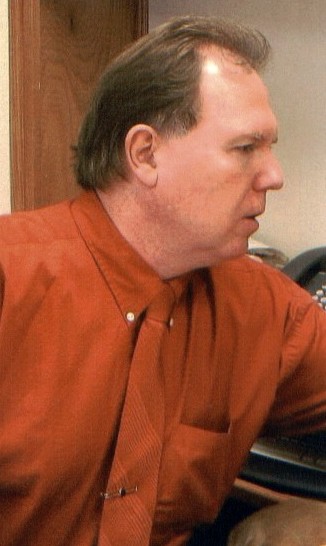
I spent Friday morning conducting an interview for submission to the
Disability 411 podcast.
Beth had recently sent out a call for guest submissions to help her manage recent time crunches on Disability 411. With that opening, I figured I’d take my first crack at the world of podcasting and called up a good friend,
Marcus Engel,
To be the interviewee for my freshman introduction.
I have known Marcus for twelve years and find him to be an interesting and fascinating man. He is a 31-year old professional speaker and author of two books. He was blinded at age 18 in 1993 as the result of an auto accident when the car he was riding in was hit by a drunk driver. After more than 300 hours of surgery, most of it above the neck, Mark redirected his life with a positive attitude and a personal motivation for success.
I don’t know if Beth will select this interview for inclusion in her podcast, but I certainly hope she will. Granted the interviewer sort of stumbles a bit in his questioning, but give him a break. It is his first podcast effort. As for Marcus, his replies are interesting and thought provoking.
Whether she uses the interview in her podcast or not, Marcus is donating signed copies of both his books for Beth to give away to listeners of Disability 411. He is also offering a computer file of his manuscripts to those with a disability that keeps them from reading printed material. They can get this by simply emailing him through his website. Now, that’s accessibility!
To learn more about Marcus, click the link above for his official home page. On that site, you can also subscribe to the monthly newsletter that he writes. As if the speaking schedule, book and newsletter writing weren’t enough, Marcus also writes
Engel’s Ensights,
His personal blog with updates on a regular basis.
Monday, March 05, 2007


Sunday, March 04, 2007
LearnOutLoud.com appears promising, but has accessibility concerns
I recently learned of an interesting clearinghouse for audio and video learning resources.
LearnOutLoud.com
Claims to have more than 10,000 educational audio books, podcasts, mp3 downloads, as well as videos at its disposal. They boast to have the internet’s largest collection of these items. Of this vast collection, they have more than 500 audio and video titles which are free. It does have a searchable database that appears to have strong potential.
The site also hawks an e-magazine and a “Free resource of the day” email.
This all sounds good and promising, but I have not personally delved any deeper into their offerings beyond the home page. I find the web site to be very cluttered and several of the links in dire need of alt tags. It is not very screen reader friendly and that’s both sad and ironic. It would be to the advantage of the site’s owners if they would realize that their project could be of great service to the population of students with disabilities, but to serve this population, they will need to address the accessibility of the overall site.
LearnOutLoud.com
Claims to have more than 10,000 educational audio books, podcasts, mp3 downloads, as well as videos at its disposal. They boast to have the internet’s largest collection of these items. Of this vast collection, they have more than 500 audio and video titles which are free. It does have a searchable database that appears to have strong potential.
The site also hawks an e-magazine and a “Free resource of the day” email.
This all sounds good and promising, but I have not personally delved any deeper into their offerings beyond the home page. I find the web site to be very cluttered and several of the links in dire need of alt tags. It is not very screen reader friendly and that’s both sad and ironic. It would be to the advantage of the site’s owners if they would realize that their project could be of great service to the population of students with disabilities, but to serve this population, they will need to address the accessibility of the overall site.
Senator Harkin: Congress may be restoring ADA
Hark, hark, Senator Harkin!
If you missed it, Sen. Tom Harkin (D-Iowa) remarked in a Feb. 27 presentation that the new Congress may push for
restoring the Americans with Disabilities ACT.
He commented that the ADA has been defined narrower than Congress had originally intended.
He also dogged the current Medicare policy restricting wheelchair purchases to only those appropriate around the home, giving no regard to people with disabilities being mobile and activbe in the communities within which they live.
If you missed it, Sen. Tom Harkin (D-Iowa) remarked in a Feb. 27 presentation that the new Congress may push for
restoring the Americans with Disabilities ACT.
He commented that the ADA has been defined narrower than Congress had originally intended.
He also dogged the current Medicare policy restricting wheelchair purchases to only those appropriate around the home, giving no regard to people with disabilities being mobile and activbe in the communities within which they live.
Wednesday, February 28, 2007
Breast cancer drug trial results appear biased
In research and statistics classes, one idea is often repeated—be skeptical of statistics. It is not meant to degrade the value of statistical information, but more as a guide to pursue the purpose of the provided statistical information. The professors want students to evaluate the source of the research, usually by examining who provided the funding for the research. To be objective, research should be free of bias.
Unfortunately, bias seems to be the case being reflected in a world where advances and growing awareness are regularly reported—breast cancer research. In a Mcclatchy Newspapers article, it is noted that
Funding seems to affect breast cancer drug trial results.
According to the article:
“Some 84 percent of company-supported drug studies published in 10 major medical journals in 2003 reported positive results about the breast cancer drugs they investigated, according to an analysis by Dr. Jeffrey Peppercorn, a cancer physician and researcher at University of North Carolina-Chapel Hill's School of Medicine, and colleagues at Harvard's Dana-Farber Cancer Institute.”
“Non-industry supported studies were far less likely to be upbeat, publishing favorable results just 54 percent of the time.”
Compare and digest those numbers: 84% favorable when it is company funded research versus 54% favorable when studies were independent.
It doesn’t take a statistics major to figure that this equals a 30% differential when the drug companies are not funding the research.
If the statistical research being submitted is as skewed as this article reports, then This is truly sad. Breast cancer is a dangerous killer and honest research needs to be conducted to maintain a vigilant battle to defeat this beast.
We are taught that statistics are just numbers. We are also taught that just because the difference exists, this does not infer any causal relationship. However, recognizing this difference does make my eyebrows raise, oh, about 100% of the time.
Unfortunately, bias seems to be the case being reflected in a world where advances and growing awareness are regularly reported—breast cancer research. In a Mcclatchy Newspapers article, it is noted that
Funding seems to affect breast cancer drug trial results.
According to the article:
“Some 84 percent of company-supported drug studies published in 10 major medical journals in 2003 reported positive results about the breast cancer drugs they investigated, according to an analysis by Dr. Jeffrey Peppercorn, a cancer physician and researcher at University of North Carolina-Chapel Hill's School of Medicine, and colleagues at Harvard's Dana-Farber Cancer Institute.”
“Non-industry supported studies were far less likely to be upbeat, publishing favorable results just 54 percent of the time.”
Compare and digest those numbers: 84% favorable when it is company funded research versus 54% favorable when studies were independent.
It doesn’t take a statistics major to figure that this equals a 30% differential when the drug companies are not funding the research.
If the statistical research being submitted is as skewed as this article reports, then This is truly sad. Breast cancer is a dangerous killer and honest research needs to be conducted to maintain a vigilant battle to defeat this beast.
We are taught that statistics are just numbers. We are also taught that just because the difference exists, this does not infer any causal relationship. However, recognizing this difference does make my eyebrows raise, oh, about 100% of the time.
Monday, February 26, 2007
Assistive technology allows "low functioning autistic" to function beautifully
I usually use the forum of Access Ability to provide links to web sites that provide qualified and worthy resources or news that is of interest to DSS professionals. As a result, I limit links to any personal blogs, as many are only personal soapboxes and do not usually provide credible, professional information. However, I have discovered one that is definitely worthy of the attention of DSS professionals. Let me direct you to
Ballastexistenz,
The blog site of Amanda Baggs, a woman with autism.
Her doctors describe Ms. Baggs as “a low-functioning autistic.” However, when you read her blog, you will see that this label is very misleading. What this misnomer fails to grasp is the stimulating intellect that Ms. Baggs’ possesses. The mind which hides behind her disabling condition can totally flourish when provided the proper assistive technology.
Ms. Baggs is a video blogger with a demonstrative video posted under her on-line name of
SilentMiaow
posted on Youtube. Her video
in my language
was shot, edited, and posted by Ms. Baggs herself.
On the link of her blog marked “About,” Ms. Baggs explains the insightful and thought-provoking source of the name of her blog and further discloses:
I am a non-speaking physically disabled and autistic woman who’s lived in institutions, whose income comes from a disability check, and whose services are funded by the state.”
“This blog is about assorted ideas, but most will have something to do with human rights, autistic liberation, disability rights, and so forth.”
Check out her blog and see what I’m talking about. For somebody who classifies herself as “non-speaking,” she sure has a lot to say…and she says a lot that is worthwhile. Her video is a strong statement of this fact.
I originally came across this post through another blogger’s writing about Ms. Baggs via a news alert for the terms “assistive technology.” I think her Ballastexistenz blog demonstrates a hallmark example of what strides people with disabilities can gain via AT.
Ballastexistenz,
The blog site of Amanda Baggs, a woman with autism.
Her doctors describe Ms. Baggs as “a low-functioning autistic.” However, when you read her blog, you will see that this label is very misleading. What this misnomer fails to grasp is the stimulating intellect that Ms. Baggs’ possesses. The mind which hides behind her disabling condition can totally flourish when provided the proper assistive technology.
Ms. Baggs is a video blogger with a demonstrative video posted under her on-line name of
SilentMiaow
posted on Youtube. Her video
in my language
was shot, edited, and posted by Ms. Baggs herself.
On the link of her blog marked “About,” Ms. Baggs explains the insightful and thought-provoking source of the name of her blog and further discloses:
I am a non-speaking physically disabled and autistic woman who’s lived in institutions, whose income comes from a disability check, and whose services are funded by the state.”
“This blog is about assorted ideas, but most will have something to do with human rights, autistic liberation, disability rights, and so forth.”
Check out her blog and see what I’m talking about. For somebody who classifies herself as “non-speaking,” she sure has a lot to say…and she says a lot that is worthwhile. Her video is a strong statement of this fact.
I originally came across this post through another blogger’s writing about Ms. Baggs via a news alert for the terms “assistive technology.” I think her Ballastexistenz blog demonstrates a hallmark example of what strides people with disabilities can gain via AT.
Saturday, February 24, 2007
NAD celebrating Read Captions Across America
On March 2, the National Association of the Deaf (NAD) is launching its 2nd
Read Captions Across America Campaign.
This event is in conjunction with the National Education Association’s (NEA) Read Across America celebration.
In the press release on its web site, the NAD explains this observance as:
“Read Captions Across America puts emphasis on the importance of captioned media (DVD, CD-ROM and Internet streaming) as a reading tool for deaf and hearing children alike.”
“The Described and Captioned Media Program (DCMP), administered by the NAD and funded by the U.S. Department of Education, is organizing and promoting Read Captions Across America and loaning captioned media for the event as well. “We are pleased to be joining the NEA in celebrating the joy of reading,” says Nancy J. Bloch, NAD Chief Executive Officer. ‘Teachers and parents of young children are fast discovering the benefits of captioned media in fostering literacy development.’”
“Captions are text forms of the spoken word and often convey sound effects. Captions and subtitles can be carried on DVD, videotape, broadcast TV and cable TV. Also, an increasing amount of content on the Internet has sound, with some of it being captioned. While captions were originally developed for deaf and hard of hearing persons, they are increasingly used by others to develop reading skills.”
Please share the news of this great awareness campaign. While they are marking this observance during the week of March 2, and the week following, both Read Captions Across America and Read Across America are year-long campaigns.
Read Captions Across America Campaign.
This event is in conjunction with the National Education Association’s (NEA) Read Across America celebration.
In the press release on its web site, the NAD explains this observance as:
“Read Captions Across America puts emphasis on the importance of captioned media (DVD, CD-ROM and Internet streaming) as a reading tool for deaf and hearing children alike.”
“The Described and Captioned Media Program (DCMP), administered by the NAD and funded by the U.S. Department of Education, is organizing and promoting Read Captions Across America and loaning captioned media for the event as well. “We are pleased to be joining the NEA in celebrating the joy of reading,” says Nancy J. Bloch, NAD Chief Executive Officer. ‘Teachers and parents of young children are fast discovering the benefits of captioned media in fostering literacy development.’”
“Captions are text forms of the spoken word and often convey sound effects. Captions and subtitles can be carried on DVD, videotape, broadcast TV and cable TV. Also, an increasing amount of content on the Internet has sound, with some of it being captioned. While captions were originally developed for deaf and hard of hearing persons, they are increasingly used by others to develop reading skills.”
Please share the news of this great awareness campaign. While they are marking this observance during the week of March 2, and the week following, both Read Captions Across America and Read Across America are year-long campaigns.
New E-Journal from Access Technologists Higher Education Network
I have previously posted about the
Access Technologist Higher Education Network,
or ATHEN, so their name should not be new to those who have been reading this blog for a while.
However, what is new is that this proactive assistive technology group has just published their second issue of
The ATHEN E-Journal.
This issue’s focus is on web accessibility and higher education, strongly emphasizing providing future support and training. The articles listed in the journal include:
* Welcome to the ATHEN E-Journal Issue #2
* Accessible Electronic & Information Technology: Legal Obligations of Higher Education and Section 508
* Cultivating and Maintaining Web Accessibility Expertise and Institutional Support in Higher Education
* Accessibility Training for Distance Learning Personnel
* Case Studies in Training and Professional Development for Web Accessibility
* Contributors
Take the time to check it out. The E-journal has some good information and resources. While you’re at it, also bookmark the ATHEN site as an on-going resource to turn to for updated information in the access technology newsfront.
Access Technologist Higher Education Network,
or ATHEN, so their name should not be new to those who have been reading this blog for a while.
However, what is new is that this proactive assistive technology group has just published their second issue of
The ATHEN E-Journal.
This issue’s focus is on web accessibility and higher education, strongly emphasizing providing future support and training. The articles listed in the journal include:
* Welcome to the ATHEN E-Journal Issue #2
* Accessible Electronic & Information Technology: Legal Obligations of Higher Education and Section 508
* Cultivating and Maintaining Web Accessibility Expertise and Institutional Support in Higher Education
* Accessibility Training for Distance Learning Personnel
* Case Studies in Training and Professional Development for Web Accessibility
* Contributors
Take the time to check it out. The E-journal has some good information and resources. While you’re at it, also bookmark the ATHEN site as an on-going resource to turn to for updated information in the access technology newsfront.
Wednesday, February 21, 2007
Two assistive technology resources
Today, I present two leads for assistive technology, one I discovered on my own and the other is a user review describing his adaptation of a gaming keyboard, turning it into an assistive technology device.
After a recent hard drive crash on my old computer, I was forced into looking at getting a new pc. In doing this, the one thing that I knew I wanted to avoid was getting a computer with the new Microsoft Vista operating system. I use JAWS as my screen reader and the newness that is Vista was something JAWS wasn’t quite up to handling just yet. I had no problem finding a pc with Windows XP and was soon back in the digital world.
One thing I took for granted on my old computer was the CD burning program, Record Now. That program had come installed as part of the manufacturer’s package and I was happily surprised when first using it because I found it was designed with accessibility in mind. There was even an accessibility heading under the help menu which told how the manufacturer wanted the software to work with screen readers.
When I first attempted to burn some files onto a CD on the new machine, I had to look around the programs to find the one to use. There are actually three applications on here that can do the job, but, unfortunately, none of them are very accessible, nor are they designed to be intuitive in their operation. This brought me to search for an accessible CD burning program.
Fortunately, this search didn’t take too long. I quickly found the Premiere CD/DVD Creator manufactured by
Premiere Assistive Software.
The program was easy to locate and download and, best of all, it was free. More than that, though, is that it was designed to be accessible to screen readers.
I instantly recognized the Premiere Assistive Software name, as it was the manufacturer of some software programs we used in providing DSS to students at my last position. The main draw of their software for our job was that they did the tasks we needed very well and were affordable. The link above will take you to a page listing all the available titles. Some, like the CD/DVD Creator and talking calculator, are free.
The other item I want to share is how somebody took a
Logitech G11 gaming keyboard
that was not intended as assistive technology, but after he saw the device’s abilities, quickly understood how it could be made to meet his AT needs. The focus is the keyboard’s additional, programmable function and mode keys. Instead of assigning game functions to these keys, the user assigned executable macros to them and made it function as AT to assist him in overcoming his physical limitations.
Again, technology not specifically designed to work as AT fits well into the DSS domain. This is the true beauty of designing products with universal access. If only the manufacturer’s could see this, they could open up new markets for their products.
After a recent hard drive crash on my old computer, I was forced into looking at getting a new pc. In doing this, the one thing that I knew I wanted to avoid was getting a computer with the new Microsoft Vista operating system. I use JAWS as my screen reader and the newness that is Vista was something JAWS wasn’t quite up to handling just yet. I had no problem finding a pc with Windows XP and was soon back in the digital world.
One thing I took for granted on my old computer was the CD burning program, Record Now. That program had come installed as part of the manufacturer’s package and I was happily surprised when first using it because I found it was designed with accessibility in mind. There was even an accessibility heading under the help menu which told how the manufacturer wanted the software to work with screen readers.
When I first attempted to burn some files onto a CD on the new machine, I had to look around the programs to find the one to use. There are actually three applications on here that can do the job, but, unfortunately, none of them are very accessible, nor are they designed to be intuitive in their operation. This brought me to search for an accessible CD burning program.
Fortunately, this search didn’t take too long. I quickly found the Premiere CD/DVD Creator manufactured by
Premiere Assistive Software.
The program was easy to locate and download and, best of all, it was free. More than that, though, is that it was designed to be accessible to screen readers.
I instantly recognized the Premiere Assistive Software name, as it was the manufacturer of some software programs we used in providing DSS to students at my last position. The main draw of their software for our job was that they did the tasks we needed very well and were affordable. The link above will take you to a page listing all the available titles. Some, like the CD/DVD Creator and talking calculator, are free.
The other item I want to share is how somebody took a
Logitech G11 gaming keyboard
that was not intended as assistive technology, but after he saw the device’s abilities, quickly understood how it could be made to meet his AT needs. The focus is the keyboard’s additional, programmable function and mode keys. Instead of assigning game functions to these keys, the user assigned executable macros to them and made it function as AT to assist him in overcoming his physical limitations.
Again, technology not specifically designed to work as AT fits well into the DSS domain. This is the true beauty of designing products with universal access. If only the manufacturer’s could see this, they could open up new markets for their products.
Tuesday, February 20, 2007
Informative article about epilepsy
I want to tell you about an interesting article in today’s
New York Times.
Though the article focuses on the life experiences of a 12-year old girl with epilepsy and the impact on her family as well as herself, ,it provides a good overall understanding of the difficulties faced with this neurological disability. It discusses the trade-off of having the seizures versus the often impairing side effects of medication and also the role diet may play in the management of the disorder. It also explores the social stigma associated with epilepsy.
Some statistics in the article worth noting:
*50 million people worldwide have epilepsy
*2.7 million Americans have epilepsy
* There are more Americans with epilepsy than those with Parkinson’s disease, Multiple sclerosis, and Lou Gherig’s disease combined
* 30% of the people with epilepsy have seizures which are not controlled by existing treatments
I have had several close friendships over my lifetime with people who have epilepsy and thought I knew a lot about the disorder, yet still found the article very insightful and informative, learning things I had not previously known about epilepsy. Check it out— it is a good read. (Remember that the Times requires registration to read their articles, but it is free.)
New York Times.
Though the article focuses on the life experiences of a 12-year old girl with epilepsy and the impact on her family as well as herself, ,it provides a good overall understanding of the difficulties faced with this neurological disability. It discusses the trade-off of having the seizures versus the often impairing side effects of medication and also the role diet may play in the management of the disorder. It also explores the social stigma associated with epilepsy.
Some statistics in the article worth noting:
*50 million people worldwide have epilepsy
*2.7 million Americans have epilepsy
* There are more Americans with epilepsy than those with Parkinson’s disease, Multiple sclerosis, and Lou Gherig’s disease combined
* 30% of the people with epilepsy have seizures which are not controlled by existing treatments
I have had several close friendships over my lifetime with people who have epilepsy and thought I knew a lot about the disorder, yet still found the article very insightful and informative, learning things I had not previously known about epilepsy. Check it out— it is a good read. (Remember that the Times requires registration to read their articles, but it is free.)
Monday, February 19, 2007
Adaptech Research Network-- a great DSS resource
I have just recently learned about a Canadian web site that seems very promising in what it brings to the table for DSS. While it is from our northern neighbor, the information presents a strong parallel to U.S. colleges and universities.
The Adaptech Research Network
Has information that should be of interest to any DSS provider. It offers resources that would fit in with any program. They are also seeking input that DSS providers should have thoughts on.
On its website, ARN is seeking informational input about free or low-cost software programs that would be beneficial to students with disabilities. By low-cost, they mean under $200. If you have names of software titles you would like to share, email
catherine.fichten@mcgill.ca
She would also like the name of the companies that manufacture the software, if you have it.
The reason for this query is to expand the ARN’s
database of free and low-cost software.
They have recently updated their database, but are continuously seeking to expand the listings. They would also like any input you might offer on the usability of the library. If you have any comments, please email Catherine at the email address above.
Additionally, the ARN has recent data that is of interest to DSS professionals. They have conducted research into graduation/employment rates of students with disabilities, comparing these rates to the non-disabled student population.
Here is a synopsis of the study from their website:
“The Adaptech Research Network in collaboration with our partners recently completed three studies whose goal was to explore obstacles and facilitators to college studies and examine what happens to college graduates with and without disabilities a year after graduation. Participants were: 182 graduates with and 1304 without disabilities from three large junior/community colleges, 57 college based professionals providing disability-related services, and 300 students with disabilities who were registered to receive disability related services from their college. While current students with disabilities indicated that disability-related accommodations such as extended time on exams were important facilitators, for the most part these students, as well as graduates with disabilities, mentioned the same facilitators as their nondisabled peers. The same was generally true for obstacles. The main difference here was that students and graduates with disabilities cited disability-related issues, such as health, as a major obstacle. Graduates with and without disabilities continued their studies and obtained jobs at the same rate as nondisabled graduates.”
You can download the executive summary of their report in either MS-Word or PDF format from their web site linked above.
The Adaptech Research Network
Has information that should be of interest to any DSS provider. It offers resources that would fit in with any program. They are also seeking input that DSS providers should have thoughts on.
On its website, ARN is seeking informational input about free or low-cost software programs that would be beneficial to students with disabilities. By low-cost, they mean under $200. If you have names of software titles you would like to share, email
catherine.fichten@mcgill.ca
She would also like the name of the companies that manufacture the software, if you have it.
The reason for this query is to expand the ARN’s
database of free and low-cost software.
They have recently updated their database, but are continuously seeking to expand the listings. They would also like any input you might offer on the usability of the library. If you have any comments, please email Catherine at the email address above.
Additionally, the ARN has recent data that is of interest to DSS professionals. They have conducted research into graduation/employment rates of students with disabilities, comparing these rates to the non-disabled student population.
Here is a synopsis of the study from their website:
“The Adaptech Research Network in collaboration with our partners recently completed three studies whose goal was to explore obstacles and facilitators to college studies and examine what happens to college graduates with and without disabilities a year after graduation. Participants were: 182 graduates with and 1304 without disabilities from three large junior/community colleges, 57 college based professionals providing disability-related services, and 300 students with disabilities who were registered to receive disability related services from their college. While current students with disabilities indicated that disability-related accommodations such as extended time on exams were important facilitators, for the most part these students, as well as graduates with disabilities, mentioned the same facilitators as their nondisabled peers. The same was generally true for obstacles. The main difference here was that students and graduates with disabilities cited disability-related issues, such as health, as a major obstacle. Graduates with and without disabilities continued their studies and obtained jobs at the same rate as nondisabled graduates.”
You can download the executive summary of their report in either MS-Word or PDF format from their web site linked above.
EASI offering podcasts, tips for creating accessible web seminar
I have previously posted information about
EASI,
the web site for Equal Access to Software and Information. These are usually about educational seminars teaching how to create accessible materials. Today, I will share two more resources from EASI, one that is a new feature and another web seminar they are offering.
Podcasts have grown in popularity as a timely and useful medium to get information to users. Many colleges are employing podcasts in some manner, either as part of information distribution of course material or as informational outreach. EASI is no different and is also making some of their information available with a
podcast page
recently added to their site.
The staff from EASI will report from next month’s CSUN Conference on Technology and People with Disabilities. This is the 22nd edition of this annual event and EASI is going to bring highlights of the event to you by means of their podcasts. So, if you’re not able to make it, but want to know the latest scoop in AT and what is cutting edge out there, watch the EASI podcast page for updates.
The other EASI tool that I want to share is an upcoming web seminar on
Making web seminars accessible.
This is a free seminar, but you need to register in advance to participate.
The seminar is being presented on Tuesday, March 13, 2007 at 2 pm Eastern.
If your school offers web seminars in any form, then it is imperative to have these accessible to all students. If it is not the DSS office teaching accessibility to the creators of your school’s seminars, then who is?
The price is right for this seminar. Check it out and see what they have to teach.
EASI,
the web site for Equal Access to Software and Information. These are usually about educational seminars teaching how to create accessible materials. Today, I will share two more resources from EASI, one that is a new feature and another web seminar they are offering.
Podcasts have grown in popularity as a timely and useful medium to get information to users. Many colleges are employing podcasts in some manner, either as part of information distribution of course material or as informational outreach. EASI is no different and is also making some of their information available with a
podcast page
recently added to their site.
The staff from EASI will report from next month’s CSUN Conference on Technology and People with Disabilities. This is the 22nd edition of this annual event and EASI is going to bring highlights of the event to you by means of their podcasts. So, if you’re not able to make it, but want to know the latest scoop in AT and what is cutting edge out there, watch the EASI podcast page for updates.
The other EASI tool that I want to share is an upcoming web seminar on
Making web seminars accessible.
This is a free seminar, but you need to register in advance to participate.
The seminar is being presented on Tuesday, March 13, 2007 at 2 pm Eastern.
If your school offers web seminars in any form, then it is imperative to have these accessible to all students. If it is not the DSS office teaching accessibility to the creators of your school’s seminars, then who is?
The price is right for this seminar. Check it out and see what they have to teach.
Regenerating fingers and limbs
This is the first of several posts I want to write today. There is a lot of good stuff in the news of late and I want to give each subject it’s own post. Consider yourself warned!
Last week, I posted a short piece here about scientists discovering methods to make the spine regenerate in rats. In a related story, some other scientists are working on
digit and, in the future, limb regeneration.
An extract of pig’s bladder is marketed by a company named Acell Inc, which is used to regrow ligaments in horses, and is also now approved by the federal government for use on people. This compound has already been successfully used to regenerate the fingertip on a man who was involved in an accident with a table saw.
Further, there are anomalies in nature that defy human understanding. Salamenders can regrow limbs and a particular breed of mouse can heal itself. Scientists are studying these animals to learn the genetics involved and if these can be used in the future to help humans heal.
These medical advances offer potential that has before been unthinkable. They present hope for some restoration for people who have damaged or missing appendages or limbs. And, that is only the near future prospects. When examining the potential research that can branch off from these findings, the potential advances are even more encouraging.
According to the Associated Press article:
“The implications for regrowing fingers go beyond the cosmetic. People who are missing all or most of their fingers, as from an explosion or a fire, often can't pick things up, brush their teeth or button a button. If they could grow even a small stub, it could make a huge difference in their lives.”
“And the lessons learned from studying regrowth of fingers and limbs could aid the larger field of regenerative medicine, perhaps someday helping people replace damaged parts of their hearts and spinal cords, and heal wounds and burns with new skin instead of scar tissue.”
While this news may not be necessarily central to providing service to people with disabilities, it is, nonetheless, encouraging for a particular segment of the DSS population. I offer it here on Access Ability as an informational conduit for these people.
Last week, I posted a short piece here about scientists discovering methods to make the spine regenerate in rats. In a related story, some other scientists are working on
digit and, in the future, limb regeneration.
An extract of pig’s bladder is marketed by a company named Acell Inc, which is used to regrow ligaments in horses, and is also now approved by the federal government for use on people. This compound has already been successfully used to regenerate the fingertip on a man who was involved in an accident with a table saw.
Further, there are anomalies in nature that defy human understanding. Salamenders can regrow limbs and a particular breed of mouse can heal itself. Scientists are studying these animals to learn the genetics involved and if these can be used in the future to help humans heal.
These medical advances offer potential that has before been unthinkable. They present hope for some restoration for people who have damaged or missing appendages or limbs. And, that is only the near future prospects. When examining the potential research that can branch off from these findings, the potential advances are even more encouraging.
According to the Associated Press article:
“The implications for regrowing fingers go beyond the cosmetic. People who are missing all or most of their fingers, as from an explosion or a fire, often can't pick things up, brush their teeth or button a button. If they could grow even a small stub, it could make a huge difference in their lives.”
“And the lessons learned from studying regrowth of fingers and limbs could aid the larger field of regenerative medicine, perhaps someday helping people replace damaged parts of their hearts and spinal cords, and heal wounds and burns with new skin instead of scar tissue.”
While this news may not be necessarily central to providing service to people with disabilities, it is, nonetheless, encouraging for a particular segment of the DSS population. I offer it here on Access Ability as an informational conduit for these people.
Thursday, February 15, 2007
Unintended innovation becomes assistive technology
Every now and then, a product comes along that has an unintended feature that makes it a useful piece of assistive technology. Such is the case of two voicemail management programs.
The original pitch of these two products is to make getting access to one’s cell phone’s voicemail easier to manage without burning up precious minutes of your calling plan. If you’ve ever experienced the prolonged messages that begin most cell phone voicemail programs, they seem to take forever before allowing you to respond by pushing your desired action to retreive messages. Then, some programs also make you listen to the entire length of each voicemail message before allowing you to decide to keep or delete each one. All of these tasks take away some of those precious minutes of your call plan, which is what both
Simulscribe
and
Spinbox
Are initially targeting in their offered services.
However, when you understand what they are offering is voice-to-text transcription service for voicemail messages that are then sent to the user as either an email or a text message which can be read on the subscriber’s mobile phone or PDA, it seems clear that this might very well be useful to people who are deaf.
The primary difference in what the two companies are offering is price-- Spinbox is free and Simulscribe costs$10 monthly for 40 messages. However, the idea is an innovative way to quickly get audio messages to people who wouldn’t otherwise hear them.
To read a more in-depth review of these two offerings, check out the article in today’s
New York Times.
(The Times requires on-line readers to register, but it is free.)
Some informational notes from that article:
“SimulScribe is available right now. It costs $10 a month, which covers 40 messages; each additional transcription costs 25 cents. This can become very expensive if you get a lot of messages. The company plans to offer better deals for frequent phoners — including an unlimited plan — in the coming months.”
“SpinVox, on the other hand, has been operating in Britain for some time. It will be free during its year of testing in the United States. To sign up for the free year, send an e-mail inquiry to gamma@spinvox.com. (Ignore the “seven-day trial” offered at spinvox.com; that’s just for British customers.) Eventually — in the second half of this year, SpinVox says — the service will be available in the United States only through cellular carriers; pricing hasn’t been set. That’s right: you’ll be able to spend more money with your carrier to spend less time on its voice mail system.”
“When you sign up for either service, an e-mail message gives you instructions for reprogramming your phone. For most carriers, that involves dialing a string of numbers with * and # characters; for Sprint, you have to call customer service. Either way, this process reroutes incoming messages to the SpinVox or SimulScribe service. (Until you re-record the greeting, callers hear a generic “Welcome to SimulScribe” or “Welcome to SpinVox” message.)”
The original pitch of these two products is to make getting access to one’s cell phone’s voicemail easier to manage without burning up precious minutes of your calling plan. If you’ve ever experienced the prolonged messages that begin most cell phone voicemail programs, they seem to take forever before allowing you to respond by pushing your desired action to retreive messages. Then, some programs also make you listen to the entire length of each voicemail message before allowing you to decide to keep or delete each one. All of these tasks take away some of those precious minutes of your call plan, which is what both
Simulscribe
and
Spinbox
Are initially targeting in their offered services.
However, when you understand what they are offering is voice-to-text transcription service for voicemail messages that are then sent to the user as either an email or a text message which can be read on the subscriber’s mobile phone or PDA, it seems clear that this might very well be useful to people who are deaf.
The primary difference in what the two companies are offering is price-- Spinbox is free and Simulscribe costs$10 monthly for 40 messages. However, the idea is an innovative way to quickly get audio messages to people who wouldn’t otherwise hear them.
To read a more in-depth review of these two offerings, check out the article in today’s
New York Times.
(The Times requires on-line readers to register, but it is free.)
Some informational notes from that article:
“SimulScribe is available right now. It costs $10 a month, which covers 40 messages; each additional transcription costs 25 cents. This can become very expensive if you get a lot of messages. The company plans to offer better deals for frequent phoners — including an unlimited plan — in the coming months.”
“SpinVox, on the other hand, has been operating in Britain for some time. It will be free during its year of testing in the United States. To sign up for the free year, send an e-mail inquiry to gamma@spinvox.com. (Ignore the “seven-day trial” offered at spinvox.com; that’s just for British customers.) Eventually — in the second half of this year, SpinVox says — the service will be available in the United States only through cellular carriers; pricing hasn’t been set. That’s right: you’ll be able to spend more money with your carrier to spend less time on its voice mail system.”
“When you sign up for either service, an e-mail message gives you instructions for reprogramming your phone. For most carriers, that involves dialing a string of numbers with * and # characters; for Sprint, you have to call customer service. Either way, this process reroutes incoming messages to the SpinVox or SimulScribe service. (Until you re-record the greeting, callers hear a generic “Welcome to SimulScribe” or “Welcome to SpinVox” message.)”
Wednesday, February 14, 2007
News: Scooter giveaway, Spinal breakthrough
In my daily scanning of news for anything worth posting here, I came across two items today that caught my attention.
First, The Scooter Store—yes, the same one that you see repeatedly on television promoting mobility—is sponsoring a national concert tour raising funds to fight Multiple Sclerosis. Additionally, The Scooter Store will
give away a scooter
at each of the 53 cities that the tour plays.
The series is the Roger Neal and Friends Sing for MS Concert Tour, a Southern Gospel show.
I figure that I’d mention it here as an informative service. Besides, if you have a student who could benefit from a new scooter, please share this with him or her.
The second bit of news I have today is to pass along something that is pretty groundbreaking. In a recent study, researchers at Johns Hopkins have proven that
the spine can repair itself.
This study has disproven the long-held idea that the spine was incapable of repairing itself. The results of this study are based on clinical trials with rats, but the results offer promise and hope for the many people who have suffered a spinal injury. Only time will tell where this leads.
First, The Scooter Store—yes, the same one that you see repeatedly on television promoting mobility—is sponsoring a national concert tour raising funds to fight Multiple Sclerosis. Additionally, The Scooter Store will
give away a scooter
at each of the 53 cities that the tour plays.
The series is the Roger Neal and Friends Sing for MS Concert Tour, a Southern Gospel show.
I figure that I’d mention it here as an informative service. Besides, if you have a student who could benefit from a new scooter, please share this with him or her.
The second bit of news I have today is to pass along something that is pretty groundbreaking. In a recent study, researchers at Johns Hopkins have proven that
the spine can repair itself.
This study has disproven the long-held idea that the spine was incapable of repairing itself. The results of this study are based on clinical trials with rats, but the results offer promise and hope for the many people who have suffered a spinal injury. Only time will tell where this leads.
Tuesday, February 13, 2007
Class teaches students about disability
Every now and then, an innovative program pops up on a college curriculum that makes me sit up and take notice.
Such is the case of the new course being offered at the University of California Santa Cruz. The new
Course teaches UCSC students about disability.
This credit course offers students much more understanding than the typical disability awareness day or, at best, week usually offered up at colleges and universities.
According to the official UCSC web site:
“The University of California, Santa Cruz, is offering a new general education course on universal access and assistive technology, enabling students from all majors to learn more about disability and the issues that surround it.”
Did you notice "universal access" is part of the objective. Hooray for this great insight!
The professor for the class is Roberto Manduchi, an associate professor in computer engineering. Manduchi’s research has included work on assistive technology. The class will also feature guest lecturers in various aspects of the field: experts who study disability; professionals who work with people with disabilities; and some people who have disabilities themselves.
There is a quote from Manduchi on the site that really makes the course sound intriguing:
"There is some technology involved, because this is an engineering course. But mostly the emphasis is on understanding the physiology, psychology, and sociology of disability."
In addition to the class work, there will also be a project required of the students. This might include learning some American Sign Language or spending 24 hours with somebody with a disability.
It sounds like this is a computer engineering course on the surface, but in a deeper sense, this is a broader study of understanding disabilities.
Good work, UCSC!
Such is the case of the new course being offered at the University of California Santa Cruz. The new
Course teaches UCSC students about disability.
This credit course offers students much more understanding than the typical disability awareness day or, at best, week usually offered up at colleges and universities.
According to the official UCSC web site:
“The University of California, Santa Cruz, is offering a new general education course on universal access and assistive technology, enabling students from all majors to learn more about disability and the issues that surround it.”
Did you notice "universal access" is part of the objective. Hooray for this great insight!
The professor for the class is Roberto Manduchi, an associate professor in computer engineering. Manduchi’s research has included work on assistive technology. The class will also feature guest lecturers in various aspects of the field: experts who study disability; professionals who work with people with disabilities; and some people who have disabilities themselves.
There is a quote from Manduchi on the site that really makes the course sound intriguing:
"There is some technology involved, because this is an engineering course. But mostly the emphasis is on understanding the physiology, psychology, and sociology of disability."
In addition to the class work, there will also be a project required of the students. This might include learning some American Sign Language or spending 24 hours with somebody with a disability.
It sounds like this is a computer engineering course on the surface, but in a deeper sense, this is a broader study of understanding disabilities.
Good work, UCSC!
Monday, February 12, 2007
Disability rights: It is not one world
While the following is not particularly about DSS at a postsecondary institution, it is, nonetheless, a brief discussion about the rights appreciated by people with disabilities here in the United States.
Reknowned radio commentator and newsman Paul Harvey invokes a phrase when discussing subjects that reflect situations in other countries that play out differently than they might have here in the good old U.S. of A. He usually closes these narratives by highlighting, “It is not one world.”
The same might be said when discussing disability law and the rights of people with disabilities. Remember that the ADA is the “Americans” with Disabilities Act. These rights do not go beyond our border, not even to our closest neighbor to the south, Mexico.
A recent Houston Chronicle article illustrates the
plight of Mexicans with disabilities
through Joaquin Alva, a man who was paralyzed from the chest down in an auto accident. He now uses a wheelchair and walks with the assistance of elbow crutches and leg braces. He is a 31-year old government worker and is also a stalwart disability advocate.
The article reports:
“When a Mexico City-based health-club chain barred him from using its facilities, the 31-year-old federal government worker decided to teach the company a lesson in disability rights.
He's achieved more than that. In a country where the disabled have long lived on the fringes of society, suffered discrimination or simply been ignored, Alva has made their plight headline news. And in the process, he's shamed the government into enforcing, in his case, its much-touted new laws protecting disabled rights.
It took five months. But faced with a lawsuit, government fines and a public relations nightmare, Sports World agreed to make its 10 health clubs disabled-accessible within three months.
It also has accepted Alva's proposal to provide 30 free memberships for the disabled, including 15 members of Mexico's Special Olympics squad.”
The article points out that even though Mexico has had disability rights laws since 1995, enforcement, the teeth that make legislation work, has been spotty at best. The implication is that without activism to bring about action, none will be taken.
Here in America, we have the ADA and the Rehabilitation Act of 1973, as well as various state laws to support the rights of those with disabilities. The laws allow for legal recourse and these may be pursued by the very people who find themselves discriminated against. While our system of laws isn’t always perfect, the rights of people with disabilities are given a good base to stand on. We may not always appreciate the rights we have until we look elsewhere to see what isn’t there.
Also, remember that, even if there are problems, Mexico does have laws protecting the rights of people with disabilities. With these in place and better enforcement, the situation for people with disabilities can only get better. There are other countries that have no laws protecting the rights of these people.
Mr. Harvey, you are correct-- It is not one world.
Reknowned radio commentator and newsman Paul Harvey invokes a phrase when discussing subjects that reflect situations in other countries that play out differently than they might have here in the good old U.S. of A. He usually closes these narratives by highlighting, “It is not one world.”
The same might be said when discussing disability law and the rights of people with disabilities. Remember that the ADA is the “Americans” with Disabilities Act. These rights do not go beyond our border, not even to our closest neighbor to the south, Mexico.
A recent Houston Chronicle article illustrates the
plight of Mexicans with disabilities
through Joaquin Alva, a man who was paralyzed from the chest down in an auto accident. He now uses a wheelchair and walks with the assistance of elbow crutches and leg braces. He is a 31-year old government worker and is also a stalwart disability advocate.
The article reports:
“When a Mexico City-based health-club chain barred him from using its facilities, the 31-year-old federal government worker decided to teach the company a lesson in disability rights.
He's achieved more than that. In a country where the disabled have long lived on the fringes of society, suffered discrimination or simply been ignored, Alva has made their plight headline news. And in the process, he's shamed the government into enforcing, in his case, its much-touted new laws protecting disabled rights.
It took five months. But faced with a lawsuit, government fines and a public relations nightmare, Sports World agreed to make its 10 health clubs disabled-accessible within three months.
It also has accepted Alva's proposal to provide 30 free memberships for the disabled, including 15 members of Mexico's Special Olympics squad.”
The article points out that even though Mexico has had disability rights laws since 1995, enforcement, the teeth that make legislation work, has been spotty at best. The implication is that without activism to bring about action, none will be taken.
Here in America, we have the ADA and the Rehabilitation Act of 1973, as well as various state laws to support the rights of those with disabilities. The laws allow for legal recourse and these may be pursued by the very people who find themselves discriminated against. While our system of laws isn’t always perfect, the rights of people with disabilities are given a good base to stand on. We may not always appreciate the rights we have until we look elsewhere to see what isn’t there.
Also, remember that, even if there are problems, Mexico does have laws protecting the rights of people with disabilities. With these in place and better enforcement, the situation for people with disabilities can only get better. There are other countries that have no laws protecting the rights of these people.
Mr. Harvey, you are correct-- It is not one world.
Friday, February 09, 2007
Cerebral palsy resource web sites
At my most recent position, I was a little surprised at the number of students on my caseload whose disability was cerebral palsy. There were more people than I had anticipated who were managing the spectrum of impairments associated with this condition Hence, I had to study up on CP and learn more of what to expect so I could better serve my students. My prior experience was limited to knowing only one person who has cerebral palsy, an inspiring young lady and good friend, who was Ms Wheelchair Texas 2005.
If you are looking for a couple of good resources to increase your understanding of cerebral palsy, I offer the following two web sites.
First, the intuitive resource for CP would be the
United Cerebral Palsy
Home page.
The UCP site offers some very useful information for understanding CP and is also a good resource for disability advocacy/rights in general.
Secondly, you should also check out the
Cerebral palsy information
Site.
While this site is intended as a resource for K-12 educators, it is nonetheless useful for anybody seeking more understanding about the impairments that accompany cerebral palsy in the education setting.
While these two web sites are far from being everything one would need to have comprehensive cerebral palsy resources, they are definitely good additions to keep bookmarked.
If you are looking for a couple of good resources to increase your understanding of cerebral palsy, I offer the following two web sites.
First, the intuitive resource for CP would be the
United Cerebral Palsy
Home page.
The UCP site offers some very useful information for understanding CP and is also a good resource for disability advocacy/rights in general.
Secondly, you should also check out the
Cerebral palsy information
Site.
While this site is intended as a resource for K-12 educators, it is nonetheless useful for anybody seeking more understanding about the impairments that accompany cerebral palsy in the education setting.
While these two web sites are far from being everything one would need to have comprehensive cerebral palsy resources, they are definitely good additions to keep bookmarked.
Monday, February 05, 2007
Two more web resources
Today, I want to tell you about two websites that offer rich resources for disability support service. They are useful to bookmark and come back to when needed.
First, I offer
Accessibility Resources,
A virtual compendium of anything related to accessibility. The site is a blog created by the
Virtual Private Library.
There is more information here about accessibility resources than I’ve seen collected in any one location anywhere else.
Secondly, there is
Assistive Technology for hearing impaired students,
A pretty good compilation of resources specific to the needs of deaf and hearing impaired students. It is the latest post to Special Education and Technology, a fairly new blog that appears promising.
These are just more resources to be aware of. Information is power, so check these sites out and consider yourself recharged for the day.
First, I offer
Accessibility Resources,
A virtual compendium of anything related to accessibility. The site is a blog created by the
Virtual Private Library.
There is more information here about accessibility resources than I’ve seen collected in any one location anywhere else.
Secondly, there is
Assistive Technology for hearing impaired students,
A pretty good compilation of resources specific to the needs of deaf and hearing impaired students. It is the latest post to Special Education and Technology, a fairly new blog that appears promising.
These are just more resources to be aware of. Information is power, so check these sites out and consider yourself recharged for the day.
Saturday, February 03, 2007
Hackers exploit Vist'as voice recognition
Well, well, well. What do you know? It took until the release of Windows Vista, but they’re finally taking notice of assisstive technology.
Those involved in the world of AT would love for more people to take notice of what is out there and make use of it. Unfortunately, the “they” in this case is not good. The first reported exploit in the just-released Windows Vista operating system has been revealed –
Hackers exploit Vista’s voice recognition.
In the InfoWorld article linked above, the term “Shouthack” is used to identify the first reported break in the new premiere Microsoft operating system.
According to the article:
“Microsoft researchers are investigating the reports of a vulnerability that could allow an attacker to use the speech recognition feature to run malicious programs on Vista systems using prerecorded verbal commands, the company said in an e-mail statement.”
For the full details, read the entire InfoWorld article. It also gives insight on how to prevent execution of this malicious hack.
Voice Recognition has been a breakthrough that has provided great access to many for several years, most notably through Dragon’s top of the line program. It is actually sad that the first time such a useful feature is incorporated into the newest offering of the dominant operating system manufacturer and it is the first thing that gets exploited by hackers.
Hold on to your defenses and don’t panic. The first crack isn’t the end of voice recognition in Windows. It is just a new playground for the hackers to look at now that it is being deployed en mass. The developers must remain diligent in following the cracks and filling them in. As for the users, do your part and ensure that all steps are taken to alleviate the threats by keeping anti-virus programs current and not opening files from unknown sources.
Those involved in the world of AT would love for more people to take notice of what is out there and make use of it. Unfortunately, the “they” in this case is not good. The first reported exploit in the just-released Windows Vista operating system has been revealed –
Hackers exploit Vista’s voice recognition.
In the InfoWorld article linked above, the term “Shouthack” is used to identify the first reported break in the new premiere Microsoft operating system.
According to the article:
“Microsoft researchers are investigating the reports of a vulnerability that could allow an attacker to use the speech recognition feature to run malicious programs on Vista systems using prerecorded verbal commands, the company said in an e-mail statement.”
For the full details, read the entire InfoWorld article. It also gives insight on how to prevent execution of this malicious hack.
Voice Recognition has been a breakthrough that has provided great access to many for several years, most notably through Dragon’s top of the line program. It is actually sad that the first time such a useful feature is incorporated into the newest offering of the dominant operating system manufacturer and it is the first thing that gets exploited by hackers.
Hold on to your defenses and don’t panic. The first crack isn’t the end of voice recognition in Windows. It is just a new playground for the hackers to look at now that it is being deployed en mass. The developers must remain diligent in following the cracks and filling them in. As for the users, do your part and ensure that all steps are taken to alleviate the threats by keeping anti-virus programs current and not opening files from unknown sources.
Monday, January 22, 2007
Rich Resource for Bipolar Disorder
If you’re wantding to stay up on the latest information about Bipolar disorder, then check out the offerings on
Psychcentral.com.
The information on the site is extremely comprehensive, including descriptions of the disorder, its various phases and aspects, an abundance of resources, and the latest feeds of news pertaining to the illness.
Psych Central is a credible web resource offered by Dr. John Grohol and is regularly updated by he and several contributing editors. Psych Central states that it is in its 15th year and has been on the web for 12. According to the site’s “About” page, it has been listed among Forbes Magazine’s Best of the Web Directory and has been noted in the Washington Post, USA Today, the Wall Street Journal, L.A.Times, Newsweek, U.S. News & World Report, USA Weekend, The Village Voice, Business Week, Forbes Magazine, and dozens of other publications.
Psychcentral.com.
The information on the site is extremely comprehensive, including descriptions of the disorder, its various phases and aspects, an abundance of resources, and the latest feeds of news pertaining to the illness.
Psych Central is a credible web resource offered by Dr. John Grohol and is regularly updated by he and several contributing editors. Psych Central states that it is in its 15th year and has been on the web for 12. According to the site’s “About” page, it has been listed among Forbes Magazine’s Best of the Web Directory and has been noted in the Washington Post, USA Today, the Wall Street Journal, L.A.Times, Newsweek, U.S. News & World Report, USA Weekend, The Village Voice, Business Week, Forbes Magazine, and dozens of other publications.
More 508 news and a developer's guide
I’m back with another post about web site accessibility. This time I've got some news that may be of interest to you and a resource for web developers.
It was just announced that
Blackwell Publishing has redesigned its web offerings.
According to the
EContent.com
article:
“Blackwell Publishing, a society publisher, has announced its newly re-designed online delivery platform, Blackwell Synergy. Blackwell Synergy enables its users to search 1 million articles from over 850 scholarly journals across the sciences, social sciences, humanities, and medicine. The redesign is intended to provide easier navigation, faster loading times, and improved access to tools for researchers, as well as meeting the latest accessibility standards (ADA section 508 and W3C's WAI-AA). The new Blackwell Synergy website retains all the benefits that researchers, librarians, and authors value and uses the same URL structure. In addition to a new look and feel, features have been repositioned to highlight options more clearly to users and enable them to make best use of the suite of tools available such as most read and most cited articles, citation alerts, download to reference manager software, and the ability to email the article to a friend. Full-text online access to the journals on Blackwell Synergy is available at thousands of institutions worldwide.”
Kudos to Blackwell Publishing for being a database service that has the initiative to make their offerings accessible.
Also, for web developers interested in making their material accessible, another resource is Dan Hounshell’s book review of
Cascading Style Sheets 2.0: Programmer's Reference
By Eric Meyer.
mr. Hounshell says:
“More than just a CSS book, this book covers the gamut of web standards from CSS to HTML markup to Section 508 and WAIS accessibility. The author is a web standards pragmatist, the book could have easily been part of the Pragmatic Programmer series, rather than a strict zealot. He offers standards options explaining the benefits and detriments of each one, letting you decide how much or how little you'd like to travel down the web standards path, and telling you it's okay to take baby steps - "some is better than none". This alone makes implementing a site built on standards approachable and realistic.”
The next time you run up against a developer who gives you excuses why he couldn’t make the contents of his work accessible, refer him to this handy guide.
Forgive the Section 508-heavy posts of late, but if the law wasn’t worthwhile, then it wouldn’t keep making news.
It was just announced that
Blackwell Publishing has redesigned its web offerings.
According to the
EContent.com
article:
“Blackwell Publishing, a society publisher, has announced its newly re-designed online delivery platform, Blackwell Synergy. Blackwell Synergy enables its users to search 1 million articles from over 850 scholarly journals across the sciences, social sciences, humanities, and medicine. The redesign is intended to provide easier navigation, faster loading times, and improved access to tools for researchers, as well as meeting the latest accessibility standards (ADA section 508 and W3C's WAI-AA). The new Blackwell Synergy website retains all the benefits that researchers, librarians, and authors value and uses the same URL structure. In addition to a new look and feel, features have been repositioned to highlight options more clearly to users and enable them to make best use of the suite of tools available such as most read and most cited articles, citation alerts, download to reference manager software, and the ability to email the article to a friend. Full-text online access to the journals on Blackwell Synergy is available at thousands of institutions worldwide.”
Kudos to Blackwell Publishing for being a database service that has the initiative to make their offerings accessible.
Also, for web developers interested in making their material accessible, another resource is Dan Hounshell’s book review of
Cascading Style Sheets 2.0: Programmer's Reference
By Eric Meyer.
mr. Hounshell says:
“More than just a CSS book, this book covers the gamut of web standards from CSS to HTML markup to Section 508 and WAIS accessibility. The author is a web standards pragmatist, the book could have easily been part of the Pragmatic Programmer series, rather than a strict zealot. He offers standards options explaining the benefits and detriments of each one, letting you decide how much or how little you'd like to travel down the web standards path, and telling you it's okay to take baby steps - "some is better than none". This alone makes implementing a site built on standards approachable and realistic.”
The next time you run up against a developer who gives you excuses why he couldn’t make the contents of his work accessible, refer him to this handy guide.
Forgive the Section 508-heavy posts of late, but if the law wasn’t worthwhile, then it wouldn’t keep making news.
Section 508: gripes and suggested alternative solutions
In my career as a correctional supervisor, I led with the philosophy of “I’m not perfect and my decisions are not always the best, but don’t gripe about my decisions unless you can propose a workable alternative.” It left the door open for good input of ideas and also demonstrated a reasonable allowance for critique. In this same vein, I offer today’s post about accessaibility.
Last week, I posted a couple of times about Section 508. The reason for those posts was by necessity, as too many web sites still exist that limit access to people with disabilities. Following my own advice, while I don’t think I was necessarily griping, I continue the 508 discussion and suggest some alternative solutions to inaccessible web sites.
Granted, Section 508 only requires that entities that receive federal funds make their web sites compliant with 508 standards for access, but according to the
ZoomNews
Newsletter, 18 states have already adopted the statutes set out in Section 508. Additionally, one private website, www.target.com, is being sued for having an inaccessible website. So, it is becoming obvious that the trend of requiring access is growing.
And, wouldn’t it be nice if people just did the right thing and made their web offerings accessible to all from inception?
With all that said, there are still 32 states that don’t require web access standards and, at this time, the private business sector is only required to provide access if the individual business deems it a nice goodwill gesture on their part.
It is understandable that businesses want to market their wares using the snazziest and latest whiz-bang marketing technology. This often means using Flash media on their web sites, which is a graphical interface and, in the method usually offered up, is very inaccessible to users of screen readers.
However, it doesn’t need to be inaccessible. Methods exist to make the graphical content accessible.
Layers Magazine
Offers a site where web developers can read the
Flash 8 Accessibility Design Guidelines.
According to the site:
“Whether using ActionScript or the Accessibility panel in Macromedia Flash, creating accessible Flash content can be quick and easy. Using text and text equivalents, designers and developers can create exciting content for users of screen readers and other assistive technologies.”
“At the same time, the screen reader environment poses new challenges. Just as designers and developers are mindful of the user experience in a browser or stand-alone environment, it is important to consider how users of assistive technologies such as screen readers will interact with Macromedia Flash content.”
The site clearly demonstrates that just because it is made accessible, web content doesn’t need to be boring. Web designers can still use whiz-bang technology like Flash media; they just need to think with a little forethought to make it accessible. The guidelines shows interested parties how to install a virtual curb cut that allows everybody to gain access to their on-ramp of the information superhighway.
If web developers aren’t going to make the effort to make inclusion a forethought, then at least they can incorporate offering a web page text-only translator, such as the
Lift Transcoder,
offered by the
University of Florida’s Disability Service Office
web site. This useful application allows the user to take any web page and translate it into a version that is text-only.
While this software tool has the potential to make any web site accessible, I’m sure there are limitations. It falls into the category of the last, best solution under 508 standards, but a text-only version is better than one where no access is allowed.
With my pardons to Dr. King… I have a dream of a world where one day there will be no need for discussion about accessibility, a day where inclusion will be the norm.
Last week, I posted a couple of times about Section 508. The reason for those posts was by necessity, as too many web sites still exist that limit access to people with disabilities. Following my own advice, while I don’t think I was necessarily griping, I continue the 508 discussion and suggest some alternative solutions to inaccessible web sites.
Granted, Section 508 only requires that entities that receive federal funds make their web sites compliant with 508 standards for access, but according to the
ZoomNews
Newsletter, 18 states have already adopted the statutes set out in Section 508. Additionally, one private website, www.target.com, is being sued for having an inaccessible website. So, it is becoming obvious that the trend of requiring access is growing.
And, wouldn’t it be nice if people just did the right thing and made their web offerings accessible to all from inception?
With all that said, there are still 32 states that don’t require web access standards and, at this time, the private business sector is only required to provide access if the individual business deems it a nice goodwill gesture on their part.
It is understandable that businesses want to market their wares using the snazziest and latest whiz-bang marketing technology. This often means using Flash media on their web sites, which is a graphical interface and, in the method usually offered up, is very inaccessible to users of screen readers.
However, it doesn’t need to be inaccessible. Methods exist to make the graphical content accessible.
Layers Magazine
Offers a site where web developers can read the
Flash 8 Accessibility Design Guidelines.
According to the site:
“Whether using ActionScript or the Accessibility panel in Macromedia Flash, creating accessible Flash content can be quick and easy. Using text and text equivalents, designers and developers can create exciting content for users of screen readers and other assistive technologies.”
“At the same time, the screen reader environment poses new challenges. Just as designers and developers are mindful of the user experience in a browser or stand-alone environment, it is important to consider how users of assistive technologies such as screen readers will interact with Macromedia Flash content.”
The site clearly demonstrates that just because it is made accessible, web content doesn’t need to be boring. Web designers can still use whiz-bang technology like Flash media; they just need to think with a little forethought to make it accessible. The guidelines shows interested parties how to install a virtual curb cut that allows everybody to gain access to their on-ramp of the information superhighway.
If web developers aren’t going to make the effort to make inclusion a forethought, then at least they can incorporate offering a web page text-only translator, such as the
Lift Transcoder,
offered by the
University of Florida’s Disability Service Office
web site. This useful application allows the user to take any web page and translate it into a version that is text-only.
While this software tool has the potential to make any web site accessible, I’m sure there are limitations. It falls into the category of the last, best solution under 508 standards, but a text-only version is better than one where no access is allowed.
With my pardons to Dr. King… I have a dream of a world where one day there will be no need for discussion about accessibility, a day where inclusion will be the norm.
Friday, January 19, 2007
Accessibility training opportunities
I want to pass along information about two on-line accessibility training opportunities that are being offered next week. These are good informational opportunities and are both free.
First, The Hadley School for the Blind is offering
Digital Accessibility in the workplace
On Wednesday, January 24 at 2 p.m. central time.
The Hadley Seminars web site states:
“This 45-minute interactive seminar will be presented by staff from the Hadley School and will explore the various ways employees more effectively share data in the workplace using email, PDFs or word processed documents. Presenters will share tips for handling tables and graphics along with other kinds of electronic files.”
Registration is required and can be done at the web site linked above. The school encourages participants to enter the room prior to the the beginning of the seminar to check out conection and interactivity. Additionally, they recommend entering the room ten minutes prior to the beginning of the seminar as it will begin promptly at the scheduled time.
While this particular session addresses the workplace, the parallels to the academic setting can not be overlooked. It may provide some good information to pass along to students as they prepare to enter the world of work. And, you can always share the link with your students so they can participate in the seminar on their own.
Secondly,EASI, Electronic Access to Software and Information, is presenting a seminar on
making accessible Google Maps
on Thursday, Jan. 25 at 3 p.m. central time.
The EASI page describes the seminar as follows:
“Google Maps is a great tool that allows information to be presented in many exciting ways. Unfortunately it's very inaccessible to many people. Using Google's publicly available API we will see how to create custom Google Maps and make them accessible at the same time. We will see how to navigate the map by using the keyboard and also how to make the data behind the pushpins accessible.”
Even if this seminar is not one that you believe is pertinent at this time, it could offer some good resources for future application in assisting your students. Again, registration is required, so go to the site linked above and get this done prior to the event date for best results.
Finally, if you are seeking other access training opportunities, look over the EASI site and check out what other classes they offer. Some of them are offered for a fee, but there are some at no cost. One in particular that may be of interest is the March 22 session on authoring DAISY documents. It will be offered for free and will be broadcast live from CSUN.
First, The Hadley School for the Blind is offering
Digital Accessibility in the workplace
On Wednesday, January 24 at 2 p.m. central time.
The Hadley Seminars web site states:
“This 45-minute interactive seminar will be presented by staff from the Hadley School and will explore the various ways employees more effectively share data in the workplace using email, PDFs or word processed documents. Presenters will share tips for handling tables and graphics along with other kinds of electronic files.”
Registration is required and can be done at the web site linked above. The school encourages participants to enter the room prior to the the beginning of the seminar to check out conection and interactivity. Additionally, they recommend entering the room ten minutes prior to the beginning of the seminar as it will begin promptly at the scheduled time.
While this particular session addresses the workplace, the parallels to the academic setting can not be overlooked. It may provide some good information to pass along to students as they prepare to enter the world of work. And, you can always share the link with your students so they can participate in the seminar on their own.
Secondly,EASI, Electronic Access to Software and Information, is presenting a seminar on
making accessible Google Maps
on Thursday, Jan. 25 at 3 p.m. central time.
The EASI page describes the seminar as follows:
“Google Maps is a great tool that allows information to be presented in many exciting ways. Unfortunately it's very inaccessible to many people. Using Google's publicly available API we will see how to create custom Google Maps and make them accessible at the same time. We will see how to navigate the map by using the keyboard and also how to make the data behind the pushpins accessible.”
Even if this seminar is not one that you believe is pertinent at this time, it could offer some good resources for future application in assisting your students. Again, registration is required, so go to the site linked above and get this done prior to the event date for best results.
Finally, if you are seeking other access training opportunities, look over the EASI site and check out what other classes they offer. Some of them are offered for a fee, but there are some at no cost. One in particular that may be of interest is the March 22 session on authoring DAISY documents. It will be offered for free and will be broadcast live from CSUN.
Thursday, January 18, 2007
More Section 508 information
A couple of days ago, I wrote a post about Section 508 being under review. I have a few other comments and links about Section 508 which I’d like to share with you.
I was originally pointed in the direction of the news about that review by a link in
ZoomNews,
A monthly newsletter of AI Squared, the manufacturer of the ZoomText screen magnification software. If a reader prefers, there is a link on the page for an audio version of the newsletter available that plays in the ZoomNews Audio Player.
An interesting factoid from the ZoomNews site:
Every 24 hours, more than 3.2 million pages and 715,000 images are added to the internet.
Whew! That figure’s enough to boggle the mind all by itself.
Now, look at those numbers and think about how many of those pages and images are accessible. That’s what Section 508 is about. I don’t have the data, nor the intellect, to figure the accessibility of those pages and images, but, by my own experience, I would venture to guess that the percentage of accessible pages is probably pretty low.
ZoomNews also offers a brief overview of the issues considered to be critical by the Access Board to make web sites accessible. Here is their list.
• Documents must be organized so that screen readers, like ZoomText, can speak them to the user (without dependencies on associated style sheets or other external formatting information).
• Page frames and tables must be titled with text, including row and column headers.
• Electronic forms must be designed to allow the user to access all the information and functionality. In other words, to allow the user to navigate, read and complete the form in an intelligent manner.
• When timed responses are required, the website must alert the user and provide a method to give them additional time if necessary.
• All graphics must have a text element to identify them. This element can be alternate text that appears when hovering the mouse over the graphic and also able to be spoken by a screen reader.
• Information conveyed with color, such as charts, graphs and data legends, must also be comprehensible without identification by color.
• If compliance cannot be established any other way, the web site must provide a link to a text-only page, but this is only as a last resort.
If you want to brush up on your knowledge about Section 508, you can always do so via the official U.S. government
Section 508 Site.
A very useful feature for visually impaired readers of the site is the adjustable font selection and font size at the top of the page. I might add, these are easily recognized as user-selectable combo boxes, even by those who can’t physically see the page and access the page with screen reader software, a great point for others to emulate for access and inclusion.
This site also offers
The Section 508 Universe
an on-line training program, which you may find useful to share with others on your campus who are not as enlightened about federal law as you are.
Using the training site does require the user to register with a user name and password. No other information is gathered. The user name is used to allow users to pick up in courses at the same location they might have had to leave in a previous web session.
There are 11 courses offered through the Section 508 Universe. If you would like more information about what these are each about, check out the Section 508 Universe web site. These classes are:
• Designing Accessible Websites
• Accessible Conferences
• Buying Accessible E&IT (Requiring Officials and Contracting Officers)
• Section 508 Coordinators
• Additional Accessibility & Usability Concerns
• Accessible Video and Multimedia
• Building and Buying Accessible Software
• Buying Accessible Computers
• Opening Closed Products
• Micro-purchases and Section 508
• IRS Course on Software Development
Finally, there is also a
Section 508 Awareness CD
That is available through the website as a download. This CD contains general information about section 508 for all employees, and includes a self-test and copies of the statute and accessibility standards.
Even if you’re not the person in charge of purchases and development, such as those specified in the list of classes offered through the Section 508 Universe, as the DSS coordinator, you have a duty to ensure that the persons making these decisions do so with as much knowledge and insight to Section 508 as possible. Help these folks make informed decisions and share the knowledge of your expertise.
The exact requirements of Section 508 may change to some degree in coming months, depending on the recommendations of the review committee, but the general principles offered in the training and the CD download will still be in place. Stay tuned to see what happens.
I was originally pointed in the direction of the news about that review by a link in
ZoomNews,
A monthly newsletter of AI Squared, the manufacturer of the ZoomText screen magnification software. If a reader prefers, there is a link on the page for an audio version of the newsletter available that plays in the ZoomNews Audio Player.
An interesting factoid from the ZoomNews site:
Every 24 hours, more than 3.2 million pages and 715,000 images are added to the internet.
Whew! That figure’s enough to boggle the mind all by itself.
Now, look at those numbers and think about how many of those pages and images are accessible. That’s what Section 508 is about. I don’t have the data, nor the intellect, to figure the accessibility of those pages and images, but, by my own experience, I would venture to guess that the percentage of accessible pages is probably pretty low.
ZoomNews also offers a brief overview of the issues considered to be critical by the Access Board to make web sites accessible. Here is their list.
• Documents must be organized so that screen readers, like ZoomText, can speak them to the user (without dependencies on associated style sheets or other external formatting information).
• Page frames and tables must be titled with text, including row and column headers.
• Electronic forms must be designed to allow the user to access all the information and functionality. In other words, to allow the user to navigate, read and complete the form in an intelligent manner.
• When timed responses are required, the website must alert the user and provide a method to give them additional time if necessary.
• All graphics must have a text element to identify them. This element can be alternate text that appears when hovering the mouse over the graphic and also able to be spoken by a screen reader.
• Information conveyed with color, such as charts, graphs and data legends, must also be comprehensible without identification by color.
• If compliance cannot be established any other way, the web site must provide a link to a text-only page, but this is only as a last resort.
If you want to brush up on your knowledge about Section 508, you can always do so via the official U.S. government
Section 508 Site.
A very useful feature for visually impaired readers of the site is the adjustable font selection and font size at the top of the page. I might add, these are easily recognized as user-selectable combo boxes, even by those who can’t physically see the page and access the page with screen reader software, a great point for others to emulate for access and inclusion.
This site also offers
The Section 508 Universe
an on-line training program, which you may find useful to share with others on your campus who are not as enlightened about federal law as you are.
Using the training site does require the user to register with a user name and password. No other information is gathered. The user name is used to allow users to pick up in courses at the same location they might have had to leave in a previous web session.
There are 11 courses offered through the Section 508 Universe. If you would like more information about what these are each about, check out the Section 508 Universe web site. These classes are:
• Designing Accessible Websites
• Accessible Conferences
• Buying Accessible E&IT (Requiring Officials and Contracting Officers)
• Section 508 Coordinators
• Additional Accessibility & Usability Concerns
• Accessible Video and Multimedia
• Building and Buying Accessible Software
• Buying Accessible Computers
• Opening Closed Products
• Micro-purchases and Section 508
• IRS Course on Software Development
Finally, there is also a
Section 508 Awareness CD
That is available through the website as a download. This CD contains general information about section 508 for all employees, and includes a self-test and copies of the statute and accessibility standards.
Even if you’re not the person in charge of purchases and development, such as those specified in the list of classes offered through the Section 508 Universe, as the DSS coordinator, you have a duty to ensure that the persons making these decisions do so with as much knowledge and insight to Section 508 as possible. Help these folks make informed decisions and share the knowledge of your expertise.
The exact requirements of Section 508 may change to some degree in coming months, depending on the recommendations of the review committee, but the general principles offered in the training and the CD download will still be in place. Stay tuned to see what happens.
Monday, January 15, 2007
Section 508 under review, called obsolete
Section 508 is an omnipresent force for any entity who gets federal funding to contend with. If your college or university is a state school, then this post pertains to you.
If you didn’t already know, the latest version of Section 508, a complex and sometimes difficult to understand law, is under review.
The law, an extension of the Rehabilitation Act of 1973, spells out specific rules on making electronic information accessible to all users, including those with disabilities. Section 508 was drafted with good intentions, but, in this dynamic world of ever-evolving technologies, it is finding itself a bit outdated.
Last July, an advisory board was put in place to work up new recommendations for the law. The initial draft proposal is projected to be released in July 2007.
According to an
article in Federal Computer Week,
“The panel said that emerging technologies have made current 508 standards obsolete. Bluetooth and wireless mobile devices, streaming Web video and asynchronous Java and XML-enabled Web sites have become common since the original standards were set in place.”
The article demonstrated the committee’s forward thinking with the comment by committee member Gregg Vanderheiden,a professor at the University of Wisconsin –Madison, “We're trying to create guidelines that not only work today, but also with technologies that are upcoming.”
So, Section 508 as we know it may be in for a major change. Time will tell what revisions the committee comes up with.
If you didn’t already know, the latest version of Section 508, a complex and sometimes difficult to understand law, is under review.
The law, an extension of the Rehabilitation Act of 1973, spells out specific rules on making electronic information accessible to all users, including those with disabilities. Section 508 was drafted with good intentions, but, in this dynamic world of ever-evolving technologies, it is finding itself a bit outdated.
Last July, an advisory board was put in place to work up new recommendations for the law. The initial draft proposal is projected to be released in July 2007.
According to an
article in Federal Computer Week,
“The panel said that emerging technologies have made current 508 standards obsolete. Bluetooth and wireless mobile devices, streaming Web video and asynchronous Java and XML-enabled Web sites have become common since the original standards were set in place.”
The article demonstrated the committee’s forward thinking with the comment by committee member Gregg Vanderheiden,a professor at the University of Wisconsin –Madison, “We're trying to create guidelines that not only work today, but also with technologies that are upcoming.”
So, Section 508 as we know it may be in for a major change. Time will tell what revisions the committee comes up with.
Saturday, January 13, 2007
Olympus introduces three accessible recorders
As anybody who has done so would know, purchasing an accessible digital player/recorder in the past has required one to buy either a specially modified, otherwise commercially available product or a specialty product made specifically for the glind. In Both cases, the recorders have been expensive, often costing several times more than what an off the shelf model would cost. Now, that experience is changing.
Olympus is introducing
three accessible digital recorders.
The electronics company is launching its DS-30, DS-40, and DS-50 models, which the company claims are “optimized for downloading, listening to, and creating podcasts.” Olympus is pitching these units as the “all-in-one audio device,” noting that the high sound quality makes them ideal for listening to audio books and music.
What sets this line of recorders apart from any competition is that they are accessible to blind consumers off the shelf.
According to the Olympus press release linked above:
“The three new devices offer a voice confirmation function that can be turned on or off. When turned on, the function enables the devices to speak, helping users to navigate the folders and various set-up options. The pleasant automated voice guides users through the onscreen menus for setting date, time and other menu selecting modes. It also confirms by stating the folder name as the user moves from one folder to another. This enables visually challenged users to easily move through the device's menus, folders and set-up options. An instruction manual will also be available to users as an audio file. Much like any audio book, this option enables users to listen to the instruction manual for quick and easy use.”
The recorders connect with users computers via a USB cable and, via the included software, podcasts are automatically downloaded to the unit when it is connected to the pc. Additionally, the digital recorders are designed to work with
Audible.com,
A commercial site for audio books and spoken word content many blind consumers are already familiar with.
The primary difference between the three units are the storage capacities. The DS-30 holds 256 Mb, the DS-40 512 Mb, and the DS-50 holds 1 Gb.
All of the recorders play files in either the MP3 or WMA format.
Another useful feature of the units is the ability to slow down and speed up the playback of the recordings. The recordings can be slowed down to 50% speed or sped up by 50%, assisting users to either grab specifics or to breeze through recorded lectures.
I was impressed with the devices’ claimed reported battery life. Olympus states that users can get up to 32 hours of use from 2 AAA batteries. (An AC power adaptor is also included with the unit.)
These units are supposed to be available this month. Accessories included are a USB cable, a stereo microphone, stereo headphones, two AAA batteries, and software. The DS 50 also comes with a remote control and a carrying case.
MSRP for these units: DS-30, $149; DS-40, $199; DS-50, 249.
Olympus is leading the way by making products that are accessible out of the box.
Olympus is introducing
three accessible digital recorders.
The electronics company is launching its DS-30, DS-40, and DS-50 models, which the company claims are “optimized for downloading, listening to, and creating podcasts.” Olympus is pitching these units as the “all-in-one audio device,” noting that the high sound quality makes them ideal for listening to audio books and music.
What sets this line of recorders apart from any competition is that they are accessible to blind consumers off the shelf.
According to the Olympus press release linked above:
“The three new devices offer a voice confirmation function that can be turned on or off. When turned on, the function enables the devices to speak, helping users to navigate the folders and various set-up options. The pleasant automated voice guides users through the onscreen menus for setting date, time and other menu selecting modes. It also confirms by stating the folder name as the user moves from one folder to another. This enables visually challenged users to easily move through the device's menus, folders and set-up options. An instruction manual will also be available to users as an audio file. Much like any audio book, this option enables users to listen to the instruction manual for quick and easy use.”
The recorders connect with users computers via a USB cable and, via the included software, podcasts are automatically downloaded to the unit when it is connected to the pc. Additionally, the digital recorders are designed to work with
Audible.com,
A commercial site for audio books and spoken word content many blind consumers are already familiar with.
The primary difference between the three units are the storage capacities. The DS-30 holds 256 Mb, the DS-40 512 Mb, and the DS-50 holds 1 Gb.
All of the recorders play files in either the MP3 or WMA format.
Another useful feature of the units is the ability to slow down and speed up the playback of the recordings. The recordings can be slowed down to 50% speed or sped up by 50%, assisting users to either grab specifics or to breeze through recorded lectures.
I was impressed with the devices’ claimed reported battery life. Olympus states that users can get up to 32 hours of use from 2 AAA batteries. (An AC power adaptor is also included with the unit.)
These units are supposed to be available this month. Accessories included are a USB cable, a stereo microphone, stereo headphones, two AAA batteries, and software. The DS 50 also comes with a remote control and a carrying case.
MSRP for these units: DS-30, $149; DS-40, $199; DS-50, 249.
Olympus is leading the way by making products that are accessible out of the box.
Wednesday, January 10, 2007
Employers and what students' GPAs mean to them
There is an interesting article in today’s New York Times about
employers and what a student’s GPA means to them.
(Note: To read this article, readers need to register with the Times’s site.)
Some noted passages from that article:
“you ask Johnny C. Taylor Jr., senior vice president of human resources for the IAC/InterActiveCorp, the factor that matters most to him is a graduate’s grade-point average.”
“’Companies want the smartest people, and the best indicator for new employees competing in a knowledge-based economy are grades,’ said Mr. Taylor, whose company has 33,000 employees worldwide and owns 60 businesses including Ticketmaster, Match.com and the Home Shopping Network. ‘G.P.A. is the best indicator an individual is likely to succeed,” Mr. Taylor said. “It demonstrates a strong work ethic and smarts.’”
“Not every company puts as much emphasis on college grades as IAC, but many use it as an important factor in weeding out lower-achieving students from the interview process. Often companies will advise college admissions officers and recruiters that they will not see anyone with less than a B (3.0) average.”
“In its Job Outlook 2007 survey, the National Association of Colleges and Employers found that 66 percent of employers screen candidates by G.P.A., and 58 percent of those surveyed said they would be much less likely to hire graduates with grades averaging less than a 3.0. This cutoff makes it even more critical for average or below average students to take advantage of college internships and leadership positions in extracurricular activities, job experts say.”
On the surface, this article may not appear to be about students with disabilities. However, I challenge that it is especially about students with disabilities. Let me explain.
First, the job market is fiercely competitive. If you doubt this, I would venture that you’ve been sitting in your present position for some time now and haven’t tried to seek employment for a number of years. Get out there and see just how tough the scramble for employment can be.
Secondly, students with disabilities must work fiercely to overcome the demands of their accommodative needs in addition to the time and work loads placed on every other student. This compounds the workload placed on students with disabilities in issues such as finding accessible textbooks or scanning printed material. This also includes other encumberances such as the additional time it takes to write their numerous papers by formulating the sentences and paragraphs mentally—a Herculean task in itself—and dictating the final paper using software such as Dragon Naturally Speaking.
Finally, when interviewing for a job, the student must be able to show potential employers that despite their disability, they are the most qualified, fully confident and competent, individual for the vacancy. This may be easier for those who have invisible disabilities, but for those who enter the interview room using a wheelchair or a guide dog, the reaction of the interviewer is often a glass wal that bars access. When it comes down to standing out, the GPA may be the cutting edge that grabs the interviewer’s attention, the one thing that screams out what the student is capable of achieving, despite the obvious.
This article, while it does not address students with disabilities directly, does a great job highlighting that in today’s job market, students’ GPAs are being strutinized as much as, if not more than, any other potential factors for hirability. It is imperative to stress to students that they need to be tenacious about achieving the highest grades possible and not being satisfied with just getting by. When seeking employment, having just gotten by with your grades may very well translate into just getting passed over for the job.
employers and what a student’s GPA means to them.
(Note: To read this article, readers need to register with the Times’s site.)
Some noted passages from that article:
“you ask Johnny C. Taylor Jr., senior vice president of human resources for the IAC/InterActiveCorp, the factor that matters most to him is a graduate’s grade-point average.”
“’Companies want the smartest people, and the best indicator for new employees competing in a knowledge-based economy are grades,’ said Mr. Taylor, whose company has 33,000 employees worldwide and owns 60 businesses including Ticketmaster, Match.com and the Home Shopping Network. ‘G.P.A. is the best indicator an individual is likely to succeed,” Mr. Taylor said. “It demonstrates a strong work ethic and smarts.’”
“Not every company puts as much emphasis on college grades as IAC, but many use it as an important factor in weeding out lower-achieving students from the interview process. Often companies will advise college admissions officers and recruiters that they will not see anyone with less than a B (3.0) average.”
“In its Job Outlook 2007 survey, the National Association of Colleges and Employers found that 66 percent of employers screen candidates by G.P.A., and 58 percent of those surveyed said they would be much less likely to hire graduates with grades averaging less than a 3.0. This cutoff makes it even more critical for average or below average students to take advantage of college internships and leadership positions in extracurricular activities, job experts say.”
On the surface, this article may not appear to be about students with disabilities. However, I challenge that it is especially about students with disabilities. Let me explain.
First, the job market is fiercely competitive. If you doubt this, I would venture that you’ve been sitting in your present position for some time now and haven’t tried to seek employment for a number of years. Get out there and see just how tough the scramble for employment can be.
Secondly, students with disabilities must work fiercely to overcome the demands of their accommodative needs in addition to the time and work loads placed on every other student. This compounds the workload placed on students with disabilities in issues such as finding accessible textbooks or scanning printed material. This also includes other encumberances such as the additional time it takes to write their numerous papers by formulating the sentences and paragraphs mentally—a Herculean task in itself—and dictating the final paper using software such as Dragon Naturally Speaking.
Finally, when interviewing for a job, the student must be able to show potential employers that despite their disability, they are the most qualified, fully confident and competent, individual for the vacancy. This may be easier for those who have invisible disabilities, but for those who enter the interview room using a wheelchair or a guide dog, the reaction of the interviewer is often a glass wal that bars access. When it comes down to standing out, the GPA may be the cutting edge that grabs the interviewer’s attention, the one thing that screams out what the student is capable of achieving, despite the obvious.
This article, while it does not address students with disabilities directly, does a great job highlighting that in today’s job market, students’ GPAs are being strutinized as much as, if not more than, any other potential factors for hirability. It is imperative to stress to students that they need to be tenacious about achieving the highest grades possible and not being satisfied with just getting by. When seeking employment, having just gotten by with your grades may very well translate into just getting passed over for the job.
Tuesday, January 09, 2007
Disability Nation, by and for people with disabilities
I’d like to share another resource for discussion and commentary on current issues in the world of disabilities.
Disability Nation
is an audio magazine by and for people with disabilities.
Some of the most recent topics include The Ashley Treatment, discussing the parents who had surgical interventions taken to assist them in caring for their severely disabled 9-year old daughter, the suit against the Federal Reserve to make paper money accessible to the blind, and an informative piece about the Adaptive Sports Association.
One of the podcast magazine’s features worth noting is the availability of transcripts for the aired episodes. I’ve only seen this offered at one other site,
The Disability 411 podcast.
If you’re interested in expanding your toolbox of resources with the addition of one that provides the insight from those with disabilities, check out Disability Nation.
Disability Nation
is an audio magazine by and for people with disabilities.
Some of the most recent topics include The Ashley Treatment, discussing the parents who had surgical interventions taken to assist them in caring for their severely disabled 9-year old daughter, the suit against the Federal Reserve to make paper money accessible to the blind, and an informative piece about the Adaptive Sports Association.
One of the podcast magazine’s features worth noting is the availability of transcripts for the aired episodes. I’ve only seen this offered at one other site,
The Disability 411 podcast.
If you’re interested in expanding your toolbox of resources with the addition of one that provides the insight from those with disabilities, check out Disability Nation.
Wednesday, January 03, 2007
New look and a reader question
If you didn’t notice, AccessAbility has changed and made the switch to the new Blogger look. I’m a bit resistant to change whenever a new technology comes along for the very reason that this blog exists—accessibility. Too often, technology will change and not consider the needs of those who use assistive technology, leaving the person trying to embrace the change shut out. In that frame of mind, I have hesitated clicking the okay button for the past several months when Blogger started prompting me about the “New Blogger Beta,” as there is too often something inaccessible in that word Beta. Another reason for my delay is that Google, the owner of Blogger, has not been the most noteworthy of tech companies to adopt changes for inclusion and enhancing accessibility.
I figured that it is now 2007 and enough people have tried the new Blogger, that AccessAbility might as well begin the year with the latest features Blogger offers. So far, it is going smoothly.
You’ll notice that the posts here now have tags to indicate the category that the subject is about. You can click on a tag and see which other posts are related and classified under any particular tag heading. (I’ll be going back and placing tags on each previous post in the coming days to reflect accurate cataloging.))
Another feature the new Blogger allows is easier access to comment moderation. That means the comments needing my attention are easier for me to find. Since enabling comment moderation more than 60 days ago, this site has received 16 comments. However, using the old Blogger program, I did not know they had been posted. Now, when I logged onto the new AccessAbility site, I was immediately prompted that there were 16 comments needing moderation. The reason for originally enabling this tool was to keep spam comments promoting questionable web sites and promoting product sales of unrelated items, which had occurred on a few occasions prior to using the screening mechanism. When scrolling through the 16 comments, all but one of them were spam and I quickly dispatched them to the ether-wasteland.
Unfortunately, because of the time delay in not knowing I had comments to moderate, I was not able to respond in a timely manner to somebody who left a comment and I feel compelled to toss it out here for any feedback. Here it is, verbatim:
“Hello, I am an Occupationa therapist in Fl. with a patient who lost all his fingers. I am looking for a quadraplegic reacher where he can use his wrist to grab things. Would appreciate any assistance in finding a used one as a new one costs $251.00. My patient is on Medicare/Medicaid and this is considered an "item of convenience". Thanks. Joan”
So AccessAbility readers, any feedback to share about resources for a used reacher for a quadraplegic?
Thanks for any feedback and Joan, I hope you’re still reading AccessAbility.
I figured that it is now 2007 and enough people have tried the new Blogger, that AccessAbility might as well begin the year with the latest features Blogger offers. So far, it is going smoothly.
You’ll notice that the posts here now have tags to indicate the category that the subject is about. You can click on a tag and see which other posts are related and classified under any particular tag heading. (I’ll be going back and placing tags on each previous post in the coming days to reflect accurate cataloging.))
Another feature the new Blogger allows is easier access to comment moderation. That means the comments needing my attention are easier for me to find. Since enabling comment moderation more than 60 days ago, this site has received 16 comments. However, using the old Blogger program, I did not know they had been posted. Now, when I logged onto the new AccessAbility site, I was immediately prompted that there were 16 comments needing moderation. The reason for originally enabling this tool was to keep spam comments promoting questionable web sites and promoting product sales of unrelated items, which had occurred on a few occasions prior to using the screening mechanism. When scrolling through the 16 comments, all but one of them were spam and I quickly dispatched them to the ether-wasteland.
Unfortunately, because of the time delay in not knowing I had comments to moderate, I was not able to respond in a timely manner to somebody who left a comment and I feel compelled to toss it out here for any feedback. Here it is, verbatim:
“Hello, I am an Occupationa therapist in Fl. with a patient who lost all his fingers. I am looking for a quadraplegic reacher where he can use his wrist to grab things. Would appreciate any assistance in finding a used one as a new one costs $251.00. My patient is on Medicare/Medicaid and this is considered an "item of convenience". Thanks. Joan”
So AccessAbility readers, any feedback to share about resources for a used reacher for a quadraplegic?
Thanks for any feedback and Joan, I hope you’re still reading AccessAbility.
IBM continues to innovate with WebAdapt2Me
Big Blue keeps working on in-roads for access.
IBM, the company who originated the pc and later created the Home Page Reader, continues to develop and enhance software for providing computer access for people with disabilities. In the latest advent, IBM worked with a professor at California State University Long Beach to test the usability of the features of IBM’s newest software,
WebAdapt2Me.
In this small-scale study, the professor put together a team of ten students and faculty members with visual, hearing and other disabilities to test the new access tool in a trial basis. They used the personally adjustable software to read on-line textbooks. The features of the application allowed each user to change the type size, color, and contrast to best suit their individual access needs, as well as the key feature of allowing the user to change the page layout.
According to the official
IBM WebAdapt2Me press site:
“IBM WebAdapt2Me software allows individuals to view the Web in a way that's most productive for them. For example, people with low vision can change the size of the type and the colors and contrast of the page for easier viewing. People with learning disabilities can reduce the visual clutter of the page by, for example, reducing several columns to one, so they can follow the text more easily. People without full mobility can set up their system so the mouse and keyboard are easier to use. And people with learning disabilities can ask WebAdapt2Me to read the text on the screen aloud, using IBM ViaVoice technology. “
A tip of the hat to IBM for continued innovation making technology personally accessible. Another nod goes to the state of California for requiring that textbooks be made available on-line. These are examples of embracing technology and using insight to see where it can be best applied to serve a broad spectrum of people.
IBM, the company who originated the pc and later created the Home Page Reader, continues to develop and enhance software for providing computer access for people with disabilities. In the latest advent, IBM worked with a professor at California State University Long Beach to test the usability of the features of IBM’s newest software,
WebAdapt2Me.
In this small-scale study, the professor put together a team of ten students and faculty members with visual, hearing and other disabilities to test the new access tool in a trial basis. They used the personally adjustable software to read on-line textbooks. The features of the application allowed each user to change the type size, color, and contrast to best suit their individual access needs, as well as the key feature of allowing the user to change the page layout.
According to the official
IBM WebAdapt2Me press site:
“IBM WebAdapt2Me software allows individuals to view the Web in a way that's most productive for them. For example, people with low vision can change the size of the type and the colors and contrast of the page for easier viewing. People with learning disabilities can reduce the visual clutter of the page by, for example, reducing several columns to one, so they can follow the text more easily. People without full mobility can set up their system so the mouse and keyboard are easier to use. And people with learning disabilities can ask WebAdapt2Me to read the text on the screen aloud, using IBM ViaVoice technology. “
A tip of the hat to IBM for continued innovation making technology personally accessible. Another nod goes to the state of California for requiring that textbooks be made available on-line. These are examples of embracing technology and using insight to see where it can be best applied to serve a broad spectrum of people.
Saturday, December 30, 2006
Open Culture-- another source for alternative texts
Happy New Year!
As a gift for the new year, I want to share a resource for finding free-to-download audio versions of some classics required by many lit classes.
The
Open Culture: Audiobook Podcast Collection
is a blog edited by Dan Colman, the Associate Dean of Continuing Studies Program at Stanford University.
The mission statement of Open Culture reads as follows:
• To explore the best of contemporary intellectual life.
• To connect users with free, high-quality online media -- podcasts, videos, online courses, etc. -- that makes learning dynamic, convenient and fun.
• To keep users apprised of new cultural developments and resources worth their limited time.
The site offers links to other sites where users may download the audio versions of many undergrad-required literary classics including Robinson Crusoe, Plato’s The Republic, Kafka’s The Metamorphosis, as well as many others. Additionally, the site also has a good foundation of university podcast resources. While it is a fairly new site, this blog offers a lot of future potential for becoming an additional tool in the tool box of DSS coordinators needing alternative versions of texts.
The site is one where a student can go and download their own alternative text, store it on their computer or audio player, and read it when they are ready.
Granted, the audio version of these classics are just as easily obtained by ordering from some of the conventional sources at your DSS office’s disposal. However, isn’t the goal to empower the students by showing them the resource and to teach them to manage these as their own? It is in this light that I offer the freshly launched blog Open Culture.
So, take a few minutes and click the above link. Peruse the Open Culture web site. Look over the different resources and bookmark the site to come back to later. The site also offers an email update to keep up on the latest information the editor posts.
(Thanks to
The Ranger Station
For this useful resource.)
I hope 2007 brings many good wishes your way. Here’s to an accessible new year!
As a gift for the new year, I want to share a resource for finding free-to-download audio versions of some classics required by many lit classes.
The
Open Culture: Audiobook Podcast Collection
is a blog edited by Dan Colman, the Associate Dean of Continuing Studies Program at Stanford University.
The mission statement of Open Culture reads as follows:
• To explore the best of contemporary intellectual life.
• To connect users with free, high-quality online media -- podcasts, videos, online courses, etc. -- that makes learning dynamic, convenient and fun.
• To keep users apprised of new cultural developments and resources worth their limited time.
The site offers links to other sites where users may download the audio versions of many undergrad-required literary classics including Robinson Crusoe, Plato’s The Republic, Kafka’s The Metamorphosis, as well as many others. Additionally, the site also has a good foundation of university podcast resources. While it is a fairly new site, this blog offers a lot of future potential for becoming an additional tool in the tool box of DSS coordinators needing alternative versions of texts.
The site is one where a student can go and download their own alternative text, store it on their computer or audio player, and read it when they are ready.
Granted, the audio version of these classics are just as easily obtained by ordering from some of the conventional sources at your DSS office’s disposal. However, isn’t the goal to empower the students by showing them the resource and to teach them to manage these as their own? It is in this light that I offer the freshly launched blog Open Culture.
So, take a few minutes and click the above link. Peruse the Open Culture web site. Look over the different resources and bookmark the site to come back to later. The site also offers an email update to keep up on the latest information the editor posts.
(Thanks to
The Ranger Station
For this useful resource.)
I hope 2007 brings many good wishes your way. Here’s to an accessible new year!
Thursday, December 21, 2006
Pending legislation would require restroom access
. What happens to a person whose medical condition requires quick access to a restroom and that person is out at a public business where there is only an employee’s restroom available?
A 10-year old girl with ulcerative colitis is lobbying behind a piece of legislation which will be filed today for review by the next session of the Texas legislature which will address this specific scenario. The bill, would allow people with the girl’s condition or Crohn's disease, who often have medical concerns which require them to gain quick access to restrooms, to use restroom facilities that are otherwise designated “Employees Only” of a business.
The pending legislation will address this concern and, if approved, would require all Texas businesses to allow people who have a pressing medical concern to have access to the business’ employees restroom if no public restroom is available.
According to the
article
in today’s Austin American Statesman :
“A proposal to be filed today by state Rep. Mark Strama, D-Austin, would have Texas imitate Illinois and Maryland by mandating access to employee-only restrooms for anyone with a pressing medical condition, including pregnancy. Customers making the request would be expected to present a physician's statement or identification card stating the medical condition. “
This pending legislation raises an issue of access which many of us don’t even think about unless a more common bout of stomach distention arises. However, when somebody has a chronic medical condition that makes access to a restroom potentially omnipresent, then there is a need and the legislation needs to be considered and approved.
Texas legislators, when this bill comes before you, please do the right thing.
(Note: The Austin American Statesman web site requires registration to read this article, but the process is quick and painless. The article is definitely worth reading.)
A 10-year old girl with ulcerative colitis is lobbying behind a piece of legislation which will be filed today for review by the next session of the Texas legislature which will address this specific scenario. The bill, would allow people with the girl’s condition or Crohn's disease, who often have medical concerns which require them to gain quick access to restrooms, to use restroom facilities that are otherwise designated “Employees Only” of a business.
The pending legislation will address this concern and, if approved, would require all Texas businesses to allow people who have a pressing medical concern to have access to the business’ employees restroom if no public restroom is available.
According to the
article
in today’s Austin American Statesman :
“A proposal to be filed today by state Rep. Mark Strama, D-Austin, would have Texas imitate Illinois and Maryland by mandating access to employee-only restrooms for anyone with a pressing medical condition, including pregnancy. Customers making the request would be expected to present a physician's statement or identification card stating the medical condition. “
This pending legislation raises an issue of access which many of us don’t even think about unless a more common bout of stomach distention arises. However, when somebody has a chronic medical condition that makes access to a restroom potentially omnipresent, then there is a need and the legislation needs to be considered and approved.
Texas legislators, when this bill comes before you, please do the right thing.
(Note: The Austin American Statesman web site requires registration to read this article, but the process is quick and painless. The article is definitely worth reading.)
Monday, December 18, 2006
Internet cafe for people with disabilities
Kudos to Goodwill Industries of San Antonio for opening an
internet café for people with disabilities.
In many ways, the Good Bytes Café looks like many other internet cafes, but the shop’s computers also include assistive hardware and software such as screen magnifiers, joystick mice, and the equipment to have eye movements replicate mouse actions. This is a good idea that provides access in the community where none has previously existed for people with disabilities. The expensive cost of providing the access tools is covered by Goodwill via a grant from AT&T. The café will also be supported through food sales with labor provided by Goodwill’s disabled food service trainees.
I admit the concept is very novel and innovative, but the reasons given by Goodwill for starting the café leave me scratching my head a bit. According to the linked news article above, they say that there is a correlation between the 70% unemployment rate of the area’s people with disabilities and that 60% of that population do not have computer skills. Shouldn’t the call be for providing computer training instead of a public access point where the users would be expected to come in already possessing some level of computer competence?
Still, I’m not knocking the idea. This is a great step forward in providing accessibility. It goes hand in hand with other pieces of a much larger picture. It also provides a work training location for Goodwill to let their consumers get real work experience that can serve as a launchpad to another position.
internet café for people with disabilities.
In many ways, the Good Bytes Café looks like many other internet cafes, but the shop’s computers also include assistive hardware and software such as screen magnifiers, joystick mice, and the equipment to have eye movements replicate mouse actions. This is a good idea that provides access in the community where none has previously existed for people with disabilities. The expensive cost of providing the access tools is covered by Goodwill via a grant from AT&T. The café will also be supported through food sales with labor provided by Goodwill’s disabled food service trainees.
I admit the concept is very novel and innovative, but the reasons given by Goodwill for starting the café leave me scratching my head a bit. According to the linked news article above, they say that there is a correlation between the 70% unemployment rate of the area’s people with disabilities and that 60% of that population do not have computer skills. Shouldn’t the call be for providing computer training instead of a public access point where the users would be expected to come in already possessing some level of computer competence?
Still, I’m not knocking the idea. This is a great step forward in providing accessibility. It goes hand in hand with other pieces of a much larger picture. It also provides a work training location for Goodwill to let their consumers get real work experience that can serve as a launchpad to another position.
Thursday, December 07, 2006
Review of IE7 and JAWS 8.0
I’ve recently upgraded to using JAWS 8.0 and also began using Internet Explorer 7. After briefly using both of these upgraded products, I’d like to share my initial thoughts about each.
I understand that the timeliness of this review of these two applications is behind those that other reviewers have offered, but I’ve not had access to the Beta versions of either of these products. I will also disclose that I chose not to install the JAWS 7.1 upgrade due to reported bugs in the initial launch of the free upgrade. This review is presented here to share my insights to what both of these applications can do.
Internet Explorer 7:
IE7 is an application most of us will have to live with at one time or another. Being able to adopt the new interfaced web browser at a time close to its initial launch will help users familiarize themselves with it for the long haul. The browser incorporates some features that seem like major changes but really aren’t and also employs some of the latest advances in browsing that are definite changes.
New Interface:
My comments about the new interface will be limited in scope. Being I’m totally blind really limits my assessment of this aspect. However, any blind user who has been used to performing functions in the program by way of the menu bars will notice that the menu bar does not appear to be there. (See, that change in the interface is so obvious that a blind man can see it!) However, This is the primary feature that seems to be changed, but really is not.
People, who loved to use the menu items, and especially those who rely on keystroke shortcuts to manipulate these menu items, needn’t despair. These features, such as edit and favorites are still there by pressing the alt+e and alt+a key combinations respectively. If one is used to using a mouse to access these, pressing the alt key once opens up the File menu in a drop down box. Pressing alt+f does the same thing. Users can just move over one menu at a time and work your way down just as in earlier editions of IE. And, yes, all your favorites from earlier versions of IE are still stored here.
(Note to computer users who use the keyboard to surf the internet: Using keystroke commands like Control+O to open a new web page are still the same.)
Tab Browsing:
Users of the Mozilla Firefox browser are already familiar with this nifty feature, but it is truly new for Microsoft. This feature lets you load a page by clicking on the link, but also keeps your main window of focus on the page you are viewing. It loads the page and has it ready for your reading without taking you out of your regular window until you are ready to move. Of course, you can just click on the link and open it up if you are ready to move on and leave the site you were on.
Where tab browsing proves really useful are web sites where one is reading something with several items the reader wants to explore, such as a newspaper. I usually read the Houston Chronicle and for ease of navigating the page, I’ve been opening articles in a new window when I wanted to read them. When I finished reading that article, I’d close the story and get moved back to the link on the Chronicle site where I had been before reading the article. (This was my selected option on how to read the Chronicle due to the site’s dynamic content resetting when I would use the “Back” command that would put me at the top of the page. I would then have to find my place on the page all over again after reading each article.
However, with tab browsing, the articles are all loaded in the same window I’m in. I can quickly skim through the Chronicle’s news page, press Control+Enter on each article I want to read and never leave the news page. Meanwhile, all the stories I want to read are loaded and waiting for me to read. I use the Control+Tab command to move from the news page to the first article I have loaded. When I’m finished reading the story, I press Control+F4 and that article closes and I’m placed on the next article I have loaded. This technique also saves the time spent waiting for pages to load.
Another sharp and useful feature of tab browsing is that a user can have more than one web site load when IE7 is launched. For instance, if you have your college’s web site set as your home page, but frequently refer to another page that offers a list of resources, such as the AHEAD site, you can have both these sites load at the opening of IE7. As far as I can tell, there is no set limit to how many pages one can set in this mode. Shifting from one site to the other is done by simply pressing the Control+Tab command until the desired site is in view. In my last position, this would have been useful as I used the college’s site as my home page, but also frequently went to the AHEAD site and also liked to read the news headlines in the Chronicle, so I could have had all three sites load at the launch of IE if version 7 were around then and had been accessible.
Search:
IE7 has incorporated a nifty search feature that is both functional and customizable to the individual user’s preference. The user originally setting up the browser is prompted to choose which search engine is the default and IE7 stores that information. What is even better is that to access the search engine, the user does not have to go to the web site of the search engine. Just go to the address bar and type in what you want and IE7 delivers your engine’s search returns.
Personally, I’m a Google fan and don’t like my choices mess with. So, I was very pleased when I tried this search feature and found that the results are brought up in the normal Google returns, not some model where the Google returns are just a framed portion of a larger screen.
Increased Security:
Microsoft has taken a lot of hits about the vulnerabilities in its flagship browser in the past and has sought to remedy that in its latest offering. One of the things they are offering is to indicate when a web site is suspect for phishing, sites where unwary web users are tricked into revealing personal information such as social security or, credit card, and bank account numbers. I haven’t tried to find any flaw with this and don’t visit too many suspect sites, so can’t offer an opinion on this aspect of IE7.
JAWS 8.0:
My initial thoughts about the latest version of JAWS all come back to the fact that it gives me full access to IE7. However, there are a few notable changes worth mentioning as well.
Virtual Window and Virtualized Current Command.
The concept of “virtual” is one that has been around for some time in tech circles, but not one that I’ve heard easily explained in a non-techie language. What this does is take an active control window and let you select and copy all the text from a message window into a document or email. The best application of this would be for error messages that give some string of alpha-numeric data that some geek on tech support might ask you for if calling for help. Now, with this virtual feature, users of JAWS can grab that information and put into an accessible document just as easily as sighted folks would do with a notepad and pencil.
Expanded JAWS Find.
This feature lets JAWS store the last 20 terms you have had used via the JAWS search command. It is extremely helpful in getting past superfluous headings on web sites that you frequent often and need to search for more than one term. The emphasis here is that you visit frequently, as your search will be as good as knowing what you are looking for.
New Keyboard Commands:
There are some new keystroke commands for JAWS users to learn, especially when using IE7. Adding these to the repertoire you already use regularly should come without any major problems.
All in all, JAWS 8.0 seems to be a smooth transition from the previous edition and gives full access to IE7. It feels like I haven’t changed anything and have even more access to information than I had before.
(Note: If you do not have an SMA to go to 8.0, but are running JAWS 7.0, know that Freedom Scientific made the upgrade to 7.1 a free upgrade, and the latest version of this includes a patch that allows 7.1 to access IE7.)
While this is perhaps behind the curve of the web offerings for reviews, I hope these insights are still timely and valid. They are only my initial thoughts and may grow over time. If so, I’ll share those here as well.
I understand that the timeliness of this review of these two applications is behind those that other reviewers have offered, but I’ve not had access to the Beta versions of either of these products. I will also disclose that I chose not to install the JAWS 7.1 upgrade due to reported bugs in the initial launch of the free upgrade. This review is presented here to share my insights to what both of these applications can do.
Internet Explorer 7:
IE7 is an application most of us will have to live with at one time or another. Being able to adopt the new interfaced web browser at a time close to its initial launch will help users familiarize themselves with it for the long haul. The browser incorporates some features that seem like major changes but really aren’t and also employs some of the latest advances in browsing that are definite changes.
New Interface:
My comments about the new interface will be limited in scope. Being I’m totally blind really limits my assessment of this aspect. However, any blind user who has been used to performing functions in the program by way of the menu bars will notice that the menu bar does not appear to be there. (See, that change in the interface is so obvious that a blind man can see it!) However, This is the primary feature that seems to be changed, but really is not.
People, who loved to use the menu items, and especially those who rely on keystroke shortcuts to manipulate these menu items, needn’t despair. These features, such as edit and favorites are still there by pressing the alt+e and alt+a key combinations respectively. If one is used to using a mouse to access these, pressing the alt key once opens up the File menu in a drop down box. Pressing alt+f does the same thing. Users can just move over one menu at a time and work your way down just as in earlier editions of IE. And, yes, all your favorites from earlier versions of IE are still stored here.
(Note to computer users who use the keyboard to surf the internet: Using keystroke commands like Control+O to open a new web page are still the same.)
Tab Browsing:
Users of the Mozilla Firefox browser are already familiar with this nifty feature, but it is truly new for Microsoft. This feature lets you load a page by clicking on the link, but also keeps your main window of focus on the page you are viewing. It loads the page and has it ready for your reading without taking you out of your regular window until you are ready to move. Of course, you can just click on the link and open it up if you are ready to move on and leave the site you were on.
Where tab browsing proves really useful are web sites where one is reading something with several items the reader wants to explore, such as a newspaper. I usually read the Houston Chronicle and for ease of navigating the page, I’ve been opening articles in a new window when I wanted to read them. When I finished reading that article, I’d close the story and get moved back to the link on the Chronicle site where I had been before reading the article. (This was my selected option on how to read the Chronicle due to the site’s dynamic content resetting when I would use the “Back” command that would put me at the top of the page. I would then have to find my place on the page all over again after reading each article.
However, with tab browsing, the articles are all loaded in the same window I’m in. I can quickly skim through the Chronicle’s news page, press Control+Enter on each article I want to read and never leave the news page. Meanwhile, all the stories I want to read are loaded and waiting for me to read. I use the Control+Tab command to move from the news page to the first article I have loaded. When I’m finished reading the story, I press Control+F4 and that article closes and I’m placed on the next article I have loaded. This technique also saves the time spent waiting for pages to load.
Another sharp and useful feature of tab browsing is that a user can have more than one web site load when IE7 is launched. For instance, if you have your college’s web site set as your home page, but frequently refer to another page that offers a list of resources, such as the AHEAD site, you can have both these sites load at the opening of IE7. As far as I can tell, there is no set limit to how many pages one can set in this mode. Shifting from one site to the other is done by simply pressing the Control+Tab command until the desired site is in view. In my last position, this would have been useful as I used the college’s site as my home page, but also frequently went to the AHEAD site and also liked to read the news headlines in the Chronicle, so I could have had all three sites load at the launch of IE if version 7 were around then and had been accessible.
Search:
IE7 has incorporated a nifty search feature that is both functional and customizable to the individual user’s preference. The user originally setting up the browser is prompted to choose which search engine is the default and IE7 stores that information. What is even better is that to access the search engine, the user does not have to go to the web site of the search engine. Just go to the address bar and type in what you want and IE7 delivers your engine’s search returns.
Personally, I’m a Google fan and don’t like my choices mess with. So, I was very pleased when I tried this search feature and found that the results are brought up in the normal Google returns, not some model where the Google returns are just a framed portion of a larger screen.
Increased Security:
Microsoft has taken a lot of hits about the vulnerabilities in its flagship browser in the past and has sought to remedy that in its latest offering. One of the things they are offering is to indicate when a web site is suspect for phishing, sites where unwary web users are tricked into revealing personal information such as social security or, credit card, and bank account numbers. I haven’t tried to find any flaw with this and don’t visit too many suspect sites, so can’t offer an opinion on this aspect of IE7.
JAWS 8.0:
My initial thoughts about the latest version of JAWS all come back to the fact that it gives me full access to IE7. However, there are a few notable changes worth mentioning as well.
Virtual Window and Virtualized Current Command.
The concept of “virtual” is one that has been around for some time in tech circles, but not one that I’ve heard easily explained in a non-techie language. What this does is take an active control window and let you select and copy all the text from a message window into a document or email. The best application of this would be for error messages that give some string of alpha-numeric data that some geek on tech support might ask you for if calling for help. Now, with this virtual feature, users of JAWS can grab that information and put into an accessible document just as easily as sighted folks would do with a notepad and pencil.
Expanded JAWS Find.
This feature lets JAWS store the last 20 terms you have had used via the JAWS search command. It is extremely helpful in getting past superfluous headings on web sites that you frequent often and need to search for more than one term. The emphasis here is that you visit frequently, as your search will be as good as knowing what you are looking for.
New Keyboard Commands:
There are some new keystroke commands for JAWS users to learn, especially when using IE7. Adding these to the repertoire you already use regularly should come without any major problems.
All in all, JAWS 8.0 seems to be a smooth transition from the previous edition and gives full access to IE7. It feels like I haven’t changed anything and have even more access to information than I had before.
(Note: If you do not have an SMA to go to 8.0, but are running JAWS 7.0, know that Freedom Scientific made the upgrade to 7.1 a free upgrade, and the latest version of this includes a patch that allows 7.1 to access IE7.)
While this is perhaps behind the curve of the web offerings for reviews, I hope these insights are still timely and valid. They are only my initial thoughts and may grow over time. If so, I’ll share those here as well.
Wednesday, November 29, 2006
Disability 411 blog
Beth Case, of the North Harris Montgomery County College District, is arguably one of the most respected and recognized names among DSS coordinators in Texas. She is a tireless and innovative advocate for students with disabilities. She initiated the
Disability 411 podcast
At a time when most people’s understanding of what a podcast was had something to do with the movie Invasion of the Body Snatchers.
In her latest outreach effort of information and resource sharing, Beth continues to expand networking efforts with the launch of the
Disability 411 blog.
The site informs,
“This is the blog that accompanies the Disability411 podcast, which can be found at http://disability411.jinkle.com. These are not show notes, but additional information and thoughts to enhance the podcast.”
In the field of DSS, a world where knowing your resources is so important, Accessability proudly welcomes Beth’s continuously expanding horizons. We welcome the valuable insight and wealth of experience the Disability 411 blog will certainly offer in the future.
Disability 411 podcast
At a time when most people’s understanding of what a podcast was had something to do with the movie Invasion of the Body Snatchers.
In her latest outreach effort of information and resource sharing, Beth continues to expand networking efforts with the launch of the
Disability 411 blog.
The site informs,
“This is the blog that accompanies the Disability411 podcast, which can be found at http://disability411.jinkle.com. These are not show notes, but additional information and thoughts to enhance the podcast.”
In the field of DSS, a world where knowing your resources is so important, Accessability proudly welcomes Beth’s continuously expanding horizons. We welcome the valuable insight and wealth of experience the Disability 411 blog will certainly offer in the future.
Thursday, November 16, 2006
Pepnet has a new face, same mission
At the AHEAD in Texas conference, I attended a breakout session about
Pepnet,
The Postsecondary Education Programs Network. I was already familiar with the organization providing resources for services to the deaf and hard of hearing through my recent position, but learned a good bit more about it here.
There are now state clusters being served by the regional centers. Most clusters have three or four states, but because of Texas’ size, we are in a cluster with only one other state, Louisiana.
The breakout session was hosted by previous coordinator Beth Case, and turned over to Jenny, the new coordinator of our bluster. Jenny is the coordinator of the deaf and hard of hearing program at Louisiana State University. They emphasized that this is a new grant cycle and Jenny wants to hear from DSS coordinators on what concerns you have and also what you need to have in order to do your job more effectively. They want to hear from you.
She said one of the changes in Pepnet is that they are eyeing more cost effective methods of delivering outreach programs. This will include video conferencing instead of physical visits to campuses, which would also let Pepnet reach several campuses simultaneously instead of just one. She said other means they are considering to achieve more cost effective delivery are on-line chats, webcasts, and conferencing
Jenny stressed that while she is a new face in this position, the goals of Pepnet remain the same. These include providing technical assistance to postsecondary schools, doing independent living, doing career guidance with high school students, and working on a technical assistance network. She said she does a lot of tech assistance by IM, email, and phone. If she does not know the answer, she has five other coordinators to call upon. If the request is for local resources, she said she will go to people like Beth to help give her guidance.
There was good audience participation in discussing topics related to services to the deaf, including comparison of VRS and VRI, and balancing the use of CART and interpreters to best meet the needs of the student as well as the school. One of the points that the discussion highlighted was the shortage and need for qualified interpreters.
Much of the presentation hammered home the need to treat students as individuals. The student may read at a 5th grade level, which is above that required for CART services, but what if the student reads slowly? The student may do well with CART in one class and be better served in another class by an interpreter. Beth summed up that point by encouraging coordinators to not get locked in in offering only one service, but find what works best for the student in each setting. Jenny added that doing this helps manage the precious interpreter resources.
If you provide services to deaf students, it would serve you well to check out the Pepnet website. While there, sign up for the Pepnet Perspectives newsletter for the latest information from the group.
Pepnet,
The Postsecondary Education Programs Network. I was already familiar with the organization providing resources for services to the deaf and hard of hearing through my recent position, but learned a good bit more about it here.
There are now state clusters being served by the regional centers. Most clusters have three or four states, but because of Texas’ size, we are in a cluster with only one other state, Louisiana.
The breakout session was hosted by previous coordinator Beth Case, and turned over to Jenny, the new coordinator of our bluster. Jenny is the coordinator of the deaf and hard of hearing program at Louisiana State University. They emphasized that this is a new grant cycle and Jenny wants to hear from DSS coordinators on what concerns you have and also what you need to have in order to do your job more effectively. They want to hear from you.
She said one of the changes in Pepnet is that they are eyeing more cost effective methods of delivering outreach programs. This will include video conferencing instead of physical visits to campuses, which would also let Pepnet reach several campuses simultaneously instead of just one. She said other means they are considering to achieve more cost effective delivery are on-line chats, webcasts, and conferencing
Jenny stressed that while she is a new face in this position, the goals of Pepnet remain the same. These include providing technical assistance to postsecondary schools, doing independent living, doing career guidance with high school students, and working on a technical assistance network. She said she does a lot of tech assistance by IM, email, and phone. If she does not know the answer, she has five other coordinators to call upon. If the request is for local resources, she said she will go to people like Beth to help give her guidance.
There was good audience participation in discussing topics related to services to the deaf, including comparison of VRS and VRI, and balancing the use of CART and interpreters to best meet the needs of the student as well as the school. One of the points that the discussion highlighted was the shortage and need for qualified interpreters.
Much of the presentation hammered home the need to treat students as individuals. The student may read at a 5th grade level, which is above that required for CART services, but what if the student reads slowly? The student may do well with CART in one class and be better served in another class by an interpreter. Beth summed up that point by encouraging coordinators to not get locked in in offering only one service, but find what works best for the student in each setting. Jenny added that doing this helps manage the precious interpreter resources.
If you provide services to deaf students, it would serve you well to check out the Pepnet website. While there, sign up for the Pepnet Perspectives newsletter for the latest information from the group.
Access innovations in cell phones
Two advances in the world of cell phones may further empower students with disabilities in coming days.
First, a group of researchers in IBM’s Hampshire, England lab have created
LAMA, or Location Aware Messaging for Accessibility,
a service that will stream information in an accessible format over a user’s cell phone. This application would put PA announcements in busy places such as airports, train stations, or hospitals, into text format for hearing impaired users. This system can also be used to alert hearing impaired users to fire alarms, which was the original concept for its inception.
It’s easy to see how such a system might be integrated with a university’s fire alarm system and be able to instantly notify hearing impaired students or faculty of the emergency status in an effective and timely manner.
According to the original BBC news article, people with other disabilities may be able to use the application as well. Information that is printed may be transmitted in an audio format to somebody who is visually impaired.
The second piece of cell phone news is from Korea. However, if they are able to do this there, why not on a more global basis?
This cell phone is directed at people with either a visual impairment or dyslexia, according to the original article. LG Electronics has created a cell phone with the ability to
play and store audio books.
The phone requires users to submit government certification of their disability at the purchasing site. Once users have the phone, they can download books from the LG Electronics website.
Interesting concept there, LG.
While these two advents on cell phones may or may not be practical applications that aren’t already being provided by other items, like maybe , audio books on portable mp3 players, they do indicate that electronic firms are trying to innovate change in the world of access.
These two applications are not in the mainstream US market yet, but are a couple of access items to be aware of in the coming months.
First, a group of researchers in IBM’s Hampshire, England lab have created
LAMA, or Location Aware Messaging for Accessibility,
a service that will stream information in an accessible format over a user’s cell phone. This application would put PA announcements in busy places such as airports, train stations, or hospitals, into text format for hearing impaired users. This system can also be used to alert hearing impaired users to fire alarms, which was the original concept for its inception.
It’s easy to see how such a system might be integrated with a university’s fire alarm system and be able to instantly notify hearing impaired students or faculty of the emergency status in an effective and timely manner.
According to the original BBC news article, people with other disabilities may be able to use the application as well. Information that is printed may be transmitted in an audio format to somebody who is visually impaired.
The second piece of cell phone news is from Korea. However, if they are able to do this there, why not on a more global basis?
This cell phone is directed at people with either a visual impairment or dyslexia, according to the original article. LG Electronics has created a cell phone with the ability to
play and store audio books.
The phone requires users to submit government certification of their disability at the purchasing site. Once users have the phone, they can download books from the LG Electronics website.
Interesting concept there, LG.
While these two advents on cell phones may or may not be practical applications that aren’t already being provided by other items, like maybe , audio books on portable mp3 players, they do indicate that electronic firms are trying to innovate change in the world of access.
These two applications are not in the mainstream US market yet, but are a couple of access items to be aware of in the coming months.
Tuesday, November 14, 2006
On-line enrollment trends re-emphasize need for accessibility
It probably comes as no surprise that the
number of on-line students is increasing.
According to the ARS Technica news article linked above, there were approximately 3.2 million students who took at least one on-line class in the Fall 2005 semester. That is a jump of more than 1 million students compared to the same semester one year earlier.
With that fact in mind, it is imperative to make on-line learning accessible.
It takes a stronger sense of self discipline for students to achieve success in on-line classes. I would tend to think this sense can only be complicated when the students have a disability, much less when they encounter an inaccessible on-line class. If a student has a disability and the material is not in a format that provides access, he/she will spend valuable time attempting to resolve the technological dysfunction. The time to do this will take away from the already-tight time schedule the student has, trying to fix what should have already been fixed.
The increase is a trend that is very likely to continue for years to come. It re-emphasizes the points that noted ADA legal expert Salome Heyward made during her presentation at the AHEAD in Texas conference:
1. It is not just web access that needs to concern colleges and universities. The schools need to begin by looking closely at the contracts they are signing with vendors providing on-line material like WebCT and WebAssign.
2. Pay attention to the issue of access before signing the contract.
3. School administration needs to be aware of access concerns before they sign and commit the school.
4. If the administrators overseeing the contracts are not aware of access concerns, it is the duty of the ADA Coordinator/ DSS Coordinator to make them aware.
5. On-line programs such as WebCT and WebAssign are as accessible as they are designed to be. They can be made to be accessible.
6. Other items posted to these sites, such as lecture notes from individual professors, need to be put into an accessible format if they are not already in such.
As DSS cordinator, you can use your resources within AHEAD to help connect your school to experts to guide in this area. Like so many other things, it is all about knowing your resources.
number of on-line students is increasing.
According to the ARS Technica news article linked above, there were approximately 3.2 million students who took at least one on-line class in the Fall 2005 semester. That is a jump of more than 1 million students compared to the same semester one year earlier.
With that fact in mind, it is imperative to make on-line learning accessible.
It takes a stronger sense of self discipline for students to achieve success in on-line classes. I would tend to think this sense can only be complicated when the students have a disability, much less when they encounter an inaccessible on-line class. If a student has a disability and the material is not in a format that provides access, he/she will spend valuable time attempting to resolve the technological dysfunction. The time to do this will take away from the already-tight time schedule the student has, trying to fix what should have already been fixed.
The increase is a trend that is very likely to continue for years to come. It re-emphasizes the points that noted ADA legal expert Salome Heyward made during her presentation at the AHEAD in Texas conference:
1. It is not just web access that needs to concern colleges and universities. The schools need to begin by looking closely at the contracts they are signing with vendors providing on-line material like WebCT and WebAssign.
2. Pay attention to the issue of access before signing the contract.
3. School administration needs to be aware of access concerns before they sign and commit the school.
4. If the administrators overseeing the contracts are not aware of access concerns, it is the duty of the ADA Coordinator/ DSS Coordinator to make them aware.
5. On-line programs such as WebCT and WebAssign are as accessible as they are designed to be. They can be made to be accessible.
6. Other items posted to these sites, such as lecture notes from individual professors, need to be put into an accessible format if they are not already in such.
As DSS cordinator, you can use your resources within AHEAD to help connect your school to experts to guide in this area. Like so many other things, it is all about knowing your resources.
What's New in JAWS 8
If you've been wondering what the latest and greatest version of JAWS has in store, wonder no more. What’s New in JAWS 8 is now available. This is a downloadable zip file containing 10 mp3 files. In these audio files, two JAWS techies discuss each of the new features in JAWS 8
The file can be downloaded at the
JAWS Headquarters
web site. A quick head’s up—the file is 60 Mb.
The ten files are:
*1 Introduction
*2 Start Up Wizard
*3 Manage Application Settings
*4 Say All SAPI 5
*5 Alternate Say All
*6 Web Resources
*7 Smart Word Reading
*8 IE7 Tips and Tricks
*9 JAWS Find
10* Virtualize Window Controller Frame
You will notice that the one file indicates the SAPI5 speech engine. Freedom Scientific is including a CD of SAPI5 voice files to use when using the “Say All” command. (However, if you download JAWS 8 from the web, you will not get the files.) If you are using the “Say All” command as it has been used in the past and have installed the SAPI files, you will hear it read in the more human-sounding voice that the SAPI speech engine provides. Hence, you’ll also note there is also the file for “Alternate Say All,” which will let you continue using the normal JAWS Eloquence speech engine for using the “Say All” command.
I’ve almost completed listening to the What’s New files. On a personal note, I have to say that the advances that bring access to Internet Explorer 7 are the most intriguing aspect of JAWS 8 and have me very eager for this update. I believe IE7 will make using the web a lot more enjoyable and JAWS 8 is what is going to make that accessible.
If past behavior is any indicator, posting the What’s New files on-line means the new version is within 1-2 weeks of being shipped. This would also agree with what the Freedom Scientific rep told me this past week at the AHEAD in Texas conference.
The file can be downloaded at the
JAWS Headquarters
web site. A quick head’s up—the file is 60 Mb.
The ten files are:
*1 Introduction
*2 Start Up Wizard
*3 Manage Application Settings
*4 Say All SAPI 5
*5 Alternate Say All
*6 Web Resources
*7 Smart Word Reading
*8 IE7 Tips and Tricks
*9 JAWS Find
10* Virtualize Window Controller Frame
You will notice that the one file indicates the SAPI5 speech engine. Freedom Scientific is including a CD of SAPI5 voice files to use when using the “Say All” command. (However, if you download JAWS 8 from the web, you will not get the files.) If you are using the “Say All” command as it has been used in the past and have installed the SAPI files, you will hear it read in the more human-sounding voice that the SAPI speech engine provides. Hence, you’ll also note there is also the file for “Alternate Say All,” which will let you continue using the normal JAWS Eloquence speech engine for using the “Say All” command.
I’ve almost completed listening to the What’s New files. On a personal note, I have to say that the advances that bring access to Internet Explorer 7 are the most intriguing aspect of JAWS 8 and have me very eager for this update. I believe IE7 will make using the web a lot more enjoyable and JAWS 8 is what is going to make that accessible.
If past behavior is any indicator, posting the What’s New files on-line means the new version is within 1-2 weeks of being shipped. This would also agree with what the Freedom Scientific rep told me this past week at the AHEAD in Texas conference.
Monday, November 13, 2006
Post-conference thoughts; RFB&D going digital...soon!
I have just returned from the AHEAD in Texas annual fall conference, held last week in San Marcos. It was good to spend time with some old friends and co-workers to discuss current issues facing the DSS field.
Overall, I enjoyed myself and networked with some sharp professionals in the field. I am still sorting through the notes and information I gathered on the trip. When I have made progress towards this end, I will post some of this information here.
There is one thing in particular that I learned about and want to make sure you are aware of. If you or your institution are subscribers to
Recording for the Blind and Dyslexic
Or RFB&D, as they are commonly called, make sure that you note the date when they are going digital.
As of July, 2007, the books provided by RFB&D will only be available in the DAISY digital audio format. This means that the 4-track cassette players you or your students have will no longer play books from RFB&D after that date.
The discontinuation of cassette tapes is a move that has been in progress for a couple of years, but is quickly approaching full fruition. The advent of digital technology has brought the service provided by this organization to the modern age.
If you still have 4-track cassette players sitting around your office, , don’t despair. There may still be a need for them, because the Texas State Library, which also provides talking books for those with print disabilities is not converting its library to a digital file format. They will still continue using 4-track cassette tapes, so those highly specialized players you have may still be of some use.
However, if you continue using RFB&D as a provider of books in an accessible format, you will need a DAISY reader, if you don’t already have one. These players are available in both software and hardware versions.
I’ll be back here soon to post information and thoughts from the AHEAD in Texas conference.
Overall, I enjoyed myself and networked with some sharp professionals in the field. I am still sorting through the notes and information I gathered on the trip. When I have made progress towards this end, I will post some of this information here.
There is one thing in particular that I learned about and want to make sure you are aware of. If you or your institution are subscribers to
Recording for the Blind and Dyslexic
Or RFB&D, as they are commonly called, make sure that you note the date when they are going digital.
As of July, 2007, the books provided by RFB&D will only be available in the DAISY digital audio format. This means that the 4-track cassette players you or your students have will no longer play books from RFB&D after that date.
The discontinuation of cassette tapes is a move that has been in progress for a couple of years, but is quickly approaching full fruition. The advent of digital technology has brought the service provided by this organization to the modern age.
If you still have 4-track cassette players sitting around your office, , don’t despair. There may still be a need for them, because the Texas State Library, which also provides talking books for those with print disabilities is not converting its library to a digital file format. They will still continue using 4-track cassette tapes, so those highly specialized players you have may still be of some use.
However, if you continue using RFB&D as a provider of books in an accessible format, you will need a DAISY reader, if you don’t already have one. These players are available in both software and hardware versions.
I’ll be back here soon to post information and thoughts from the AHEAD in Texas conference.
Friday, November 03, 2006
Combatting Autism Act of 2006
The fight for funding for autism research is on-going.
A news article in today’s Houston Chronicle about the
Combatting Autism Act
also contains some good statistical information about the explosive growth in diagnoses of children with autism spectrum disorders.
Does the six-fold increase in nine years documented by the Centers for Disease Control mean better diagnoses are being performed or that there are more children being born with the disease? You and I are not experts, and the only way to find out possible answers to that question is to conduct more research to understand what is going on.
If you haven’t heard of the Combatting Autism Act, , then take a little time to read the article and enlighten yourself. While reading that, note the number of Americans with autism—1.5 million. Yes, that’s accounting for the whole spectrum, but some of these people are or will someday be attending college classes.
If your office’s caseload has not been impacted yet, hang on. I predict the growth in these diagnoses will impact all DSS offices in coming years, no matter what the outcome of the Combatting Autism Act is.
A news article in today’s Houston Chronicle about the
Combatting Autism Act
also contains some good statistical information about the explosive growth in diagnoses of children with autism spectrum disorders.
Does the six-fold increase in nine years documented by the Centers for Disease Control mean better diagnoses are being performed or that there are more children being born with the disease? You and I are not experts, and the only way to find out possible answers to that question is to conduct more research to understand what is going on.
If you haven’t heard of the Combatting Autism Act, , then take a little time to read the article and enlighten yourself. While reading that, note the number of Americans with autism—1.5 million. Yes, that’s accounting for the whole spectrum, but some of these people are or will someday be attending college classes.
If your office’s caseload has not been impacted yet, hang on. I predict the growth in these diagnoses will impact all DSS offices in coming years, no matter what the outcome of the Combatting Autism Act is.
Disability is no reason not to vote
With the 2006 election season climaxing next week, it is imperative that we all get out and vote. If you are a registered voter and have not voted early, remember to do so on Tuesday. With the advents in physical and technological access to the polls, there is no reason for anybody of voting age not to use this right so many Americans have given their lives to protect.
This year’s election is supposed to have a good number of the electronic voting machines in place. These machines were originally intended to automate and simplify the voting process so we might all avoid a repeat of the hanging chad showdown of the 2000 presidential elections. However these machines were also heralded as revolutionary because they also had the ability to employ a screen reader and let the blind voters cast their secret ballot independently.
Personally speaking, I’ve had some experience with the electronic voting systems in the past two elections, neither of which went well and resorted to me using sighted assistance instead of the speech output that was supposed to make these devices so landmark. However, I’ll gladly work through the hassles of staff who have only cursory training on the speech technology again to have my vote count, even if we can’t get the machine to work and have to revert to a sighted person helping me.
A good discussion of the movement towards disability access at the poll is titled, “I Can’t Sing and I can’t Dance but I can vote,” written by Cass Irvin. The brief essay can be viewed at
Fred’s Head Companion,
A blog from the American Printing House for the Blind.
The bottom line is that a disability should never keep somebody from voting. There is too much legislation that affects disability programs and funding. Please encourage your students to participate in the election process.
This year’s election is supposed to have a good number of the electronic voting machines in place. These machines were originally intended to automate and simplify the voting process so we might all avoid a repeat of the hanging chad showdown of the 2000 presidential elections. However these machines were also heralded as revolutionary because they also had the ability to employ a screen reader and let the blind voters cast their secret ballot independently.
Personally speaking, I’ve had some experience with the electronic voting systems in the past two elections, neither of which went well and resorted to me using sighted assistance instead of the speech output that was supposed to make these devices so landmark. However, I’ll gladly work through the hassles of staff who have only cursory training on the speech technology again to have my vote count, even if we can’t get the machine to work and have to revert to a sighted person helping me.
A good discussion of the movement towards disability access at the poll is titled, “I Can’t Sing and I can’t Dance but I can vote,” written by Cass Irvin. The brief essay can be viewed at
Fred’s Head Companion,
A blog from the American Printing House for the Blind.
The bottom line is that a disability should never keep somebody from voting. There is too much legislation that affects disability programs and funding. Please encourage your students to participate in the election process.
Wednesday, November 01, 2006
JAMA study on rates of suicide attempts by blacks
There is a new study being published today in the Journal of the American Medical Association that is interesting as it is the first nationally representative study of the incident rate of
suicide attempts among blacks.
According to the report:
* Nearly 70,000 blacks attempt suicide annually
*Nearly 1.4 Million Blacks or 4% attempt suicide at least once in their lifetime
That 4% lifetime rate stands out, as previous surveys had shown that 2.8% of blacks had attempted suicide at least once in their lifetime. At 4%, this is similar to rates among whites.
This research flies in the face of other work that has shown lifetime rates among whites was nearly twice that of blacks.
Make what you want of these statistics. I offer them here for discussion and, hopefully, to stimulate thought.
suicide attempts among blacks.
According to the report:
* Nearly 70,000 blacks attempt suicide annually
*Nearly 1.4 Million Blacks or 4% attempt suicide at least once in their lifetime
That 4% lifetime rate stands out, as previous surveys had shown that 2.8% of blacks had attempted suicide at least once in their lifetime. At 4%, this is similar to rates among whites.
This research flies in the face of other work that has shown lifetime rates among whites was nearly twice that of blacks.
Make what you want of these statistics. I offer them here for discussion and, hopefully, to stimulate thought.
Subscribe to:
Posts (Atom)